E-Paper



Insider’s guide to... Girgaum Chowpatty

 Prefer HTon Google


There’s more to the area than sand, sea, and chaat
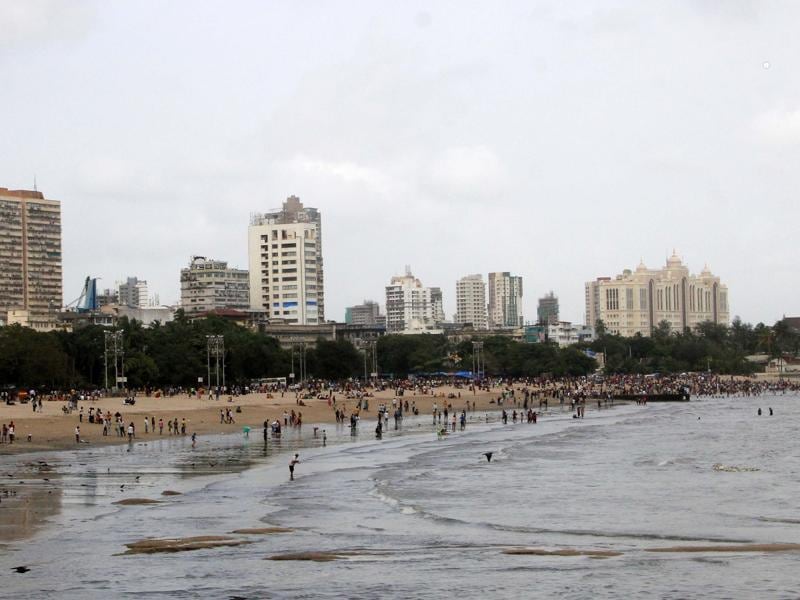
On a Saturday evening, we meet Bharat Gothoskar, founder of Khakhi Tours, at Girgaum Chowpatty. No, we’re not here to enjoy a rainy day on the beach. We’re here to rediscover the area. Gothoskar says there’s a lot more to the stretch than just sand and sea. We start from Café Ideal, opposite the iconic fast food chain Sukh Sagar, walk all the way to the Police Gymkhana at Marine Drive, cross our way to the sea face, and walk back to where we started.
DID YOU KNOW?
-Chowpatty gets its name from the Marathi words ‘chau’ (which means four) and ‘pati’ (water channels). At one point, there were four such water channels going into the sea. Today, the word has become generic for a beach. m
-The white pillars at the corner of Café Ideal and the ones across the road exist because the first escalator in the area was created here in the 1970s to help pedestrians cross the road.
-Marine Drive was known as the Kennedy Sea Face around 1915, named after John Pitt Kennedy, the engineer who designed it. There is a pillar outside the Mafatlal Bath commemorating its creation.
Also read: Insider’s guide to Chhatri Bazar
- In 1892, there were polo grounds starting from where the Charni Road station now stands till the Princess Street Flyover. Charni Road got its name from the Marathi word ‘charni’ (meadows where cows graze). When the British levied a grazing tax on the farmers for feeding their cattle, Sir Jamshedji Jeejeebhoy got a private plot here so that farmers could bring their cattle to graze without paying tax.
-Shivkar Bapuji Talpade, an Indian scholar, is rumoured be the first Indian to have constructed and flown an unmanned plane in 1895. He took off from the beaches of Chowpatty. Bollywood film Hawaizaada (2015) is said to be based on his life.
-The buildings on this stretch -- from the beginning of Chowpatty to Marine Drive -- are art deco, with curving balconies, and twirls and waves used in the design. In fact, this is the second largest art deco district in the world, after Miami.
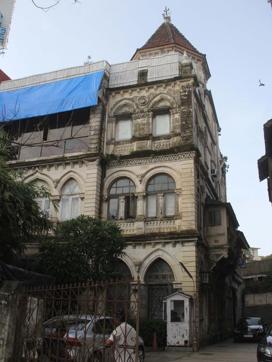
-Wagh Sculptors, established in 1901 by Vinayak Rao Wagh, is a popular studio known for sculpting various national personalities like Dr Rajendra Prasad and Sardar Vallabhbhai Patel. When Lord Hardings, the first viceroy of India, wanted his sculpture to be made, he commissioned Wagh to do it in just two hours. They have sculpted over 1,000 memorials of Dr Babasaheb Ambedkar. Today, the third generation runs the studio.
Also read: Insider’s guide to Dr Bhau Daji Lad Museum
-Jawahar Bal Bhavan is a garden named after Jawaharlal Nehru, for kids under the age of 12, and for women. At the entrance are two sculptures: Sarwadaman Bharat, which shows prince Bharat playing with a cub. The other is of Shiv Dhanush Par Sita, which narrates the story of how Sita would marry only a man who could lift Lord Shiv’s bow.
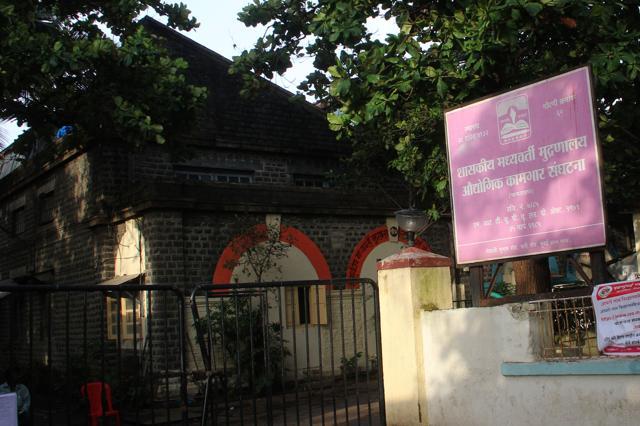
-The Bal Bhavan annexe, which houses the Maharashtra Prathamik Shikshan Parishad, imitates the architecture of Villa Savoye, outside Paris, built by architect Le Corbusier, who Jawaharlal Nehru had invited to design Chandigarh.
-The Taraporewala Aquarium is India’s oldest aquarium. Built in 1951, it cost ₹800,000 and was inaugurated by president Dr Rajendra Prasad. The aquarium is named after a Parsee philanthropist DB Taraporewala who donated ₹200,000 for the construction.
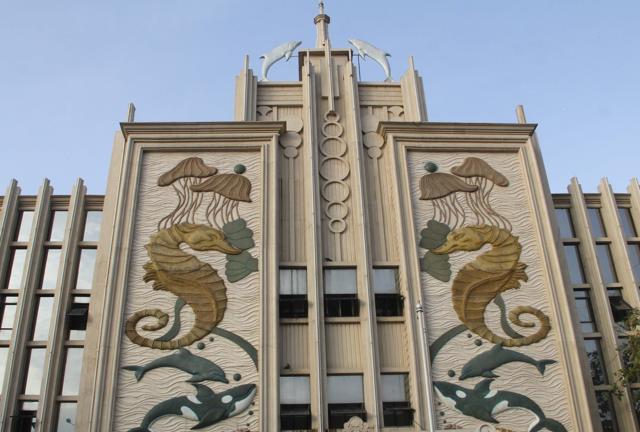
-The Pransukhlal Mafatlal Hindu Swimming Bath & Boating Club Trust, a popular club in south Mumbai, was built in 1939 by Pransukhlal Mafatlal especially for Hindus when the British didn’t allow the locals to use baths.
-The Lokmanya Tilak Udyan outside the beach has a plank with Tilak’s popular slogan—‘Swaraj is my birth right and I shall have it.’ Inside the garden is his statue. He was cremated here.