
 E-Paper



Paul Murray – “Climate change is something I worry about all the time”
The author of The Bee Sting, which is on the Booker Prize shortlist, talks about Ireland, friendships and writing, among other things

 Prefer HTon Google


The Bee Sting is about a family in small town Ireland, whose financial situation continues to nosedive well after the financial crisis. It’s told through the perspectives of the four members of the Barnes family — Imelda and Dickie, and their children Cass and PJ — and it’s about so many things really -- family, climate change, friendship, the gay scene in Dublin in the 1990s, sexual fluidity... There’s even the occult in Imelda’s section. How much of this were you familiar with when you began writing the novel?
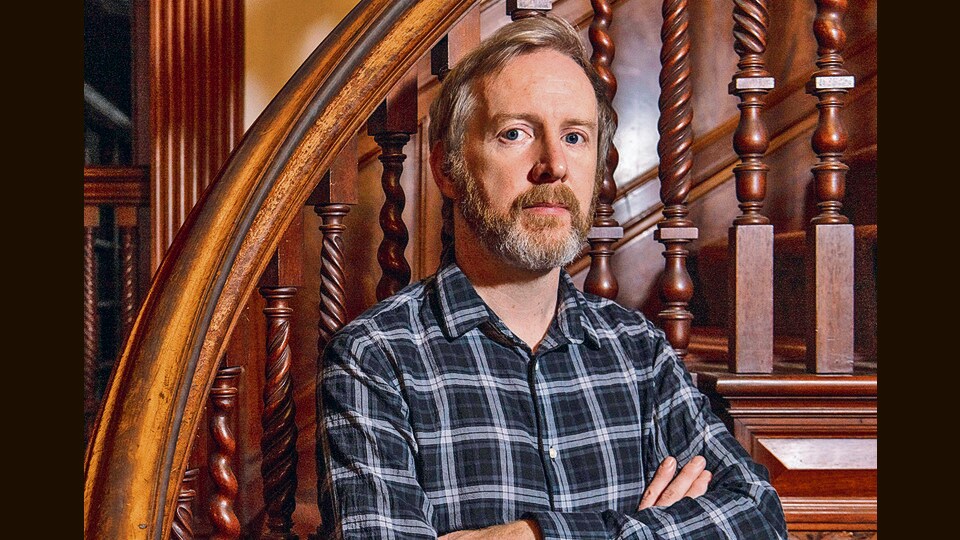
One of the joys of writing this book was that it didn’t involve any research. Most of the things in the book are adjacent to my life but they’re not actually part of my life, so they’re not things that I would know directly about.
Ireland is a very, very small country, but each little bit of it is quite specific. And the midlands [where the novel is set] are not a part of the country I knew very well. I had to do a little bit of work in terms of talking to people to find out the idioms that people use. Life is slightly different there than it is in the city, and that’s part of the story.
The gay scene in the 1990s was something that I would have heard about. The car business as well… How would I know anything about the car business? It’s sort of a cliche about the Irish as being this nation of storytelling, which is a bit of an exaggeration, but this book, the genesis of it, was really in things I’d heard — tiny little stories or bits of stories or just little snippets of what people said. All of this, in my mind turned into this vast operatic kind of novel.
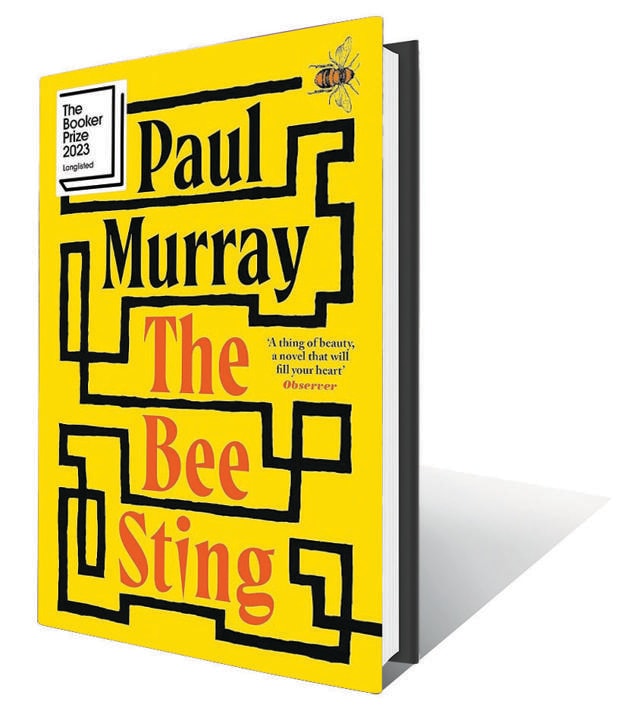
But the seeds were in these stories I’d heard. Like the policeman who beats up Dickie was a story I’d heard 20 years ago, but it was still in my mind because it was such a crazy, heartbreaking story. And it tells you so much about Ireland at that time. There were lots of things that I hadn’t anticipated, that weren’t even there as seeds, but the big one is probably Imelda’s past. That wasn’t something I had really thought about in any kind of serious way until I started writing it. I guess some of it drew on my mother’s background — it was nothing like that in terms of the poverty and the violence — but my mother came from a very rural part of Ireland, and the woman who brought her up was a little bit like Rose who’s sort of the mysterious old woman in the book.
The novel opens with Cass, a millennial teenager, and her adulation for her beautiful best friend Elaine. It reminded me in some ways of Elena Ferrante’s My Brilliant Friend — the whole toxic female friendship thing. What made you set it up in this way, to begin with these wild teenagers, one of whom is awful?
Yeah, she is awful. She’s just, I think, she’s just awful.
But, it was all very organic. I had this idea of, again, just a story someone had told me. My friend Cliona had told me once about how she and her friend skipped school. She’s a middle-class girl, and she and her friend wore these track suits, which is sort of a working-class outfit here. And she thought that no one would recognize them in the neighbourhood if they skipped school because they were wearing these track suits. And of course everybody was ringing her mother asking, “Oh why is Cliona not in school today?” And I just thought that was a funny story. So the genesis of Cass’s section was, one of the ways into it was, I wanted her to go to Dublin with Elaine wearing these trouser suits, because this new teacher wears trouser suits, and they’re kind of in love with the teacher, and it just expanded out and out and out from that.
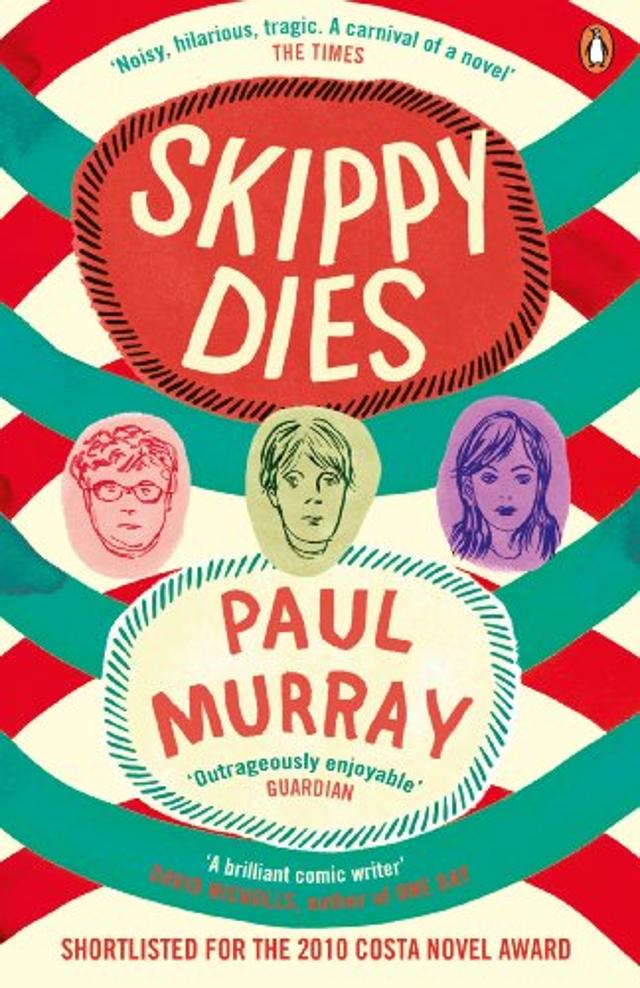
My second book, Skippy Dies, was set in a boys’ boarding school, and almost all the characters were 14-year-old boys. So I felt like I wanted to come at that part of life from a different direction. And in Skippy Dies, there’s a teenaged girl who’s got a little chapter, Lori, and I really enjoyed writing that section and I wanted to see if I could go deeper into that.
And I loved Elena Ferrante, those books, the Lila and Lenu story, it’s just so intense as a way of exploring someone trying to define themselves. You’ve got this battle where she’s, well, she not trying to define herself, she’s trying to turn herself into someone else, and she can’t do it. Cass can’t do it. She can’t become Elaine no matter how she wants to. And that felt to me like a powerful demonstration of that amorphousness you feel when you’re a teenager. I think, boys — I hate to generalize — I think boys, obviously you’re going through the same kind of thing in the struggle to determine yourself but you’re not really under the sway of one person in a way that seems to be the case for girls. I don’t know if that rings true to you but…
It does. And I was startled by the accuracy of it, and the whole millennial thing. Did that come from observation?
I met a couple of millennials just to see if the things I was writing about rang true. And they did. I met this girl, Ailbhe Reddy, who is a singer-songwriter — she’s very talented — and her friend… And they were like, “Oh my God, that’s exactly what happened to me when I was in school, I fell in love with my, my Irish teacher. And then I went to study Irish in college, and I found myself going, why am I studying Irish? I have no interest in Irish.’” So that was very funny.
Observation is too strong a word for it. I think part of your, not your job as a writer, but just the way you live as a writer, or live, is sort of like osmosis — things kind of seep into you and these stories are gathering inside you, just the way that people act and conduct themselves or relate to each other. You’re taking this in without knowing this, and then when you hit on a voice that works, I think part of the reason is that unbeknownst to yourself you’ve been interested and taking it in over a long time.
Cass’s section is followed by PJ’s and it is the funniest. For instance, that list he’s making of the “TOP TEN REASONS CASS IS A BIT*H AND YOU’RE GLAD SHE’S LEAVING”, it’s also just so cute. How did you construct his voice?
He’s a teenaged boy, well he’s 12… so if you can find that voice then there’s a lot of scope for insane behaviour or trickery or mischief or extremely rude jokes. I really enjoyed this. And I think he’s just very sweet. Of all the characters, he’s the one who still wants there to be a family. The rest of them don’t really. The family is this problem that they need to escape from. And for him, he’s just like, how can we preserve this? How can we keep this going? He doesn’t think the family is in itself a good thing. But he can remember when it was a good thing. He can remember when they were like more bound together than they are now. I liked that about him, and I like that there’s a heart to the book where there’s still hope. He represents a certain amount of hope for the family, and hope for the future more generally, because he’s an optimist.
The novel is rooted in friendship, and of course climate change. Were those two things in your mind when you began working on this?
The reservoir I was drawing on were these things that have been important to me for a long time.
Climate change is something I worry about and think about all the time. And it frustrates me when books about the present ignore it and ignore that sense of dread, that everybody, everybody simultaneously doesn’t care about and also feels horrified and terrified by. It’s this weird cognitive dissonance that we’re all going through all the time, and that’s something unique to our generation or our time. So I wanted to show what it’s like being in like 2014 [when the book is set]. If you were a teenager in 2014, and certainly if you’re a teenager now, you’re growing up thinking, this is f*cked, we’re over, this is just terrible. And you’re feeling this massive shame and guilt, and like there’s nothing you can do to stop it because you were just this generator of ecocide. It’s mind-bogglingly huge and awful that it’s un-processable, and yet it’s always there at the back of your mind.
All of my books have some kind of reference to climate change. And when I started the book in 2018, in the middle of just peak awfulness, which is to say like Trump was in power and Bolsonaro was in power, and Brexit had happened — everything politically just got very dark.
And friendship, to answer the other half of your question, friendship is something that, without sounding facile, is just really important to me. I’m not always a very optimistic person or a very happy person. But one blessing in my life is that I’ve always had really good friends. I have been lucky enough to find friends in each part of my life that have got me through the dark times.
It’s not a message of the book, but people have a capacity for togetherness that is so important and it gets us through so much. And I feel like it’s under assault at the moment because the technology we find ourselves immersed in more and more, is antagonistic to that sense of togetherness and that capacity for togetherness. And I think it’s deliberate. I think, to a certain degree, the guys running it — like Musk or Zuckerberg or whatever — they don’t like togetherness because it’s for free and it’s like something that people do without buying a thing in a shop. So they’re like literally trying to dissolve the bonds between people and so they can monetize loneliness, you know and it’s just so sad.
Friendships ultimately are — I don’t think they’re transient — but I think that they’re something that you choose to reflect certain parts of yourself. You’re not friends with people who you find awful. I mean Cass does, but it’s not a functional friendship.
But your family is different… With families, I was interested in this idea of responsibility, which ties to climate change as well. For the world to survive, we have to do things that aren’t pleasant for us, that don’t reflect an idea of ourselves that we find attractive. So you can have cool friends, and go to the bar with them, and show them your new sneakers, but you also have to visit your grandmother in the nursing home and give her oatmeal. It’s not necessarily that one is more important than the other. But I think even though families are often difficult and spaces that, you know, it’s almost impossible to survive in. And you construct this narrative that you’re so different from your family that the only solution is for you to leave and reinvent yourself… The truth is that you are bound up in your family. And if you run a million miles away from them, they’re there in your head and in your genes.
You can see that from the book, each member of the family is like, well, I’ve got nothing to do with these other three people… So I guess my idea was… with family, there’s so much there that is loving and good. And if they could just stop and learn to speak to each other, they can find something that will help them to get through, to process their past and find a way into the future.
Those would be very long conversations. Because these people know nothing about each other. Every narrative of each family member shows you, not a fuller picture, but something entirely different about the others. They’re all living these secret lives… And none of them seem to understand love. Why is that?
Okay that’s a big question.
There’s this quote from Dostovesky that I really like: ‘What is hell? I maintain it is the suffering of being unable to love.’
Insofar as I thought about the book structurally, one of the major engines was that the children are living in this world the parents have created, without really knowing that. If you’re a kid, you think that you’re self-generated. You know your parents are creating the rules and things, but you just think they’re these kind of cartoons who just tell you what to do and you have to.
I think PJ is loving. I think he loves Cass, and he wants his parents to come back together. It’s a family that, well, okay, so, sociologically, there’s this line in the book where Cass is talking to this German girl and says something to her like, this is a country where if you loved anything for hundreds of years, someone would come and would take it.
This is a country which was really run by the church. And the church destroyed families who were different, literally, they would take children away and they would imprison mothers.
READ MORE: Review: The Bee Sting by Paul Murray
Yeah, I remember the Magdalene Laundries from Claire Keegan’s Small Things Like These — they’re mentioned in your novel as well.
So in Ireland in the 1990s, two things happened: firstly, all of these stories of abuse, clerical abuse, which everybody had secretly known about, I think, but pretended not to know about, started to come. And simultaneously, Ireland had this massive influx of money from American pharma and tech firms, and in the space of three or four years, went from being one of the poorest countries in Europe to one of the richest countries in the world.
And what happened effectively was we basically papered over the past. The whole trauma of the last 100 years was just papered over with money. Almost literally, people were buying stuff to put on top of this freaking mire of darkness and trauma. So that’s kind of Dickie’s story and Imelda’s. They’re both terrified that the veneer is going to crack and they’re going to find themselves revealed and exposed, and people are going to vilify them. They’re not able to love because they’re wearing these masks. To love someone, you have to be ready for people to laugh at you. If you love someone, you have to be ready to be vulnerable. And you’re setting yourself up to be rejected because that that’s what happens sometimes when you love someone. But they’re afraid that they’re going to get hurt. And the result is that they’ve raised these children who are afraid that they’re unlovable people, and the only thing they can do is pretend and cover themselves up or invent some persona that will be acceptable. It’s not like there’s no love, but it’s like the love is not expressed enough, which is a tragic thing.
Halfway through, the novel just becomes very suspenseful. The events that unfold in Dickie’s section, were unexpected. And then the final section reads, more surprisingly, like a thriller. It’s a big book — at 650ish pages — written at a time when globally people’s attention spans are shrinking. I can’t remember the last time I stayed up all night to finish reading literary fiction. Was suspense a deliberate strategy to keep the reader hooked?
Well, yeah. It probably was.
I didn’t set out to write a long book. I didn’t realize how long it was until I had finished. I wrote it by hand and then I typed it up… I had worked on it for about three or four years before I did word count and then I was like, Oh my God!
I like books that have stories that have strong plots. And if you think of Elena Ferrante, it’s a really profound book but it’s written like a soap opera. It’s such a page-turner — short chapters and it’s got these very vivid characters, and she’s worked to make it accessible and interesting to people. And by the same token, my mind would work that way naturally.
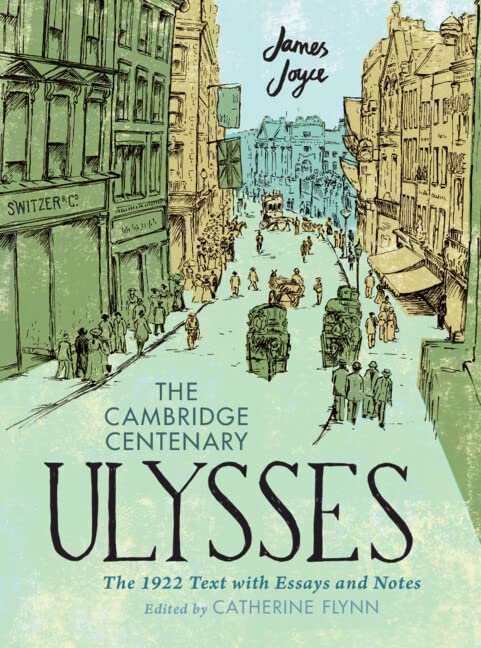
If I read a book where it’s just people sort of wandering around a city — Ulysses is like that but I don’t find Ulysses frustrating — but there’s a trend in fiction, like in Sebald and the works of Sebald’s imitators where you just have these books and people are walking down the street, and they’re thinking about the music of Wagner or the history of Iraq… I find those a bit unconvincing.
I was definitely aware that when I’m reading a book myself, the phone is kind of calling to me. My attention span, like everybody else’s, is not what it used to be. So now when I’m reading something and I look at my phone, I go back to the book and look at what was happening right then in the book that made me — why was this moment that I chose to — look at the phone.
The book doesn’t exist without readers. I don’t like books that are penance or work, that you only read because you feel, if I read for half an hour then I could go Tik-Tok for two hours. And if you’re a writer in 2023, you are aware that there are other demands on people’s attention and your book is going to be competing with all of these different things. So I was definitely thinking about that.
The form is really actively engaging with the reader. Imelda’s section, which is written without full stops, sounds like it would be hard to read — but, without the pauses, I found myself breezing through it even though sometimes my brain was belatedly making sense of the text. And the last section, written in second person, made me feel like I was inhabiting the characters.
I wrote Imelda’s section, and I knew she was on her way to this dinner… I wrote that first line like she, well, she needs to use the bathroom really urgently. And I put commas in and a full stop. And it did not feel right at all. The only way to write it was without the punctuation, and I wanted it to feel like you’re in her head. She doesn’t parse things in the same educated way that Dickie or indeed the kids would do. She just thinks in this much more immediate, intensive way. When you go from the kids’ sections into Imelda’s section, I wanted it to feel like, woah, there’s a change in gear here. Like there’s something’s going on that hasn’t been apparent up until now. At this moment in her life, but maybe at every point in her life, everything feels extremely precarious. She’s on this knife edge, all the time. She always feels like everything’s going to collapse, the floor is going to disappear from under her and she’s going to just tumble down into the past with her abusive dad and the poverty and the grimness and stuff. I really liked her voice, and the work of that section was just to get it sounding exactly right. So I went over that a lot. I don’t read stuff out loud, but I go over stuff again and again. So the rhythm of it — it doesn’t have visual breaks, but it has a rhythm — hopefully will carry you along just by virtue of the sounds of the words. And then when you come to Dickie, he’s the total opposite. He’s narrating in this very conventional way and there are lots of semicolons and paragraphs. So that was all fairly straightforward. His section was a reaction to her section in some ways.
And then the last bit, I was like, well, how am I going to do this? How do I get the four voices in the same section? …I really like second person. It’s very powerful and, in this kind of mysterious way that I don’t fully understand what the source of it is, it’s quite dreamlike, like a voice speaking to you in a dream or something… But it’s also a way to unite each of the characters because they’re all speaking in the same voice for the first time. There’s this kind of commonality between them that they’re not aware of that we can see. So when you pass from Cass to Dickie, it’s still the same voice. It’s still like you, you, you, you, you, all the way through. And you, the reader, are slipping through it as well. I didn’t want them to feel like they were kind of in control of their stories because they’re obviously not. They’re being carried by something and without being able to see it.
It was kind of an experiment, but it didn’t feel like an experiment. It felt like just this is really the only way that this is going to work. Or this is the only way I can do it that I can see.
Saudamini Jain is an independent journalist. She lives in New Delhi.


