
 E-Paper



In search of the finest fish in the country

 Prefer HTon Google


No preparation can go wrong for the Karimeen from Kerala
I returned to India from the UK via Paris in the mid ’80s, eager and excited to explore and discover my culinary roots. So it is quite apt that I should kick off this column with a fish that, after 30 years, still makes me drool.
I’m not from Kerala but I have always felt very comfortable there. I do however love seafood and the backwater fish karimeen or pearl spot, is to my mind one of the finest, most delicate fish in India. Fry it, slather masala all over it, steam it – whatever the preparation, it is something to dream about.
In the mid ’80s, my impressions were innocent, naïve and full of the freshness that only comes with the passion and energy of youth. Kerala was a wonderful interlude – and proved that you could have marvelous experiences on a shoestring budget. One of my most memorable experiences with food was when our friend, the majestic, mundu clad Sethu, a cousin of the avant garde filmmaker Aravindan, took me on a boat ride through the backwaters. Somewhere along the way, someone mentioned food. Sethu asked the boatman to stop at a spot where all we could see was a little hut and plenty of palm trees. We leapt out. The boat continued down the backwaters. We sat in the shade of a palm and were brought fantastic fried fish called karimeen – a specialty of the backwaters, we were told. We had in fact seen the fish being caught a few minutes before. It was tossed into the sand and cleaned, rubbed with red chilli, haldi and salt and fried. Nothing can erase the memory of that taste, or of that peaceful afternoon, sipping toddy and napping on the banks of the backwaters.
Beyond the basic
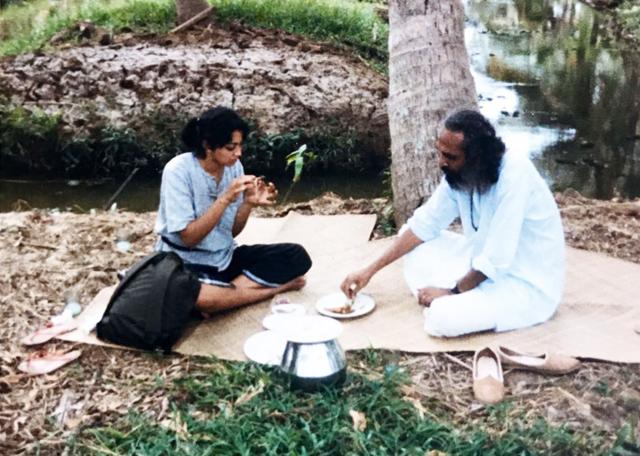
Of course, I’ve returned to Kerala a few times since then, but on a recent trip, I was determined to find that little hut and relive the memory. This time, with slightly healthier budgets, we hired a houseboat and drove the boatman batty plying up and down the backwaters till I finally found the place, now known as ‘R’ block. The toddy shop, infused no doubt with some Vitamin M from the Gulf, has morphed from a hut to an ugly structure serving all the backwater staples and catering mainly to the toddy needs of the locals. Was the karimeen the same as it was 30 years ago? Hell no! Have my taste buds become more refined or was it the preparation? Probably a bit of both!
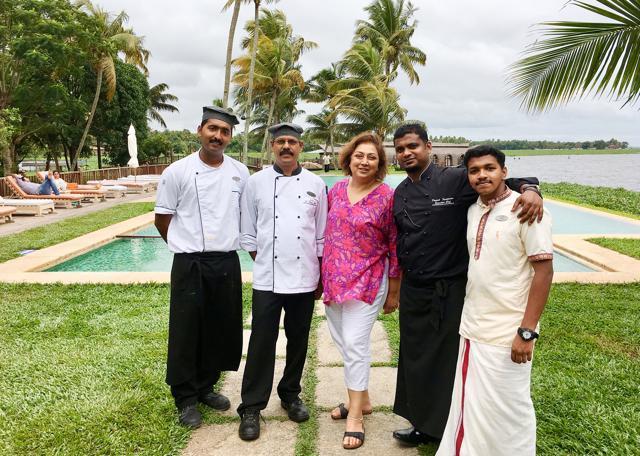
We returned to the beautiful Kumarakom Lake Resort where we were staying and I recounted my disappointment to the chef. He took pity on me and the next morning cooked the most divine karimeen polichattu. In this recipe, the fish is smothered with a roasted (aka fried) masala paste, wrapped in a banana leaf which then goes through a sort of fry / steam process in a pan with oil. The end result is quite delicious but heavy with coconut oil. Chef Deepak’s version is filled with the genteel sensitivity of a hotel chef. He adds coconut milk and juice of the dry, smoky sour kodampuli to the paste and gently simmers it in a heavy cast iron pan till the fish cooks and the paste thickens. This version retains the flavour and integrity of the original recipe without fire and brimstone and fat which our older, weary bodies simply can’t take anymore.
Karimeen Pollichathu from Kumarakom Lake Resort
Ingredients
1 karimeen (pearl spot) (250-300 gm)
150 ml coconut milk (fresh)
5 g ginger
5 g garlic
2 tsp kashmiri chilli powder
1 tsp red chili powder
½ tsp turmeric powder
1 tsp coriander powder
¼ tsp cumin seeds
15 small shallots, fried
Few curry leaves
50 ml coconut oil
Salt and coarse ground pepper to taste
1 kodampuli bulb, soaked and strained. Use ¼ cup of the juice
1 tsp vinegar
1 banana leaf
Marination
10 g ginger and garlic paste
2 tbsp red chili powder
Juice of 1 lime
Salt to taste
Method
Clean fish and make gashes on both sides, marinate and keep aside for 5 minutes.
Make a fine paste of ingredients from 3 to 10. Heat the coconut oil and cook the paste for 5-10 minutes. Add kodampuli juice and vinegar. Add salt to taste.
Apply this masala to the fish and keep aside for another 15 minutes.
Heat a heavy cast iron pan and sprinkle a few drops of oil on it. Heat the pan and place the banana leaf on it. Put the marinated fish on top of the banana leaf with a few curry leaves. Smother the fish with the masala paste. Add coconut milk, crushed pepper and salt if required.
Allow the fish to cook on one side for about 5 minutes. Flip over and cook the other side in the same way. If you find this difficult, cover the pan with a lid and allow the fish to steam cook through. The coconut milk and masala paste should be reduced by a third. Serve hot with appam.
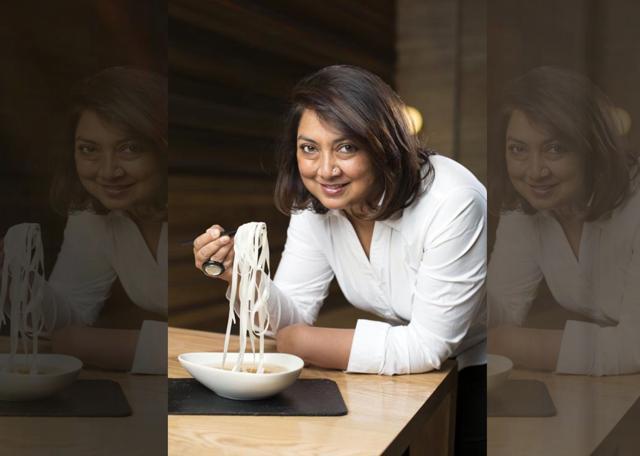
Author Bio: Culinary expert and explorer Karen Anand has been writing extensively on the subject of food and wine for 30 years. Apart from having her own brand of gourmet food products, she has anchored top rated TV shows, run a successful chain of food stores, founded the hugely successful Farmers Markets, and worked as restaurant consultant for international projects, among other things. Her latest passion is food tours, a totally curated experience which Karen herself accompanies, the first of which is to Italy this year.
From HT Brunch, October 29, 2017
Follow us on twitter.com/HTBrunch
Connect with us on facebook.com/hindustantimesbrunch


