
 E-Paper



The Big Bang in Indian defence is delayed | Opinion
Unless India can address shortcomings in the defence sector with policies aimed specifically at attracting private-sector investors, its dreams of a defence overhaul face a disappointing reality.


India has millions of military personnel, billions of dollars in arms spending and grave threats on its borders, yet the nation doesn’t make its own fighter jets and anti-tank missiles. Is that a massive opportunity for investors? Not so fast.

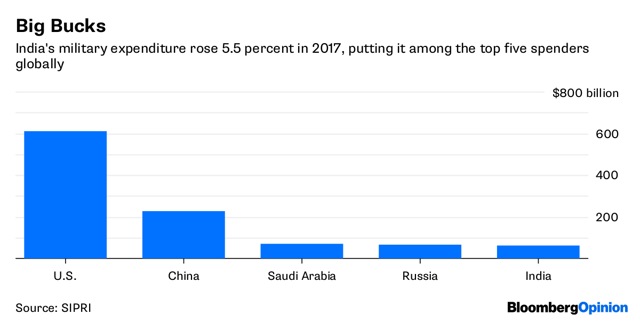
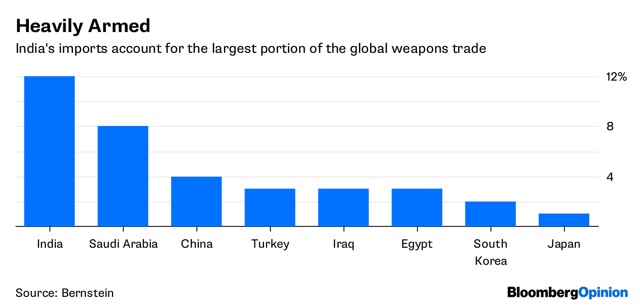
India has been striving toward defence self-sufficiency since the 1960s. The country has one of the world’s largest military budgets and also is the top arms importer, buying about 70% of its needs abroad. Last year, defence spending rose 5.5% to almost $64 billion, data last week showed. Bernstein estimates this could represent a $35 billion opportunity for the private sector.
Prime Minister Narendra Modi deserves credit for a $250 billion military modernisation plan. The so-called Make in India program prioritizes defence manufacturing on Indian soil, luring both global heavyweights and domestic firms to bid on (among other things) the biggest-ever order for fighter planes.
A lot stands in the way of these grand plans, however: Much of the ballooning defence budget goes on salaries, chiefly for the army, at the expense of the navy and air force. Capital procurement – essentially, modernization – now accounts for less than 20% of total outlays. Meanwhile, red tape discourages Indian companies from investing or staying the course.
Since Modi took office almost four years ago, the government has increasingly leaned on foreign vendors. To lure more of them, the defence Ministry earlier this month circulated draft rules to recraft its policy on so-called “offsets” – pay-to-play arrangements that help Western defence companies tap international markets, which haven’t worked well in India. The latest draft presents vaguely defined offsets, which are controversial and not always successful. In Australia and Japan, for example, the system nurtured inefficiencies in the domestic industry.
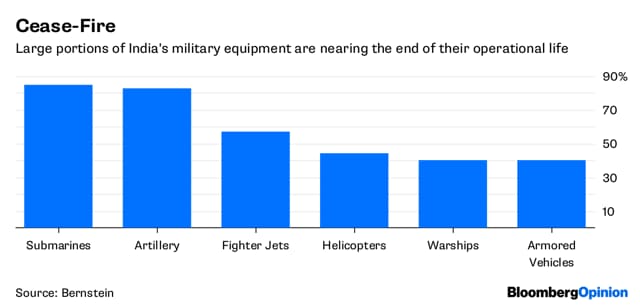
Indian and foreign companies obviously hope they’ll get a chunk of the business as the policy takes shape. There are billions of dollars of potential contracts for aircraft carriers, destroyers and combat planes. As much as 85% of the nation’s submarines, and up to 40% of its armored vehicles, are nearing the end of their operational life.
A lot of the hope, however, may be just that.
For one thing, incentives aren’t aligned. Attracting the private sector is key, as India knows. But without efficiency and focused investments, defence companies face compressed margins. It can take at least three years to bid for an order of defence equipment, and simple tenders don’t get enough legitimate bidders.
Meanwhile, changes at the top of the defence ministry have led to some policies that helped private companies being rethought. For instance, Lockheed Martin Corp. set up a strategic partnership with Tata Advanced Systems Ltd. to build fighter jets, but the degree of progress isn’t clear, and there’s political pressure to reconsider the need for such cooperation.
State-backed companies, like Hindustan Aeronautics Ltd., remain the biggest beneficiaries of military largess. But investors still aren’t impressed: Shares of Bharat Electronics Ltd., a pure-play defence communications company backed by the government, have fallen almost 30% this year because of shrinking margins and delayed orders. The inefficiencies run deep.
Unless India can address these shortcomings with policies aimed specifically at attracting private-sector investors, its dreams of a defence overhaul face a disappointing reality. Bloomberg Opinion
This column does not necessarily reflect the opinion of the editorial board or Bloomberg LP and its owners.


