E-Paper



Amid leadership transition, Nvidia bets on science discoveries with new AI models
From open chemistry datasets to a 50,000-core GPU, Nvidia has pieced together a comprehensive stack to accelerate complex scientific simulations

 Prefer HTon Google


Amid the changes surrounding its leadership transition, tech giant Nvidia has announced three key developments at the intersection of artificial intelligence (AI) and science – a new Nemotron for Science suite, the Vera CPU platform to accelerate scientific discovery, and the Rubin high-performance computing (HPC) platform, built on Vera, to accelerate scientific simulation, data processing and analytics workflows.
Nemotron for Science comprise three core components: the Nemotron 3.5 Super VL open vision-language model, a new open chemistry dataset called LitmusBench v0.2 containing nearly 50,000 questions focused on chemistry reasoning, and a post-training recipe framework to help researchers build specialised agents using Nemotron for scientific discovery.
“Accelerated computing is transforming how scientists tackle the world’s most complex challenges,” said Ian Buck, vice president of hyper-scale and high-performance computing at NVIDIA. “Nemotron for Science gives researchers open models, scientific data and post-training recipes to build specialised agents that reason through scientific problems and use CUDA-X accelerated tools to turn ideas into discoveries.”
Also read | Nvidia’s board not considering reinstating Jensen Huang as CEO
Nvidia said researchers can post-train the Nemotron open models with domain-specific data to improve performance on specialised scientific tasks. For instance, Terray Therapeutics post-trained Nemotron to extract reactants, products and reaction conditions from scientific diagrams, surpassing previously published results on two benchmarks.
“On the RxnScribe test, it recovered about 76% of annotated reactions under the benchmark’s matching criteria, helping turn published chemistry discoveries into structured data for synthesis planning and scientific agents,” the official statement said.
Lila Sciences used Nemotron to design execution-ready laboratory protocols for its automated labs, matching frontier-level performance without requiring additional fine-tuning. Post-training with laboratory feedback nearly doubled the model’s accuracy for making quantum dots (nanoscale crystals used in screens and solar panels) to 61%, which is better than OpenAI GPT-6 Astra’s 54%, and also at 10-20x lower inference cost.
Also read | Nvidia board warned of ‘irreplaceable’ talent loss in employee letter
“These gains help agents and materials scientists translate desired material properties into synthesis recipes, advancing the discovery of new materials,” Nvidia said.
The company also cited the example of Therna, which post-trained Nemotron for agentic mRNA therapeutic design, nearly doubling accuracy in predicting protein-expression ranges over frontier models.
Nvidia also announced the expansion of its Vera CPU rack-scale platform for HPC devices, focusing key efforts on accelerating memory-intensive scientific modelling, climate simulations, and agentic science use-cases.
“Scientific simulations need CPUs that can keep large datasets moving and sustain performance as applications scale. Vera brings custom CPU cores, high-bandwidth memory and InfiniBand networking together to address those bottlenecks. With compilers and libraries optimised for Vera, researchers can run demanding simulations more efficiently and explore more complex scientific problems,” said Buck.
Also read | Put-downs, parties and a ‘royal family’: The culture inside Jensen Huang’s Nvidia
Core architecture and specs include Nvidia’s first fully custom data centre CPU, equipped with 88 custom NVIDIA Olympus cores, 176 threads, and compact SOCAMM2 LPDDR5X memory per CPU. This can deliver more than 200 TB/s (or Terabytes per second) of aggregate peak memory bandwidth, with roughly 300TB (or Terabytes) of memory and 1PB (or Petabyte) of storage per rack.
Vera CPU racks from HP, Lenovo, Dell and Supermicro are expected to be available sometime in 2027.
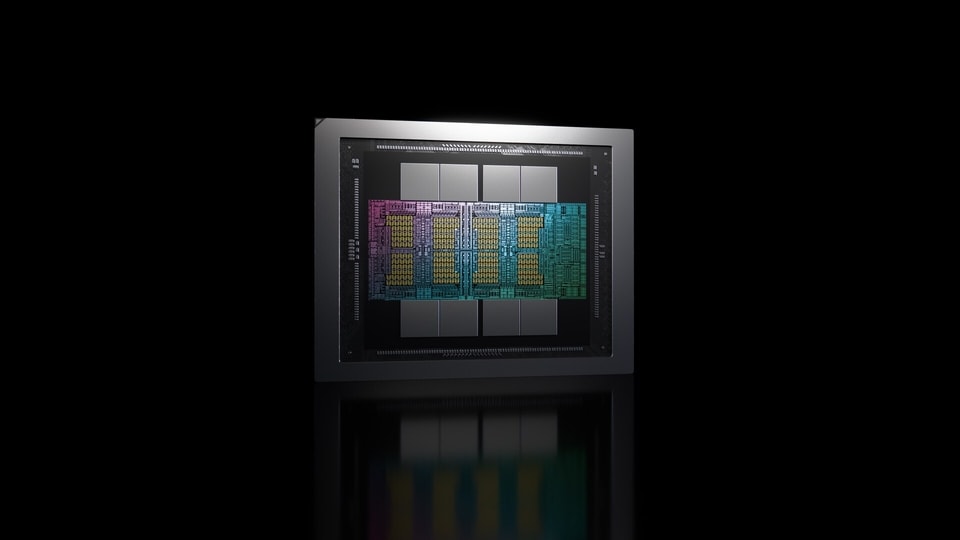
On cue is the Rubin HPC, a purpose-built GPU for the Vera platform. This features a record number of CUDA cores – more than 50,000 on a single GPU. Two important elements are that it is designed to scale data transfers alongside compute power, to prevent cores from waiting on scattered, large-scale datasets. Important to this are the sparse data acceleration and 7th-generation Nvidia NVLink interconnects for rapid GPU-to-GPU communication.
“Rubin HPC accelerates the simulations agents use to test ideas and guide their next steps, helping scientists and engineers explore more possibilities and bring breakthroughs closer,” said Buck. The HPC is meant to work with recurring patterns in physics, climate modelling, engineering, genomics, and financial risk. The Rubin HPC is expected to become available in 2028.