E-Paper



‘At 7.5%, India to be fastest-growing major economy this year’: PM Modi
The Brics Business Forum meeting was scheduled a day ahead of the virtual Brics Summit on Thursday that is likely to focus on trade, counter-terrorism, health and environment

 Prefer HTon Google


NEW DELHI: India is expected to grow by 7.5% this year, making it the fastest-growing major economy on the back of the government’s initiatives in technology-led growth, ease of doing business and the digital sector, Prime Minister Narendra Modi said on Wednesday.
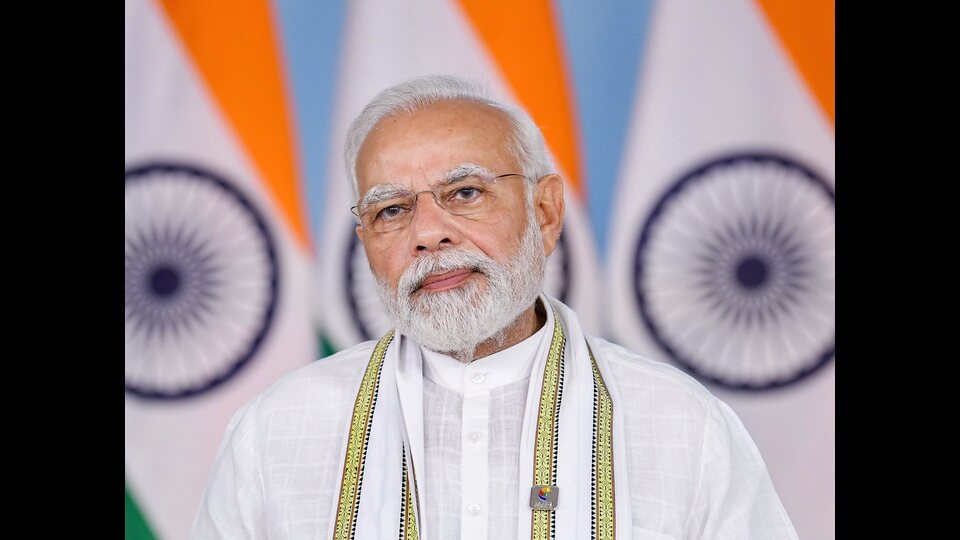
Modi made the remarks while addressing the virtual inaugural ceremony of the Brazil-Russia-India-China-South Africa (Brics) Business Forum, which was held ahead of the grouping’s virtual summit on Thursday. He said the role of the Brics member states had become important as the world focuses on post-Covid recovery.
“This year, we are expecting 7.5% growth, which makes us the fastest-growing major economy. Transformative changes are taking place in every sector in the emerging ‘New India’,” he said, speaking in Hindi.
India adopted the mantra of “reform, perform and transform” to deal with economic problems arising from the pandemic, and the results of this approach are “evident from the performance of the Indian economy”, he said.
Modi listed four pillars responsible for the Indian economy’s recovery – technology-led growth, efforts to improve the ease of doing business, improvement of infrastructure and digital transformation.
“We are supporting innovation in every sector. We have made innovation-friendly policies in many areas such as space, blue economy, green hydrogen, clean energy, drones, geo-special and data,” he said.
India now has one of the best eco-systems for innovation, reflected in the growing number of start-ups. India also has more than 100 unicorns among some 70,000 start-ups, he noted.
Even during the pandemic, India continued improving the ease of doing business, and thousands of rules were changed to reduce the compliance burden on business.
“Massive work is being done to bring more transparency and consistency in government policies and procedures,” PM Modi said.
Infrastructure is being improved and expanded on a large scale, and a national master plan has been prepared for this. “There are investment opportunities worth $1.5 trillion under our National Infrastructure Pipeline,” he said.
“And fourth, the kind of digital transformation happening in India today has never been seen before in the world. By 2025, the value of the Indian digital economy will reach $1 trillion,” he added.
The digital sector’s growth has encouraged women to participate in the workforce, and about 36% of the 4.4 million professionals working in the IT sector are women. “Our rural women have also benefited the most from technology-based financial inclusion,” he said.
Modi called on the Brics Women Business Alliance to conduct a study on this transformative change, as well as a dialogue between members of the grouping on innovation-led economic recovery. The Brics Business Forum can develop a platform for regular exchanges between start-ups, he suggested.