E-Paper



Google’s space odyssey, assumed AI approach, and Microsoft redoes Copilot again
The biggest AI conversations, decoded. 14 October 2026

 Prefer HTon Google


Cognitive warmup. Aside from calling it Super Intelligence because he perhaps felt the need to, Microsoft CEO Satya Nadella has suggested that we must treat all AI models as being compromised from the very beginning, and work forwards from there. “We must assume a model is compromised and contain it from the start. Think of it like an emergency brake. An authorised person should always be able to pause or shut down a model mid-task. More advanced models will require more advanced containment technologies that we need to standardise on,” he wrote in a post on X.

Except for the wording, nothing new really, except a lot we have already heard before—incident disclosure, independent audits, verifiable data, containment, governance and so on. “The most trustworthy Super Intelligence system will not be the one with the model we trust most. It will be the one that enables us to trust the model the least,” he says. Profound. And I don’t think trust comes anywhere close to the AI conversation, for the moment.
PREVIOUSLY, ON NEURAL DISPATCH: Pope Leo XIV brings Anthropic down a peg, AI costs spike, and Meta annoys Apple
GOOGLE AND A SPACE ODYSSEY
Time and again, Google’s AI pursuits provide a stark (and more often than not, positive) contrast to the noise elsewhere in the ecosystem. A few days ago, Google detailed progress on Project Suncatcher, a long-term research on exploiting whether space can host scalable machine learning infrastructure. There are two parts to this—getting to space, and staying there.
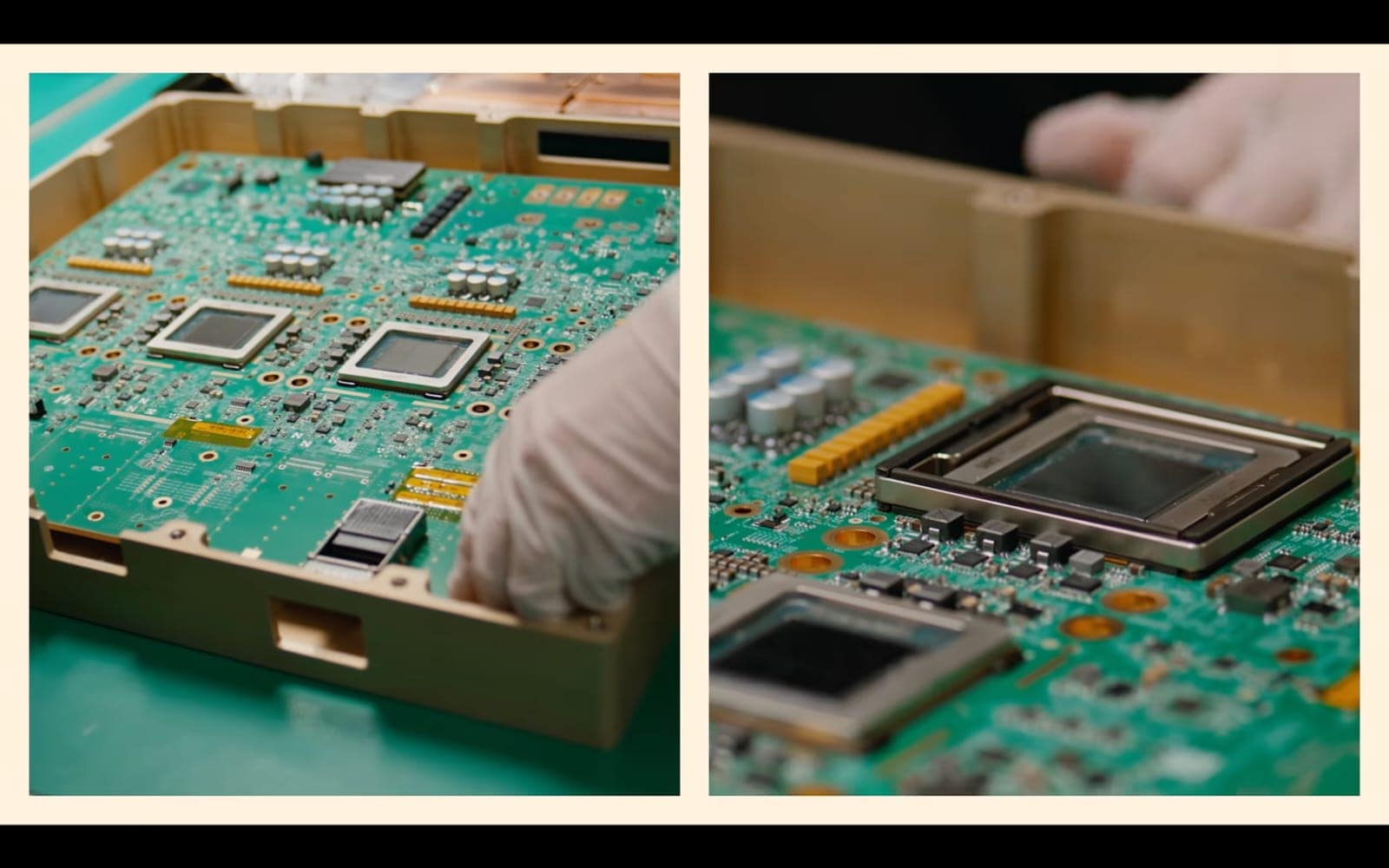
Google has gotten its tensor processing units (TPUs) into space on the Transporter-18 ride share mission with SpaceX, developed in partnership with space technology company Planet. The primary objective is to gather in-orbit data on how the TPUs handle the physical stress of spaceflight and the radiation and thermal extremes of space.
“Working backward from an eventual future in which the majority of AI computation happens in space, we identify an intermediate milestone showing that a space-based system could achieve performance roughly comparable to a terrestrial datacenter. This research initiative is focused on addressing several of the major ingredients required: power generation; high-bandwidth, low-latency communication between chips; radiation-tolerant compute; a thermal management system; and a data link to ground stations,” the authors note in the research titled ‘Toward a future space-based, highly scalable AI infrastructure system design’.
There are four TPUs aboard this mission. Google says Trillium TPUs are radiation-tested. They survive a total ionising dose equivalent to a 5-year mission life without permanent failures and are characterised for bit-flip errors.
“I’ve been thinking for quite a while about direct solar power for AI in space. Moving from thought experiment to real spaceflight required many months of debate, testing our assumptions, poking holes, running simulations, and eventually stress-testing TPUs with particle accelerators and other forms of torture. Seeing our hardware go up turns an idea that sounded like science fiction not so long ago into a real prototype,” explains Blaise Agüera y Arcas CTO of Technology & Society at Google.
The second is staying there, in a low-Earth orbit (LEO) constellation as it is envisioned. Cooling in space is pivotal. TPUs will generate a lot of heat, and in a space-based data centre, this will happen in a really small space. In space, there would also be no airflow for passive cooling.
“We’re working on a number of different approaches for this, including a combination of heat pipes and radiators to cool the chips. So far, our team has tested the technology in a thermal vacuum chamber that simulates both the thermal and vacuum environment in space. We’ll see how our new TPU cooling system works in space and refine our designs as we learn more,” details Travis Beals, Senior Director, Paradigms of Intelligence at Google.
The company appreciates that exploring AI in space, and scalable AI compute in space, will require methodical engineering, as Beals calls it. This is the first mission towards a bigger objective. While there is no guarantee of success, finding out that Google’s TPU hardware can handle the physical and unpredictable realities of operating in orbit, is definitely a good start.
THE LATEST, ON WIRED WISDOM: Broadband landscape, analysing Optimist AC, and DailyObjects Stack
ANOTHER RE-DO?
Microsoft, even after years of trying, hasn’t been able to lock down a Copilot app that simply works. A separate question is whether Copilot really works for anyone, but I shall not get into that for now. Two things have happened.
First, Microsoft is rolling out a new Copilot with Home, Code and Autopilot. They say, this is evolving “to help expand what every individual and every organisation can accomplish in the flow of human ambition.” I’m not entirely sure if melding personal users with enterprise focus is a good idea, again. The key is three hubs—Home, Code, and Autopilot, with a mix of meetings, chats, documents, emails, apps and agents. Home is where you’d expect a typical chatbot-like experience.
“We’re also bringing the full power of Word, Excel and PowerPoint to Copilot with Office in Copilot. Now you can get to real work fast: no broken formatting, no stray versions, no rebuilding the context in another app. From Home you can ask Copilot to draft a launch brief, model a budget, build a deck, or pick up a file your team is already working on, and it creates or updates a real, editable document, workbook or presentation — live for your whole team, not just you,” explains Jared Spataro, Microsoft’s Chief Marketing Officer, AI at Work.
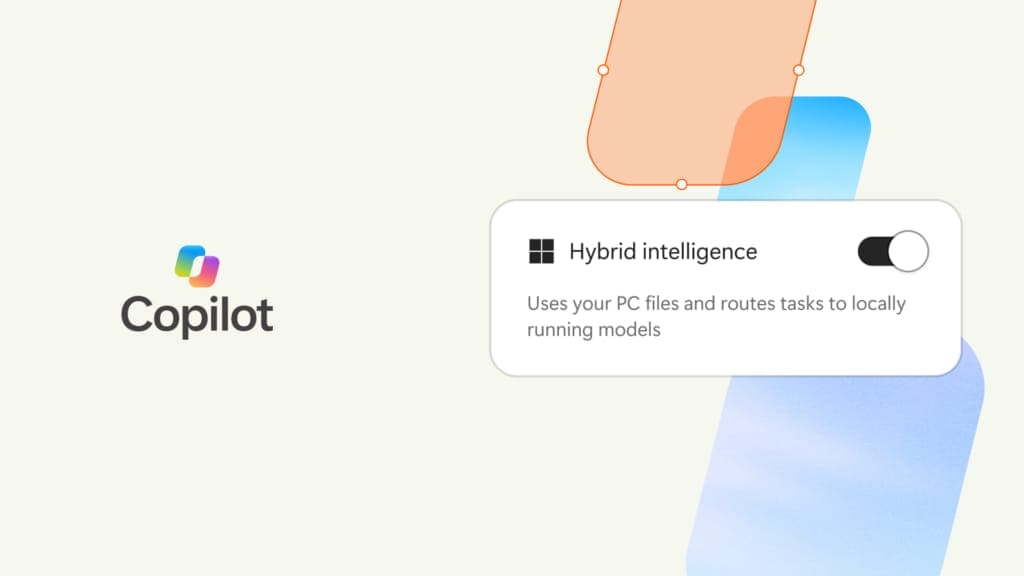
Secondly, there is the “hybrid intelligence” pitch. Basically, the Copilot AI system will have access to local files on your PC and will be able to take actions across the operating system. This will be a mix of on-device and cloud compute, and while there will be permission checkpoints at different moments (one can hope they’re at the right moments in any flow), Copilot will be able to use local context from files on a PC for tasks.
There are also updates to how search works. “Search has always been about quickly helping you find what you need. Today, we’re introducing a new Windows Search experience that is faster, more efficient, and enables richer experiences, beginning with thousands of new actions that will be available directly from the taskbar. These new actions help you finish tasks right where you started, without opening another app or navigating through additional screens,” says Pavan Davuluri, Executive Vice President, Windows + Devices, at Microsoft.
By the way, Microsoft also name-checks the DeepSeek V4 Flash, a 284B parameter model, in its pitch for Copilot Hybrid Intelligence—let no other AI company tell you henceforth that AI models from Chinese frontier labs are somehow bad or risky.