
 E-Paper



Sensex drops over 1,000 points amid key bank earnings, rising oil prices
The BSE Sensex opened at 74,594.65, falling 134.62 points, or 0.18%. The NSE Nifty 50 opened at 23,096.85, down 49.30 points, or 0.21%.

 Prefer HTon Google


Indian equity benchmark indices extended their losses on Monday with the BSE Sensex plunging over 1,000 points and the NSE Nifty 50 falling nearly 300 points by 1:48 pm, as selling in heavyweight private banks, elevated crude oil prices and concerns over foreign fund outflows weighed on investor sentiment.
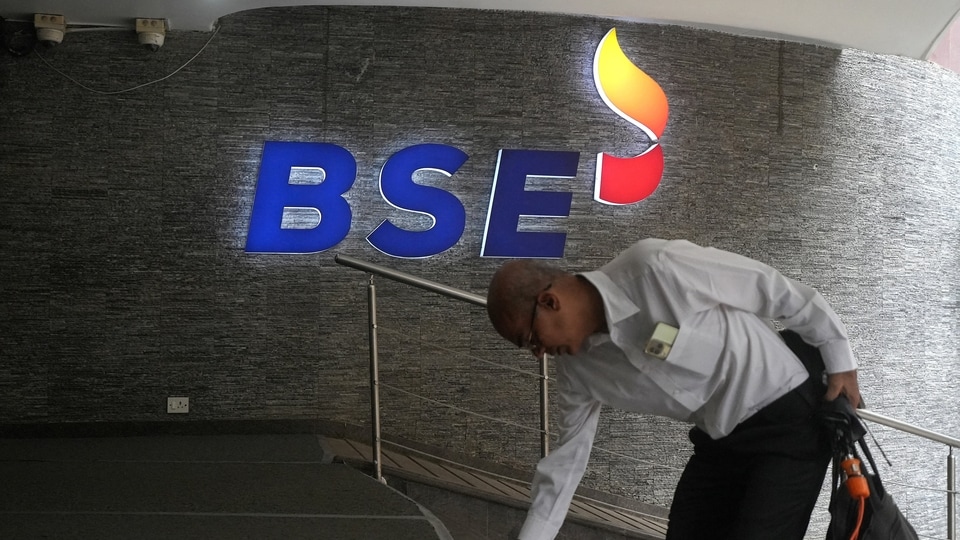
The Sensex was down 1,002 points, while the Nifty had declined around 300 points at 1:48 pm. The sharp selloff came after both benchmarks recorded their strongest weekly performances in around six months last week, gaining approximately 3% each.
The decline also erased a significant portion of last week's gains, with investors turning cautious after assessing September-quarter earnings from major lenders, including HDFC Bank, ICICI Bank and Axis Bank.
The market downturn followed a weak opening. The Sensex had started the session at 74,594.65, down 134.62 points, or 0.18%, while the Nifty opened at 23,096.85, declining 49.30 points, or 0.21%.
According to market estimates reported on Monday, investors had lost around ₹4 lakh crore in market capitalisation as the selloff spread across benchmark and broader market indices.
Why is the stock market falling today?
Heavyweight private bank stocks drag benchmarks
Private sector banks emerged as a major source of pressure on the benchmark indices after investors assessed their September-quarter earnings.
HDFC Bank, ICICI Bank and Axis Bank were among the key drags on the Sensex, with weakness in heavyweight lenders amplifying the broader market decline.
HDFC Bank reported a second-quarter profit that narrowly missed analyst estimates, as weaker treasury income and higher provisions for bad loans offset robust lending growth. Axis Bank also reported a quarterly profit that fell short of expectations, with higher operating expenses and weaker other income weighing on its performance.
Net interest margins declined at both lenders, adding to concerns over profitability.
In early trade, private sector banks fell around 1.7%, with HDFC Bank and Axis Bank declining 2% and 4.1%, respectively, as of 10:05 am.
ICICI Bank, meanwhile, reported a better-than-expected September-quarter profit, supported by stronger loan growth and lower provisions for bad loans. However, the positive results were not enough to offset broader weakness in private banking stocks.
Public sector banks bucked the trend, rising around 2.2% in early trade. Punjab National Bank led the gains, surging 5.4% after reporting an expansion in its net interest margin.
2. Crude oil prices above $108 weigh on sentiment
Elevated crude oil prices remained another major concern for investors, with Brent crude trading at around $108-$109 a barrel during Monday's session.
Although prices eased from the $110-a-barrel level reached on Friday, persistent geopolitical tensions in the Middle East continued to support oil prices. Concerns over potential supply disruptions around the Strait of Hormuz, a key route for global energy shipments, have added to market uncertainty.
US President Donald Trump's move to waive sanctions and tariffs on Russia could potentially increase Russian fuel exports and ease supply concerns. However, persistent tensions in the Middle East have continued to offset some of that relief.
For India, which imports a substantial share of its crude oil requirements, elevated prices can increase the import bill, put pressure on the rupee and add to inflation risks. Higher energy costs can also squeeze corporate margins and complicate the outlook for economic growth.
3. Foreign investor outflows and liquidity concerns
Foreign portfolio investor (FPI) selling has been another source of pressure on Indian equities. Persistent withdrawals by overseas investors have weighed on market sentiment, particularly amid elevated oil prices, a stronger US dollar and rising US bond yields.
Foreign portfolio investors turned net buyers on Friday after 15 consecutive sessions of selling, purchasing Indian shares worth ₹11.66 billion, according to provisional exchange data. However, domestic institutional investors recorded net outflows of ₹36.61 billion on the same day.
The return of foreign buying in a single session has not been enough to eliminate concerns about broader capital flows.
Investors are also assessing the potential liquidity impact of Jio Platforms' initial public offering, which is expected to open for subscription this week. The offering, linked to billionaire Mukesh Ambani's Reliance Industries, could draw substantial investor funds and affect liquidity available for other stocks.
Broader markets also under pressure
The weakness was not confined to heavyweight stocks. In early trade, the Nifty Midcap 100 and Nifty Smallcap 100 indices also declined, reflecting cautious sentiment across the market.
The Nifty's broader mid-cap and small-cap segments fell around 0.2% and 0.5%, respectively, as of 10:05 am.
Among individual stocks, Urban Company fell 7.4% after the online home services provider reported widening quarterly losses.
What should investors watch next?
The near-term direction of the market will depend on corporate earnings, movements in crude oil prices and foreign investor flows.
Banking stocks are likely to remain in focus as investors assess lenders' net interest margins, loan growth, asset quality and management commentary following their September-quarter results.
Developments in the Middle East will also be important. A sustained rise in crude oil prices could increase inflationary pressures, widen India's import bill and weigh on the rupee, potentially limiting the scope for a recovery in equities.
Investors will also monitor the upcoming Jio Platforms IPO for its potential impact on market liquidity.


