E-Paper



The pieces came together: Jennifer Bailey on why Apple Pay lands in India now
With Axis Bank as its first partner, Apple is targeting increasingly frequent card usage while trying to change payments habit built around higher UPI volumes

 Prefer HTon Google


The journey took a decade, but Apple’s digital wallet contactless payments service, Apple Pay, is finally launching in India. As an extension of the Wallet app, iPhone and Apple Watch users will be able to add credit cards to make contactless payments at stores and on websites that enable Apple Pay as a payment option during checkout.
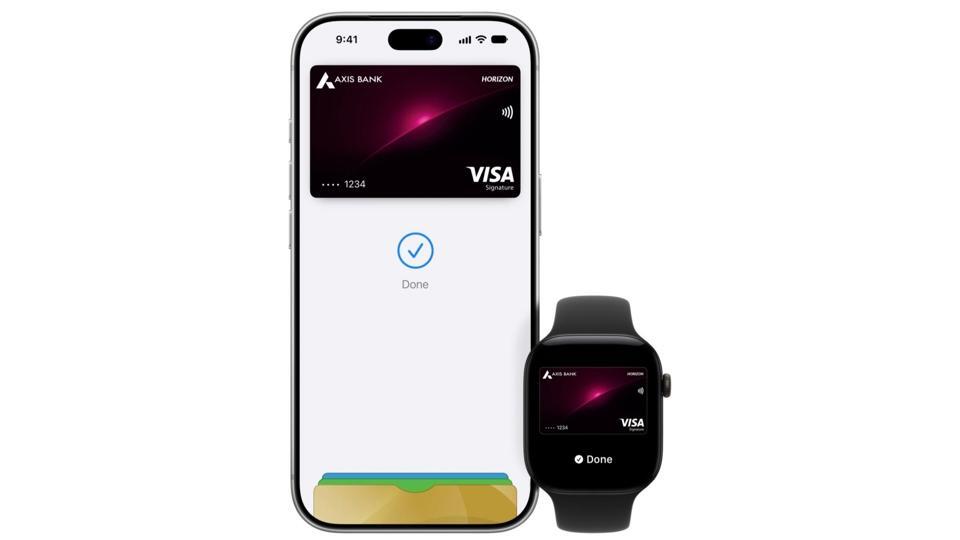
Apple Pay begins its journey in India with Axis Bank, and will initially support the latter’s credit cards issued on the Mastercard and Visa networks. Apple wants to focus on the growing credit card payments share, focusing on online purchases across devices, as well as offline point of sale (PoS) terminal transactions.
Jennifer Bailey, Apple’s vice president of Apple Pay and Apple Wallet tells HT that the right pieces must be in place for Apple Pay to launch in any market globally, including the regulatory framework, payments infrastructure and partners who can deliver the experience for customers.
“A particularly important development was the RBI’s move to support biometric authentication for card payments, which enables customers to authenticate Apple Pay transactions using Face ID or Touch ID. At the same time, we now have a tremendous partner in Axis Bank, alongside Visa and Mastercard, to bring Apple Pay to customers in India. So it’s really about the pieces coming together,” Bailey says.
In June 2022, as part of the Reserve Bank of India (RBI) Payments Vision 2025 policy, risk-based authentication mechanisms were first mooted. In February 2024, RBI formally announced its intention to adopt a framework for authenticating digital payment transactions, followed by the first draft framework in July. The final Reserve Bank of India (Authentication Mechanisms for Digital Payment Transactions) Directions, 2025 were announced in September last year, with compliance fully implemented and effective across the ecosystem from April this year.
The launch of Apple Pay in India unlocks contactless payments for iPhone users, something Samsung Wallet and Google Pay offered on Android phones. The competition landscape also includes payment apps such as PhonePe and CRED, which also offer contactless payments on Android devices using NFC, or near-field communication chips. These include UPI QR code payments as well as tap-to-pay for credit cards.
It remains to be seen whether Apple Pay’s arrival in India unlocks the NFC contactless payments option on the iPhone for other payments apps too. Apple confirms that support for Apple Pay is coming soon to Mac computing devices, for transactions on websites.
Customers will have the option to add their Axis Bank credit cards to Apple Pay either via the Axis Bank app or directly into the Apple Wallet app. On the web, Apple Pay will allow payments for online shipping without having to create accounts on websites or type in payment information such as card details every time. In stores, Apple says double-clicking the side button (or home button) of the iPhone or Apple Watch will authenticate with Face ID, Touch ID or device passcode, after which the user holds the top of the iPhone or the display of the Apple Watch near a contactless reader to make the payment.
Payments made using Apple Pay will earn rewards and cashbacks according to that specific card’s structure and category exclusions.
More credit card issuing banks are expected to add support for Apple Pay in the coming weeks. Neither Apple nor HDFC Bank has confirmed a roadmap, but the latter’s latest contactless payments guidelines on the bank website do mention Apple Pay alongside Google Pay and Samsung Pay.
Apple Wallet remains the core of the experience, with the new contactless payments feature enabled alongside an ability to add cards to the account. The Wallet app, already available in India, can be used to store loyalty cards, boarding passes for travel, movie or concert tickets and digital keys, for instance. Bailey says Apple’s vision for the Wallet app is to replace the physical wallet, with ease of use, security and privacy as key tenets.
“I don’t think it’s one thing that will fully trigger this shift, though. It’s about the totality of the offering, and the value and ease it brings to users’ lives. Which is why we’ve been working so hard to bring these various features of Wallet to more users across the globe, and introduce new ones, like Create A Pass, which we just introduced with iOS 27. And it’s why we’re so excited to be bringing Apple Pay to India now, which marks a really significant leap forward for bringing this broader vision for Wallet to users in India,” she says, detailing Apple’s intent.
Apple Pay’s security envelope
Apple Pay takes advantage of an iPhone’s hardware as well as software, particularly from the perspective of keeping financial information and transactions secure. Each transaction must be confirmed by Face ID, Touch ID or passcode, depending on device support.
“Security and privacy are at the core of Apple Pay. We were very intentional in designing Apple Pay around the security built into our hardware and software when we introduced it more than 10 years ago — and those protections start before a customer ever makes a payment,” Bailey explains.
When customers use a credit card with Apple Pay, the actual card numbers are never saved on the device or on Apple’s servers. Instead, a unique device account number is assigned, encrypted, and securely stored in the iPhone’s Secure Element chip. Every time a Mastercard or Visa card is added to Apple Pay, the service connects with the card issuing networks to create a unique device-based token, using global data organisation standards.
“When a customer adds a card to Apple Pay, their bank authenticates them—including requesting additional verification if needed—and determines whether to approve the card for Apple Pay. Once approved, a unique Device Account Number is created, encrypted and securely stored on their device. This means the customer’s actual card number is never shared with the merchant when they pay,” she says.
The created token is then stored on the iPhone—this is called a unique device account number. The actual card number is never saved on the device. At the time of making a payment, this number along with any other encryption packages (also called applets) required by the card networks (in this case Visa and Mastercard) is sent to them with a one-time code, to process and send to the merchant. This process is repeated for each transaction.
A Secure Element chip is central to Apple Pay’s security architecture. For a contactless payment, the Secure Element supplies two key pieces of information—the device account number and a dynamic, transaction-specific security code. The actual credit-card number is never transmitted to the merchant.
Apple has no visibility into what a customer has purchased or paid for, meaning any spend tracking or categorisation information will be processed on-device. Apple does not retain transaction information that can be tied back to the user, and all transactions stay between the user, the merchant, and their bank or card issuer.
Apple Pay is already available in more than 90 countries across 11,000 bank and network partners globally. The company will work closely with bank partners in India to identify and mitigate fraud.
Every transaction done with Apple Pay will comply with the Reserve Bank of India (RBI) regulations for AFA, or Additional Factor of Authentication, for card payments. In the case of Apple Pay, while the card details are saved as a unique encrypted number, the biometric confirmation or device pin becomes the second authentication method.
Regarding how many cards can be added to each Apple Wallet on an iPhone, the number will range around 25 cards—factors that will decide this include how Mastercard or Visa compress the encrypted packages on the device.
In a potential edge case where a user has two iPhones signed in with the same Apple account, each card added to the Apple Pay service will generate a unique device account number on each iPhone—a bank and card networks will work with two unique instances of a specific card, with different tokens.
India’s payments landscape, and customer behaviour
In August, Reserve Bank of India (RBI) data indicates that India recorded 632.45 million credit-card payment transactions, valued at ₹2.02 lakh crore worth of spending. The latter saw a 5.8% growth from the same period in 2025, while transaction volume in the same period increased by 28.1% (from 493.58 million).
Between January and August this year, there were 4.585 billion credit-card payment transactions, compared with 3.643 billion in the same period last year—that’s a 26% growth in transaction volume.
Interestingly, the approximate value per transaction has reduced in this time, from ₹3,870 to ₹3,194, a reduction of 17.5%. This means cardholders are using their credit cards more frequently, including for smaller ticket transactions. This penetration and usage momentum would be a positive for Apple Pay, as it begins to find traction.
Official data also pegs Axis Bank as having the fourth biggest cards outstanding share (16.9 million cards outstanding, 13.1% share), behind HDFC Bank (27.10m and 21.85%), SBI Card (22.96m and 18.51%) and ICICI Bank (19.83m and 15.99%).
Axis Bank accounts for roughly 11–12% of credit-card spending in India. The bank reported a 12.1% share of total credit card spends in the country in Q1 2026, based on RBI data. In Q4 25, Axis Bank’s spend share was 11.1%, while it was 11.5% a quarter prior.
In July, credit bureau TransUnion CIBIL’s Beyond the Swipe 2026 research indicated that India has 10.7 crore active credit cards, up from 2.1 crore in 2016.
With the Secure Element chip as a key element, Apple Pay support for payments globally goes as far back as the iPhone XR launched in 2018, and the Apple Watch Series 6 or later. For the Apple Watch to be used with Apple Pay, it must be paired with an Apple Pay compatible iPhone.
A few weeks ago, Apple’s payments services global expansion covered Argentina, Colombia, Costa Rica, the Dominican Republic, Guatemala, Honduras, Panama, and Peru with the Tap to Pay on iPhone functionality allowing merchants to accept contactless payments without the need for a separate payment terminal.
A challenge that Apple will find unique to India, is the tap-to-pay habit, built on the UPI or unified payments interface infrastructure. In August, compared with 632.45 million transactions on credit cards valued at ₹2.02 lakh crore, UPI clocked 24.509 billion transactions valued at ₹29.82 lakh crore—UPI is approximately 39 times the size of the credit card space in terms of transaction volume, and around 15 times more in terms of value of total payments made.
However, the silver lining is the ticket size. Credit card transactions average to around ₹3,200 per transaction, which is significantly higher than the average of ₹1,217 per UPI transaction.
Bailey notes Apple has faced similar competition from QR code-based payments in some other markets as well. “Which is why we work really closely with our bank and network partners to ready the payments infrastructure for when we bring Apple Pay to the market, from educating and enabling merchants to accept NFC payments, to working closely together to drive awareness amongst our shared customers,” she says.
There is a belief that it is a steady process to change a broad behaviour among customers. “We know behavioural shifts take time, but we continuously see that once people try Apple Pay and experience the magical moment when their payment is made with such ease, they quickly become regular users,” she says. Bailey is very clear that for Apple Pay to succeed in India, the troika of a seamless user experience, bank partners and card networks must all work in sync.