
 E-Paper



US over Germany: Tesla priority in battery production after Biden's tax breaks
Tesla has been trying for years to build its own energy-dense batteries and struggled to build cells in high volume. Last month, the company unveiled plans for a 100 gigawatt-hour cell factory in Nevada — a site large enough to supply some 1.5 million light duty vehicles a year.

 Prefer HTon Google


Tesla Inc. is prioritizing battery-cell production in the US over Germany because of manufacturing tax breaks included in President Joe Biden’s Inflation Reduction Act. (ALSO READ: 'It's a big deal': Joe Biden's Twitter praise for this Tesla plan of Elon Musk)
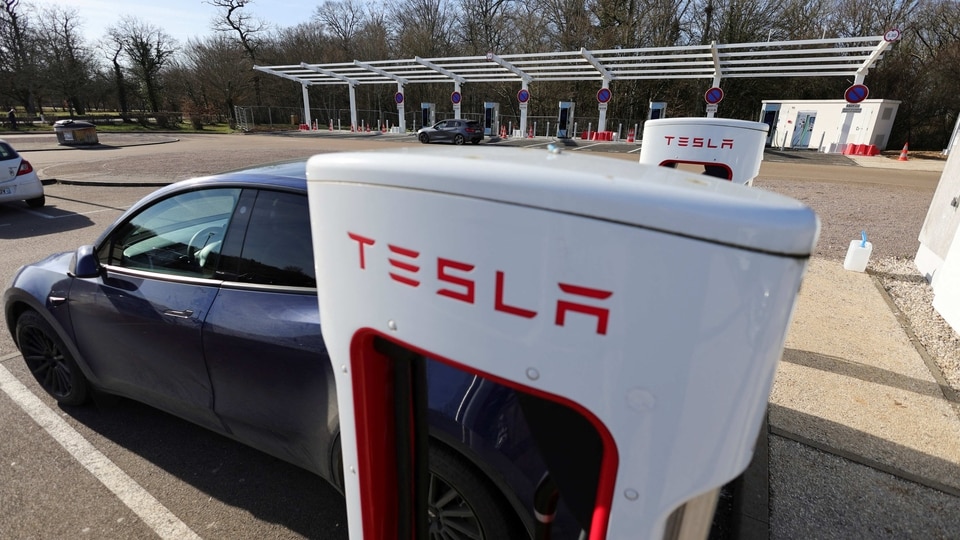
While Tesla has started assembling battery systems and is preparing to produce individual components such as electrodes at its factory in Gruenheide, outside Berlin, its focus for cell manufacturing currently is in the US because of tax incentives there, a company spokeswoman said Wednesday by email.
The IRA’s allure has fuelled concerns that Europe will fall behind in the race to attract production of EV components. Executives from Volkswagen AG, truckmaker Volvo AB and battery maker Northvolt AB have said the law’s roughly $370 billion in green-tech aid are impossible to ignore. Northvolt, which may delay a cell plant in Germany in favor of faster moves in the US, has highlighted that the IRA’s tax credits cover about 30% of cell manufacturers’ operating costs.
The move casts doubt on a prediction Tesla Chief Executive Officer Elon Musk made in late 2020 that the facility outside Berlin would become the largest EV battery plant in the world. The decision to prioritize the US won’t mean the German region will get fewer new jobs than previously hoped, according to a statement from Brandenburg’s economy ministry. (ALSO READ: Tesla driver dies after fire truck crash in California: Report)
“Tesla is currently re-prioritizing individual process steps in the plants,” the ministry said. “The Gruenheide site, including battery cell production, will be preserved in its structure and jobs.”
Tesla has been trying for years to build its own energy-dense batteries and struggled to build cells in high volume. Last month, the company unveiled plans for a 100 gigawatt-hour cell factory in Nevada — a site large enough to supply some 1.5 million light duty vehicles a year.


