E-Paper



MLA Pratima Bagri’s SC status upheld by committee, ‘Rajput’ allegation rejected
Bagri, 37, state minister for urban development and housing, was elected in 2023 from Raigaon, an SC-reserved seat.

 Prefer HTon Google


A caste scrutiny committee (CSC) has said Pratima Bagri, BJP MLA and state minister, belongs to the Scheduled Caste (SC) Bagri community, dismissing a Congress leader’s allegation that she is a Rajput.
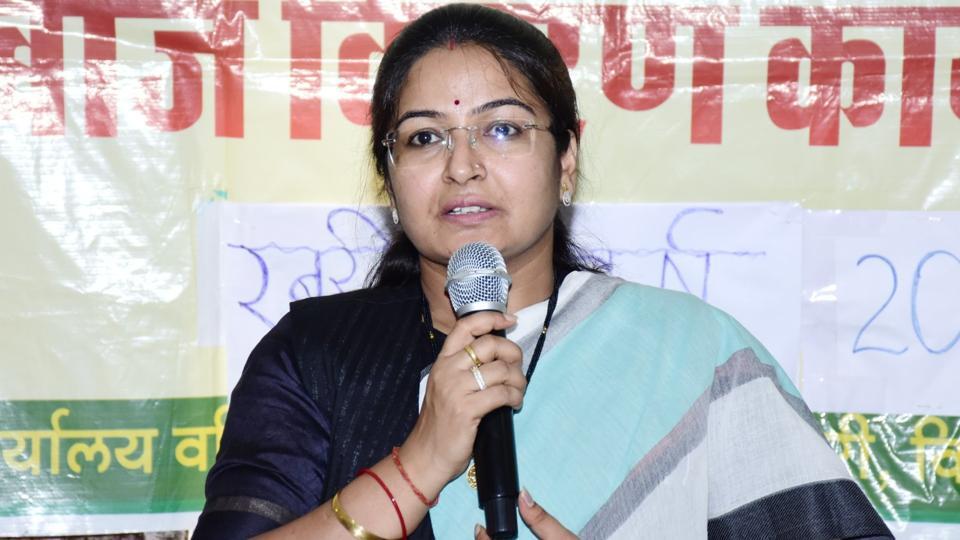
Bagri, 37, state minister for urban development and housing, was elected in 2023 from Raigaon, an SC-reserved seat, and later inducted into the cabinet.
The committee led by SC welfare department principal secretary Gulshan Bamra and three other officers scrutinised relevant certificates Bagri, 37, submitted before passing the order. The controversy began after Pradeep Ahirwar, the Congress SC wing state president, filed a petition in the Madhya Pradesh High Court on March 7, accusing Bagri and her family of fraudulently obtaining SC certificates despite being from the Rajput community.
The committee’s findings noted that Bagri’s father, Jaypratap Singh Bagri, was issued an SC Bagri caste certificate by the SDO, Nagod (Satna) in 2003–04, followed by a digitised certificate in 2018. Bagri herself was issued a similar certificate in 2003–04.
Citing anthropological studies, the order said, “As per the MP State SC Research Institute’s comparative study (2002–03), Bagri/Bagadi SCs do not have roti-beti relations with Brahmin, Rajput, Thakur, Patel, Jain etc. Bagri caste is not treated with Rajput caste for roti-beti.” The commonly sued ‘roti-beti’ phrase indicates close ties between different castes.
The committee further referred to government notifications: while Bagri caste was not listed in the 1950 SC gazette, it was included in the 1956 notification for several districts of Madhya Bharat. In 2007, the Indian government clarified that Bagri/Bagadi (excluding Rajput/Thakur sub-castes) would be recognised as SC across Madhya Pradesh.
The committee concluded that Congress leader Ahirwar failed to provide conclusive proof. “After examining facts and records, the caste certificates issued to Pratima Singh Bagri are found valid. The complaint is rejected and the case disposed of,” the order said.
Supporting evidence included studies by the Tribal Research and Training Institute, Bhopal (2002–03), which found the Bagri caste concentrated in Satna and surrounding districts, unlike Mahakoshal and Bundelkhand where Bagri was generally not recognized as SC.
The committee also verified ancestral, revenue, and educational records, confirming the family’s residence in Satna’s Banua and later Hardaula Majhgaon villages.
The petition was heard by a division bench of Justices Avanendra Kumar Singh and Vivek Agrawal on April 24, which directed the committee to decide within 60 days. The court said, “After verifying the correctness of the certificate, the Committee shall pass an appropriate order within sixty days. If the Committee fails to do so by June 30, 2026, the petitioner (Ahirwar) may revive the writ petition.”