E-Paper



No proposal on hijab, says senior MP minister after colleague ignites a row
MP home minister Narottam Mishra’s clarification comes a day after school education minister Inder Singh Parmar said the hijab wasn’t a part of school uniform and should be banned

 Prefer HTon Google


BHOPAL: There is no controversy over the hijab, a headscarf worn by Muslim women, in Madhya Pradesh and there is no proposal in this connection before the state government, MP home minister Narottam Mishra said on Wednesday, a day after the state’s school education minister Inder Singh Parmar called for a ban on hijab from the state’s schools.
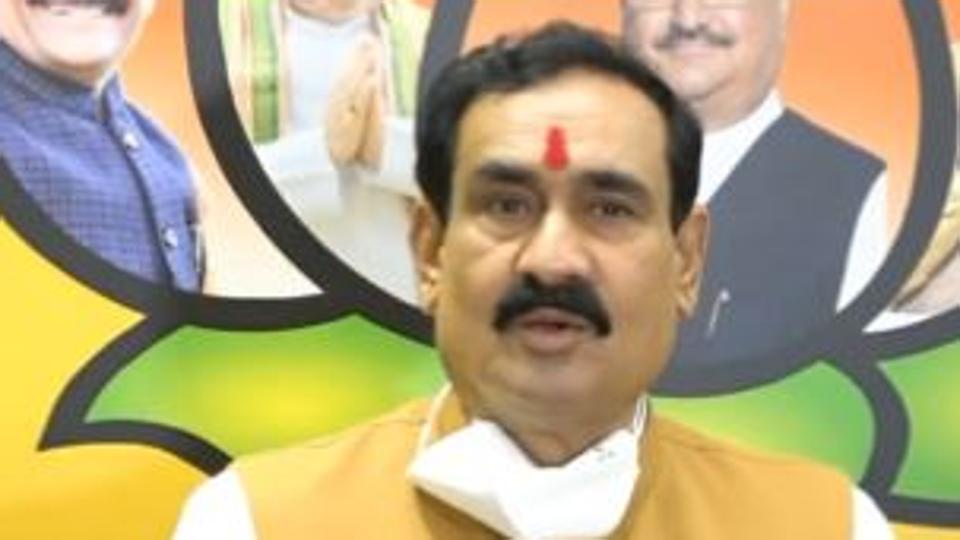
Mishra’s clarification is seen as an effort by the Bharatiya Janata Party (BJP) government in Madhya Pradesh to play down Parmar’s comments which appeared to suggest that MP intended to follow in the footsteps of the Karnataka government on hijab.
“There is no controversy in Madhya Pradesh regarding hijab. There is no proposal under consideration with the government... so there should be no confusion. In Karnataka also, this entire matter is pending in the high court,” said Mishra, a six-time lawmaker, a reference to the plea filed by two students of Udupi’s pre-university government college against the state government’s directive prohibiting them from wearing a hijab to their classes.
On Wednesday, Parmar also toned down his statement, stressing that he had only spoken of “strictly implementing uniform dress code and nothing else”.
On Tuesday, Parmar said: “MP government will apply a strict dress code for a sense of equality and discipline among students in schools. From the next session, we will issue rules and regulations related to the uniform dress codes. Hijab is not part of the uniform and it should be banned in MP.”
The row over the hijab started at a government high school at Kundapur in Karnataka’s Udupi district, where six students wearing hijab were stopped from attending class in January.
It has since then escalated, vitiating the communal climate in several districts of Karnataka amid protests by girls wearing hijabs, students wearing saffron scarfs, and Dalit students wearing blue scarfs in solidarity with the hijab-wearing girls. On Tuesday, Karnataka chief minister Basavaraj Bommai ordered the closure of high schools and colleges across the state for three days to restore peace.
Late on Tuesday, Nobel laureate and women’s rights activist Malala Yousafzai tweeted an appeal to Indian leaders to intervene. She said refusing to allow girls to attend classes wearing hijab is “horrifying”. “Objectification of women persists — for wearing less or more. Indian leaders must stop the marginalisation of Muslim women,” she said.