
 E-Paper



Chandigarh Chord | Concrete corridors of hope: What PGIMER stands for
It is easy to celebrate an institution through its buildings, awards, research papers and distinguished alumni, but PGIMER’s real monument is less tangible: It is the confidence placed in it by millions of ordinary Indians

 Prefer HTon Google


There was a time when Chandigarh roads were quieter, roundabouts less crowded, the sectors still carried freshness of new city, and the great concrete buildings designed in spirit of modern Chandigarh stood almost like declarations of a new India. PGIMER was already beginning to acquire an identity of its own. More than six decades later, one does not simply say “PGIMER” in Chandigarh. The name carries memories.
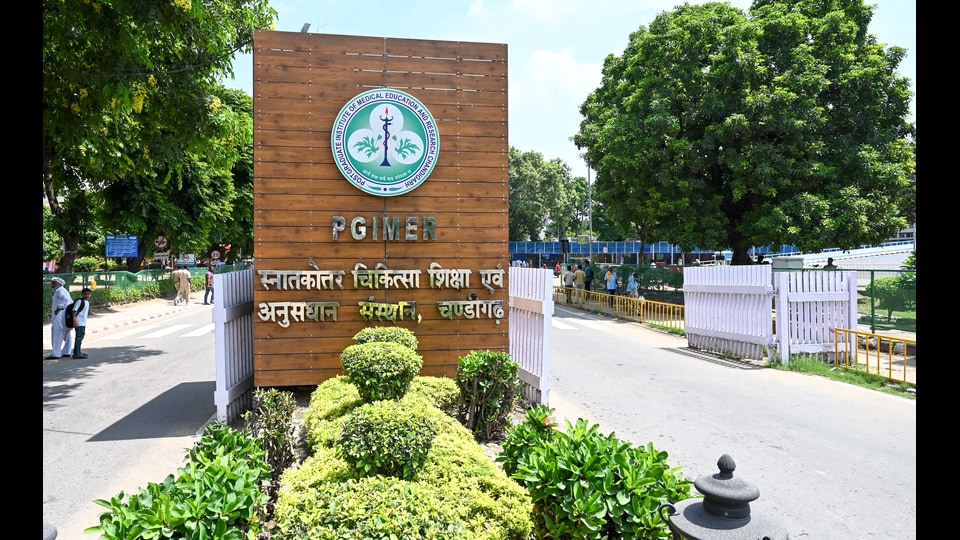
For some, it means childhood visits with parents. For others, it brings back anxious journey of taking a beloved to the hospital. For thousands of families, it is associated with a doctor who offered reassurance at difficult moments, successful operations, long nights spent waiting or news that changed everything. The architecture itself has become part of those memories. Perhaps that is how architecture becomes heritage—not simply because it is old, but because human lives accumulate around it.
PGIMER was born with an unusually ambitious purpose. It was conceived as a centre where medical education, research and patient care would reinforce one another. This vision has made the institute one of India’s foremost centres of specialised medical care and research.
Every day, patients travel hundreds of kilometres, often carrying a little more than medical records, a bag of clothes and the hope that somewhere in these buildings there may be an answer. That faith represents the greatest contribution of PGIMER. Its influence is also visible far beyond wards. Generations of doctors, surgeons, researchers and specialists trained here have taken their knowledge across the globe. Research undertaken at the institute has contributed to the advancement of medical science, while its specialised departments have become referral centres for complex and challenging cases.
Yet statistics and achievements can never completely capture what PGIMER means to ordinary people. Ask older Chandigarhites about PGIMER and the answer is often a story which forms an invisible archive of Chandigarh.
There will be a friend or relative who was treated there. A doctor’s name has not been forgotten decades later. A night when family sat together outside a ward. A morning when someone walked out carrying good news.
And perhaps most striking about PGIMER is that while the city sleeps, it does not. Late at night, when Chandigarh’s wide roads become quieter, PGIMER continues its rhythm. Emergency lights remain on. Ambulances arrive. Doctors move rapidly between departments. Nurses check on patients. Families pray and hope. Work of healing continues without regard to the clock.
It is easy to celebrate an institution through its buildings, awards, research papers and distinguished alumni. But PGIMER’s real monument is less tangible. It is the confidence placed in it by millions of ordinary Indians. For a family arriving from a distant village, PGIMER is not an architectural landmark. It is possibility. For a young doctor beginning a demanding career, it is a school. For a researcher, it is a laboratory of discovery. For Chandigarh, it’s part of the city’s identity. And for those who have spent long hours within its corridors, it’s a place where boundaries between hospital and human experience disappear.
Chandigarh itself is a city built on the idea that the future can be planned. PGIMER represents another dimension of that same optimism—the belief that knowledge, science and public institutions can improve human life.
Perhaps that is why the old concrete still feels strangely reassuring. The buildings have aged. The city has changed. Medicine has travelled from handwritten case sheets to artificial intelligence and advanced diagnostics. Yet the essential scene remains familiar: a doctor walking quickly down a corridor, a nurse attending to a patient, an anxious family waiting for news, and somewhere, another life being given a chance. More than sixty years have passed since generations have come and gone. But the lights are still on where lives the enduring story of PGIMER—not merely as a Chandigarh institution, but as an international institution built on an idea that remains as powerful today as it was at its beginning: That the finest knowledge of medicine should ultimately serve the human being who needs it most.
That may be PGIMER’s greatest legacy. And perhaps, when Chandigarh’s children of today grow old and look back at the city of their youth, they too will remember those familiar concrete buildings—not simply as a hospital, but as one of the places where Chandigarh learned what it meant to care for humanity.


