
 E-Paper



Stubble burning: Notification issued to withdraw red entries, says minister
Punjab agri minister on Sunday said that the agriculture department has issued notification, to withdraw the red entries made in the land records of farmers for stubble burning.

 Prefer HTon Google


Chandigarh The Punjab agriculture minister Kuldeep Singh Dhaliwal on Sunday said that the agriculture department has issued the notification to withdraw the red entries made in the land records of the farmers for stubble burning.
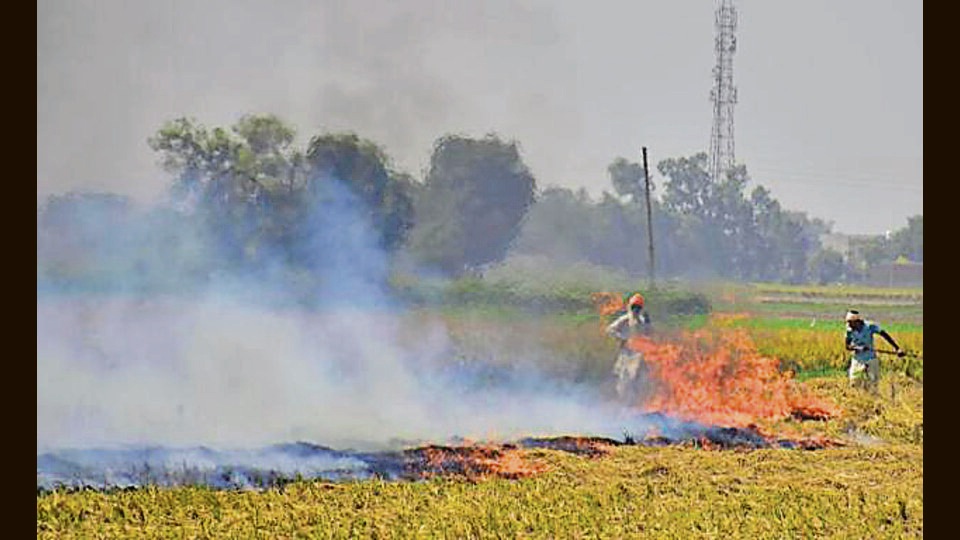
He said that the orders to make red entries against farmers in the revenue record, issued by the National Green Tribunal (NGT) in its letter on October 4, have been withdrawn. “Instructions have been issued,” he said.
Dhaliwal said that the red entry in the land record is not in the interest of the farmers. He said that due to a red entry, a farmer would have been deprived of taking loans, government facilities and subsidies etc.
The minister emphasized the need for farmers to adopt alternative methods for stubble management to support the government in making the state pollution free.
Talking about alternative methods of stubble management, the minister said that the Indian agricultural research institute has developed a radical solution for stubble burning in the form of a bio-enzyme called Pusa. He said that when sprayed, this enzyme in 20-25 days turns the stubble into compost.
The minister further said that the Punjab government has to date given 19,393 machines to the farmers on subsidy for stubble management, while in the last four years, 90,433 machines were given to the farmers. He said that a total of 1,09,815 machines are available with the farmers of the state. He said that according to the satellite information of November 26, 2022, during the years 2020, 2021 and 2022, from September 15 to November 26, 76,619, 71,122 and 49,876 cases of stubble burning have been registered, respectively. The cases this year are 30% fewer than in the last two years. He said that if the central government assists the farmers equal to the expenditure incurred on stubble management, then it was possible to get rid of this problem permanently.


