
 E-Paper



Waterbird Census conducted in 27 wetlands of Kashmir
The Asian Waterbird Census (AWC)-2026 was conducted across 27 wetlands of the Kashmir Valley to estimate the number of migratory and resident birds in the Himalayan region, officials said on Thursday.

 Prefer HTon Google


The Asian Waterbird Census (AWC)-2026 was conducted across 27 wetlands of the Kashmir Valley to estimate the number of migratory and resident birds in the Himalayan region, officials said on Thursday.
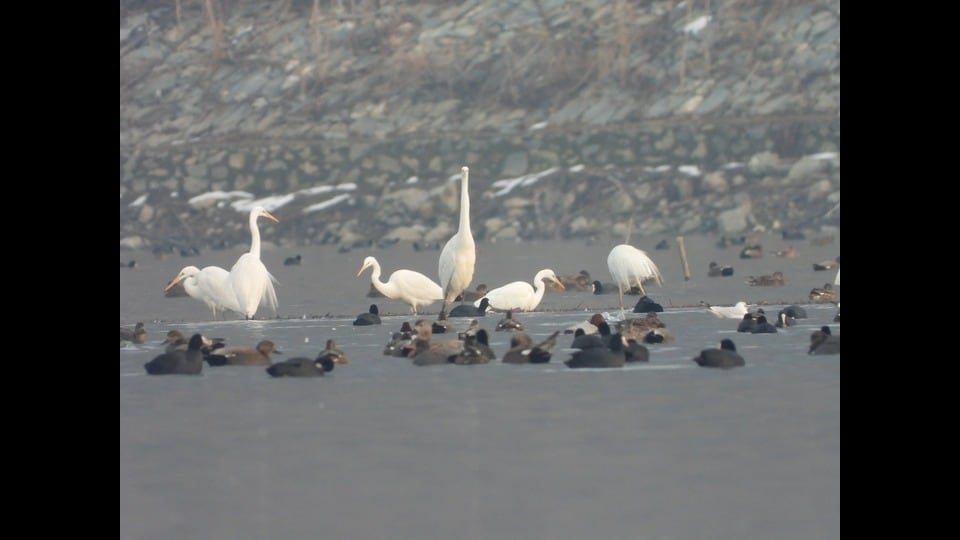
A major field-based biodiversity monitoring exercise, the census involved the services of over 350 participants including academics, experts and students who were actively involved in the field-level census, making it one of the largest participatory conservation exercises conducted in Kashmir in recent years, they said.
“The Asian Waterbird Census is not merely an exercise in counting birds, but a scientifically structured estimation process focused on population trends. These trends help assess the suitability of wetlands for migratory and resident waterbirds and serve as vital ecological indicators for sustained wetland management,” said Altaf Hussain, wildlife warden, wetlands.
Kashmir wetlands are teeming with migratory birds from Europe, Siberia and Central Asia including some species who have come for the first time.
The census was undertaken by the Department of Wildlife Protection in coordination with the Wular Conservation and Management Authority (WUCMA) and covered several ecologically significant wetlands, including Hokersar, Shalbugh, Haigam, Wular Lake, Dal Lake, Anchar Lake, Nigeen Lake, and Chatlam, among other important wetland sites.
These wetlands form a critical part of the Central Asian Flyway, serving as wintering and staging habitats for migratory waterbirds arriving from Siberia and Central Asia.
Those who were part of the census exercise included scholars and students from Sher-e-Kashmir University of Agricultural Sciences and Technology (SKUAST-Kashmir). Conservation NGOs, trained volunteers, birdwatchers, and civil-society groups also played an important role in the execution of the census.
“For the past two years, the census numbers have been hovering over 12 lakhs,” Altaf Hussain said.
Regional Wildlife warden Kashmir, Tawheed Ahmad Deva said that the early field observations were encouraging but the exact figures and final assessment will be known only after detailed compilation and analysis of data.
Manzoor Ahmad Qadri, Chief Executive Director, Wular Conservation and Management Authority, said that encouraging inputs have also been received from Wular Lake with regard to the presence of migratory waterbirds.
“While significant efforts are still required to restore the old ecological glory of Kashmir’s wetlands, the conservation and restoration interventions undertaken by the Department of Wildlife Protection and WUCMA are beginning to yield positive results,” he said.


