
 E-Paper



Delhi govt will kick off campaign to curb air pollution
The centralised system for preparing the chemical spray at Kharkhari Nahar village will be set up on October 5, while the chemicals will be produced from October 6 at 400 different camps here under the supervision of IARI scientists, who have developed the technology.


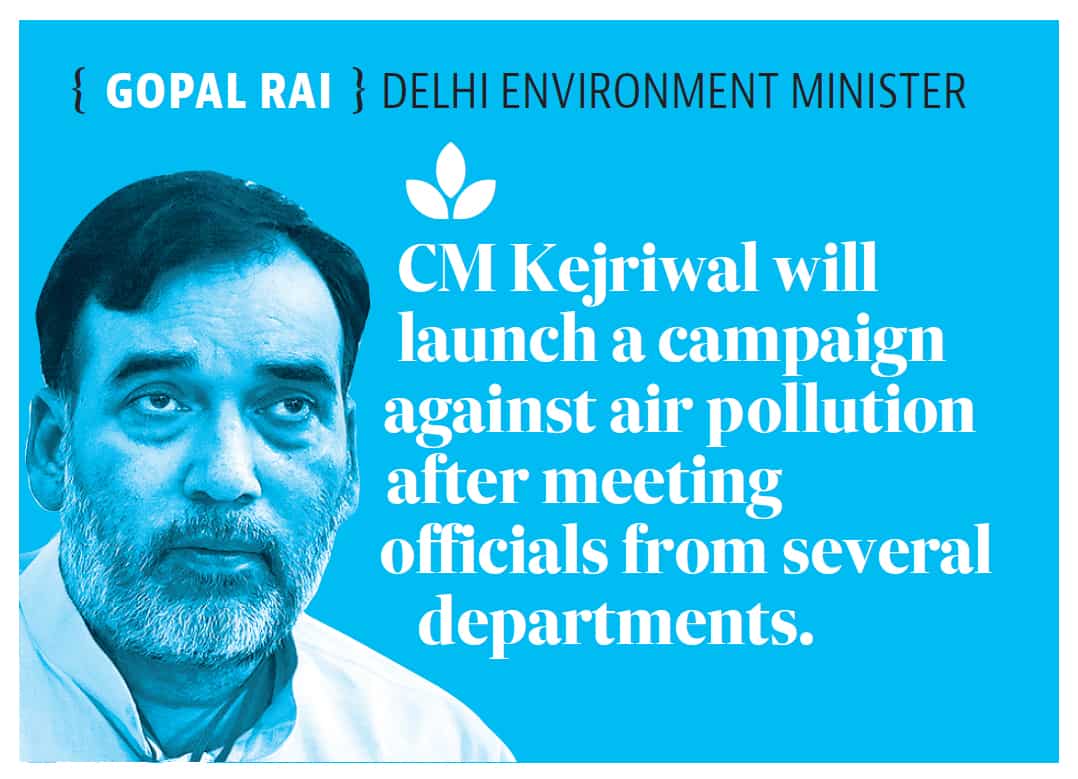
State environment minister Gopal Rai on Thursday said the government will launch a widespread campaign to curb air pollution, which peaks in the national capital during the winter, with an action plan he said that would include preparing bio-chemicals, and spraying them across 800 hectares of farmland in the rural belt of Delhi where farmers burn crop stubble.
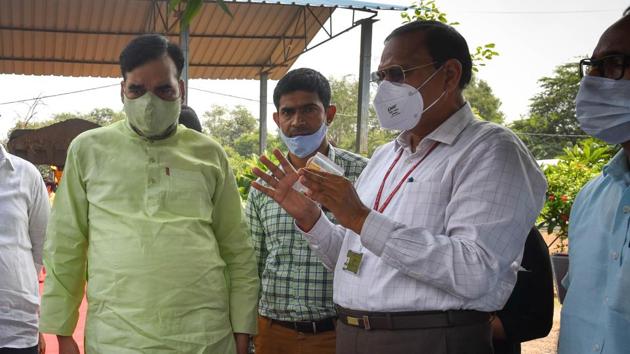
The Delhi government is going to set up a centralised system to produce biochemicals, aimed at preventing stubble burning, at Najafgarh’s Kharkhari Nahar village, under the supervision of scientists from the Indian Agricultural Research Institute (IARI), which has recently developed a low-cost solution to stop farmers from setting fire to paddy stubble.
The IARI has demonstrated this technology in Delhi, Haryana and parts of Punjab.
The solution will be sprayed at Delhi farmlands free of cost, the minister said during a press conference.
“To stop stubble burning in Delhi we have formed an action plan, under which farmers will need to fill up a form with details of their village, area under cultivation and when they want the Delhi government to spray the chemical to tackle stubble burning, “ said Rai.
Based on the form, the government will deploy officials to spray the chemical at the designated farmland. Agricultural development officers at all districts will lead the task of filling up of forms and creating awareness about the same, he added.
The centralised system for preparing the chemical spray at Kharkhari Nahar village will be set up on October 5, while the chemicals will be produced from October 6 at 400 different camps here under the supervision of IARI scientists, who have developed the technology.
“Within a few days of starting production, the first round of chemicals will be ready. Based on the demand, we will spray the chemical through tractors at the farm fields,” Rai said.
He also said that during a joint air pollution review meeting comprising Delhi, Haryana, Punjab and Rajasthan and presided over by union environment minister Prakash Javadekar on Thursday, the Delhi government has requested the states to adopt the decomposer technology to curb stubble burning, fumes from which travel to Delhi contributing to high pollution levels during winter.
“Last year there was no stubble burning inside Delhi. But in Punjab, Haryana, Rajasthan and western UP, massive stubble burning took place, contributing to 45% of overall pollution levels in Delhi. This is also the time when Diwali is celebrated, and the amalgamation of all these factors affect Delhi’s air quality,” Rai said.
He added that though the central government offers a subsidy to farmers to purchase equipment so that they don’t need to burn paddy stubble, not many farmers have been availing it because they have to spend a considerable amount on procuring it.
“In Delhi, the central government gives around ₹3 crore as subsidy to farmers so that they can buy machines and do not burn stubble. But only 80 farmers in Delhi have applied for. We will use our scheme, we will use the bio decomposer technology on 800 hectares land of Delhi for just Rs 20 lakh while the farmers will not have to pay anything,” the minister said.
Besides, he said that Delhi chief minister Arvind Kejriwal will hold a meeting with 10 government agencies including municipal corporations on October 5 where each agency will be submitting their action plan for the winter.
The minister also said that besides stubble burning and locals emissions there are various activities in the NCR towns such as Noida, Gurugram and Ghaziabad, which contribute to pollution in Delhi.
While thermal power plant in Delhi has been shut down in Delhi, 11 thermal plants at the NCR contribute to pollution in Delhi and must be replaced with better technology. “The fumes from thermal plants contribute to 9% rise in PM 10 levels while 11% increase in PM 2.5 levels, he said.
Besides, brick-kilns of outdated technology running in these towns also adds to pollution. There are around 1,640 brick kilns in UP, 161 in Haryana and 164 in Rajasthan.

Stay updated with all top Cities including, Bengaluru, Delhi, Mumbai and more across India. Stay informed on the latest happenings in World News along with Delhi Election 2025 and Delhi Election Result 2025 Live, New Delhi Election Result Live, Kalkaji Election Result Live at Hindustan Times.


