
 E-Paper



‘Regime change bid’: Delhi Police opposes bail to Umar Khalid, Sharjeel Imam in 2020 riots case
The submission comes two days after a bench of justices Aravind Kumar and NV Anjaria asked the agency to consider whether the accused could be released on bail

 Prefer HTon Google


New Delhi: The Delhi Police on Thursday strongly opposed the release of student activists Umar Khalid, Sharjeel Imam and three others booked under the Unlawful Activities (Prevention) Act (UAPA) in the 2020 Northeast Delhi riots conspiracy case, arguing before the Supreme Court that the alleged offences involved a deliberate attempt to destabilise the State and therefore warranted “jail and not bail”.
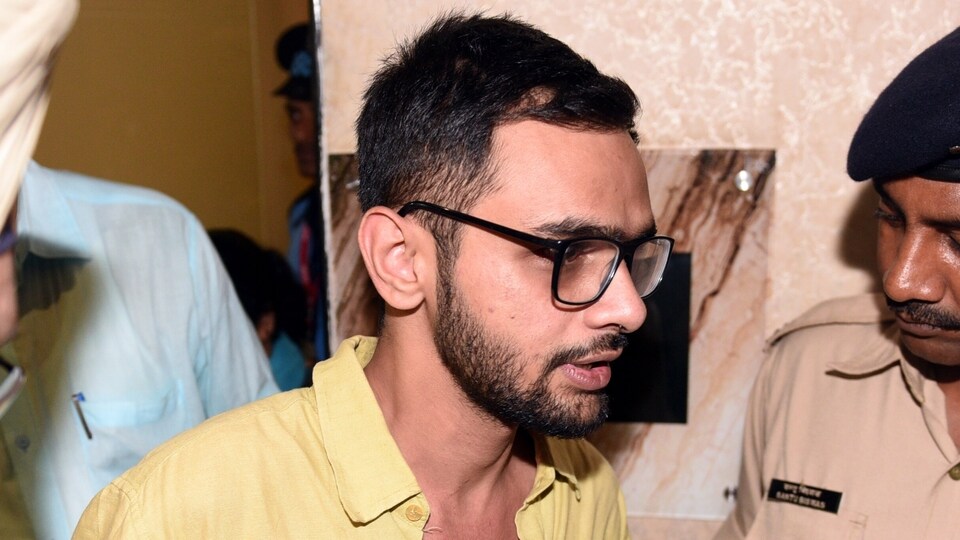
In a 177-page affidavit filed a day before the matter is scheduled to come up for hearing, the police contended that the violence that unfolded in February 2020 was not a spontaneous escalation of protests against the Citizenship (Amendment) Act (CAA), but part of a coordinated “regime change operation” executed under the guise of civil dissent. The plan, according to the prosecution, aimed to ignite communal tensions during the visit of then US President Donald Trump, so as to “internationalise” the unrest and project the Indian government as discriminatory.
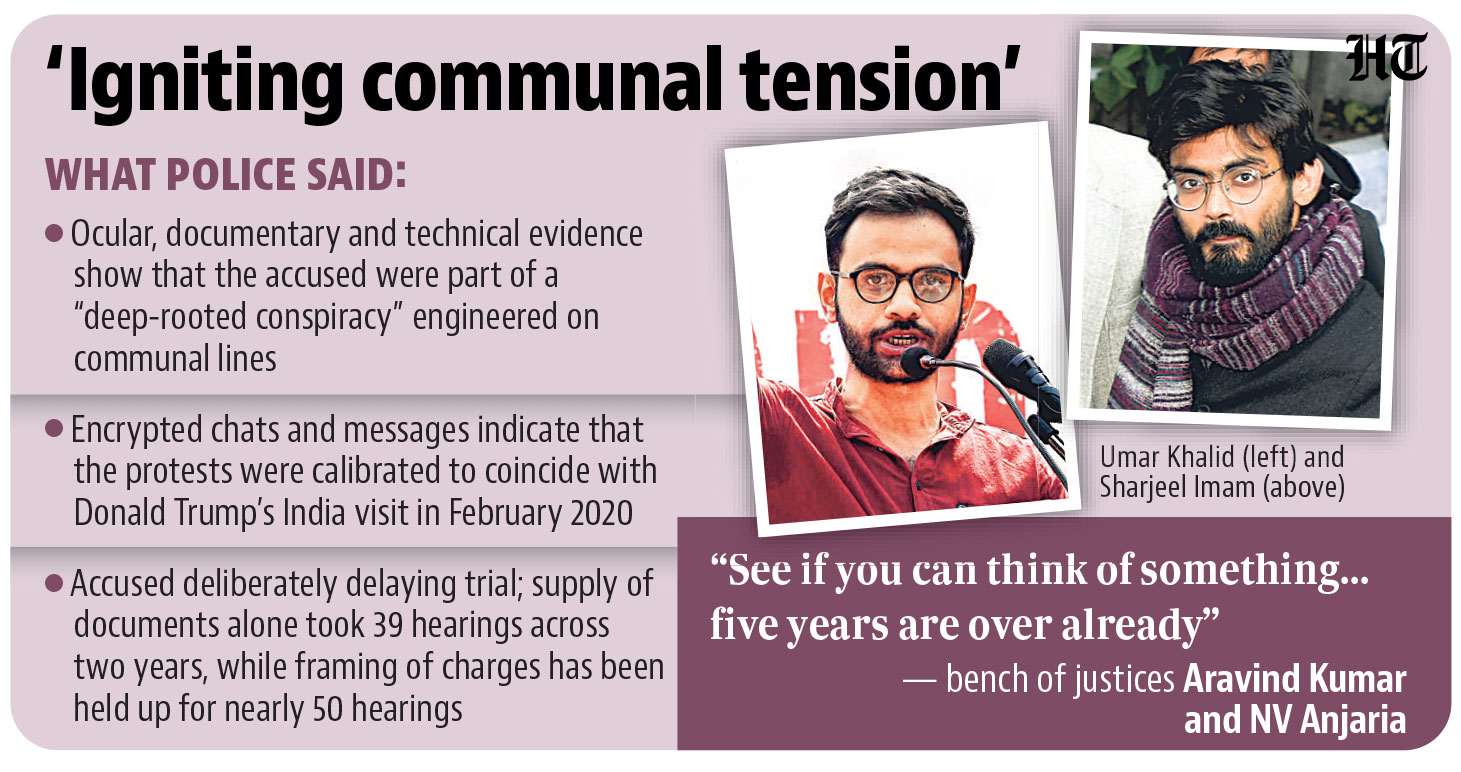
The police submission comes two days after a bench of justices Aravind Kumar and NV Anjaria asked the enforcement agency to consider whether the accused, several of whom have spent nearly five years in judicial custody as undertrials, could be released on bail.
“See if you can think of something… five years are over already,” the bench told Additional Solicitor General SV Raju on Monday, signalling that prolonged incarceration without substantive progress in trial may weigh in favour of temporary release.
Under ordinary criminal law, the principle is that bail is the rule and jail the exception; however, under UAPA, courts must first be satisfied that the allegations do not, even on a prima facie level, suggest involvement in terrorist activity before granting bail. The Delhi Police has argued that threshold is not met here.
The affidavit, filed through advocate Rajat Nair, asserts that investigators have assembled ocular, documentary and technical evidence to show that the accused were part of a “deep-rooted conspiracy” engineered on communal lines. Encrypted chats and messages, the police claim, indicate that the protests were calibrated to coincide with Trump’s India visit in February 2020 to ensure global visibility.
To strengthen its case that the violence followed an orchestrated pattern, the prosecution has pointed to incidents of unrest that broke out around the same time in parts of Uttar Pradesh, Assam, West Bengal, Karnataka, Kerala, Maharashtra and Bihar, describing it as evidence of a “pan-India plan” rather than isolated flare-ups.
The affidavit also accuses the accused of deliberately delaying the trial, asserting that proceedings for the supply of documents alone took 39 hearings across two years, while framing of charges has been held up for nearly 50 hearings. The Delhi high court, in a judgment last month, similarly remarked that the defence contributed to the delay. The prosecution has alleged that the petitioners suppressed this finding while approaching the Supreme Court.
The accused, Khalid, Imam, Meeran Haider, Gulfisha Fatima and Shifa-ur-Rehman, have maintained that they were exercising their right to peaceful protest and that the “larger conspiracy” case is an attempt to criminalise dissent. They argue that indefinite incarceration without trial amounts to punishment before conviction.
The Supreme Court is expected to examine both the question of delay and the legal threshold under UAPA, making Friday’s hearing significant for the trajectory of the case.
The accused have assailed the Delhi high court’s September 2 order, denying them bail. The high court had described their roles in the alleged conspiracy as “prima facie grave”, holding that the evidence pointed to a coordinated plan behind the riots that left 53 people dead and hundreds injured in February 2020.
The high court had observed that both Khalid and Imam were among the first to mobilise protests against the Citizenship Amendment Act (CAA) in December 2019 through speeches, pamphlets and WhatsApp groups, which, according to investigators, later morphed into a conspiracy to trigger violence. It ruled that their absence from the actual riot sites did not exonerate them, as the alleged planning preceded the violence. The Delhi Police, represented by Solicitor General Tushar Mehta and special public prosecutor Amit Prasad, had termed them “intellectual architects” of the conspiracy.
The accused, however, have consistently maintained that they were exercising their constitutional right to protest and had no role in fomenting violence. They have argued that their prolonged incarceration amounts to punishment without trial, with multiple supplementary charge sheets filed and dozens of witnesses still to be examined. They have also sought parity with student activists Natasha Narwal, Devangana Kalita and Asif Iqbal Tanha, who were granted bail by the Delhi high court in 2021.
Imam has been in custody since January 2020, while Khalid was arrested in September 2020. Other co-accused have spent comparable periods behind bars.

Stay updated with all top Cities including, Bengaluru, Delhi, Mumbai and more across India. Stay informed on the latest happenings in World News along with Delhi Election 2025 and Delhi Election Result 2025 Live, New Delhi Election Result Live, Kalkaji Election Result Live at Hindustan Times.


