
 E-Paper



Centre clears restoration of James Skinner’s crumbling Delhi haveli at Kashmere Gate
The restored complex will house a cafe, a public library, an exhibition gallery, a co-working space, and a landscaped courtyard.

 Prefer HTon Google


Hidden inside the complex housing the Municipal Corporation of Delhi (MCD)’s zonal office in Kashmere Gate lies a piece of Delhi’s layered history – a crumbling haveli, a circular baradari, and walls that have witnessed the city’s transformation over two centuries. For years, the structure – the last remaining fragments of what was once the palatial home of James Skinner, a flamboyant Anglo-Indian soldier of fortune – has served in various forms, it was from where Hindu College operated between 1908 and 1953.
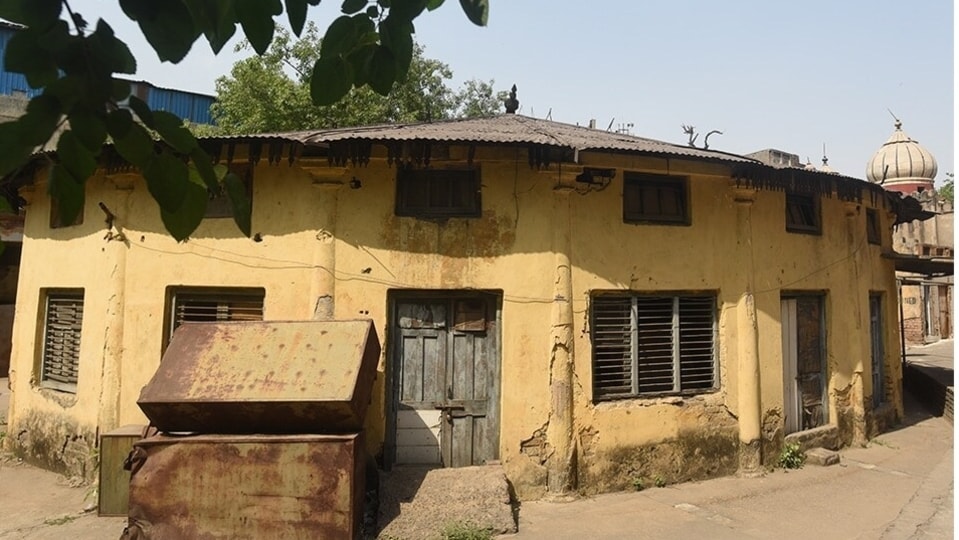
But now, after years of neglect, the central government’s Heritage Conservation Committee (HCC) has approved a proposal for its conservation, according to civic officials aware of the matter.
A senior MCD official said that the conservation process has now moved a step closer to fruition.
“HCC has approved the revised proposal. It takes the process of conservation of the buildings a step forward. The concept plan and rejuvenation proposal has been finalised,” official said.
The plan is ambitious: a full-scale restoration of the remaining structures to serve as a memorial marking the 125th anniversary of the college’s founding.
The restored complex will house a café, a public library, an exhibition gallery, a co-working space, and a landscaped courtyard. The project is to be funded entirely by alumni contributions.
Ravi Burman, president of the Hindu College Old Students Association, said the last hurdle is now cleared. “HCC has made minor changes to our proposals regarding uniform usage of the roof structure. Once the formal letter comes from HCC to MCD, we will start the work.”
Also Read: Reviving Skinner’s 200-year-old haveli in Delhi
The restoration, Burman said, will take at least 1.5 to 2 years.
“It will be a living museum which will keep the history of the college alive while also providing space for the community. This is where people associated with the freedom struggle came and the college shaped up to the institution it is now. We will ensure that it is best utilised and can become a self-sustaining place.”
The structure’s storeyed history
For over two centuries, this site has been intertwined with Delhi’s history. In the early 1820s, Colonel James Skinner acquired a five-acre estate near Kashmere Gate.
Born in 1778 to a Scottish father and an Indian Rajput mother, Skinner straddled the worlds of the East India Company and the Maratha Empire. He raised the legendary 1st and 3rd Skinner’s Horse cavalry regiments, earning him the nickname “father of the Indian cavalry.”
His mansion, featured gardens, a tank, and a circular baradari – an open pavilion with arches and a sloping roof where Skinner received visitors in a manner befitting a princely court.
In 1836, he commissioned St James’ Church, Delhi’s oldest church still in use, where Skinner himself lies buried.
After his death in 1841, the estate remained in the Skinner family for over 50 years before being acquired by Rai Bahadur Sultan Singh, treasurer of the Imperial Bank of India, toward the end of the 19th century. In 1899, Hindu College was established at Kinari Bazar in Chandni Chowk.
Within a few years, space constraints forced a shift, and in 1908, the college moved into Skinner’s haveli, operating there until 1953.
Old alumni remember heated student parliaments and cultural events held in the central courtyard – a tradition now set to be revived.
After the college moved to Delhi University’s North Campus, the haveli fell into disuse, at times housing a court and eventually being absorbed into MCD’s zonal offices.
The surviving structures are classified into two categories: the circular baradari, designated as a Grade-2 heritage structure, and a colonnaded wing, listed under Grade-3. As per the revival plan, the restored baradari will serve as a living exhibition and gallery space dedicated to the Hindu College community, also showcasing the history of Skinner.


Stay updated with all top Cities including, Bengaluru, Delhi, Mumbai and more across India. Stay informed on the latest happenings in World News along with Delhi Election 2025 and Delhi Election Result 2025 Live, New Delhi Election Result Live, Kalkaji Election Result Live at Hindustan Times.


