
 E-Paper


‘Dead fish’ in Yamuna spark row between BJP and AAP
Delhi minister Parvesh Verma accused unidentified people of dumping dead fish into the Yamuna to create panic before Chhath and said an FIR would be filed.

 Prefer HTon Google


A political confrontation has erupted between between the Bharatiya Janata Party (BJP)-led Delhi government and the Aam Aadmi Party (AAP) over the alleged “deaths of thousands of fish” in the Yamuna, with the two sides trading allegations over pollution in the river days before the Chhath festival.
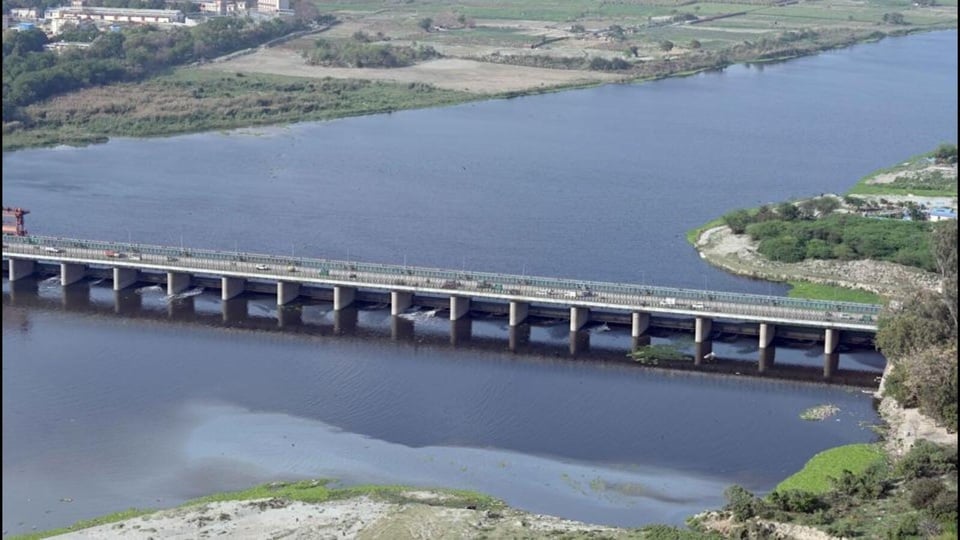
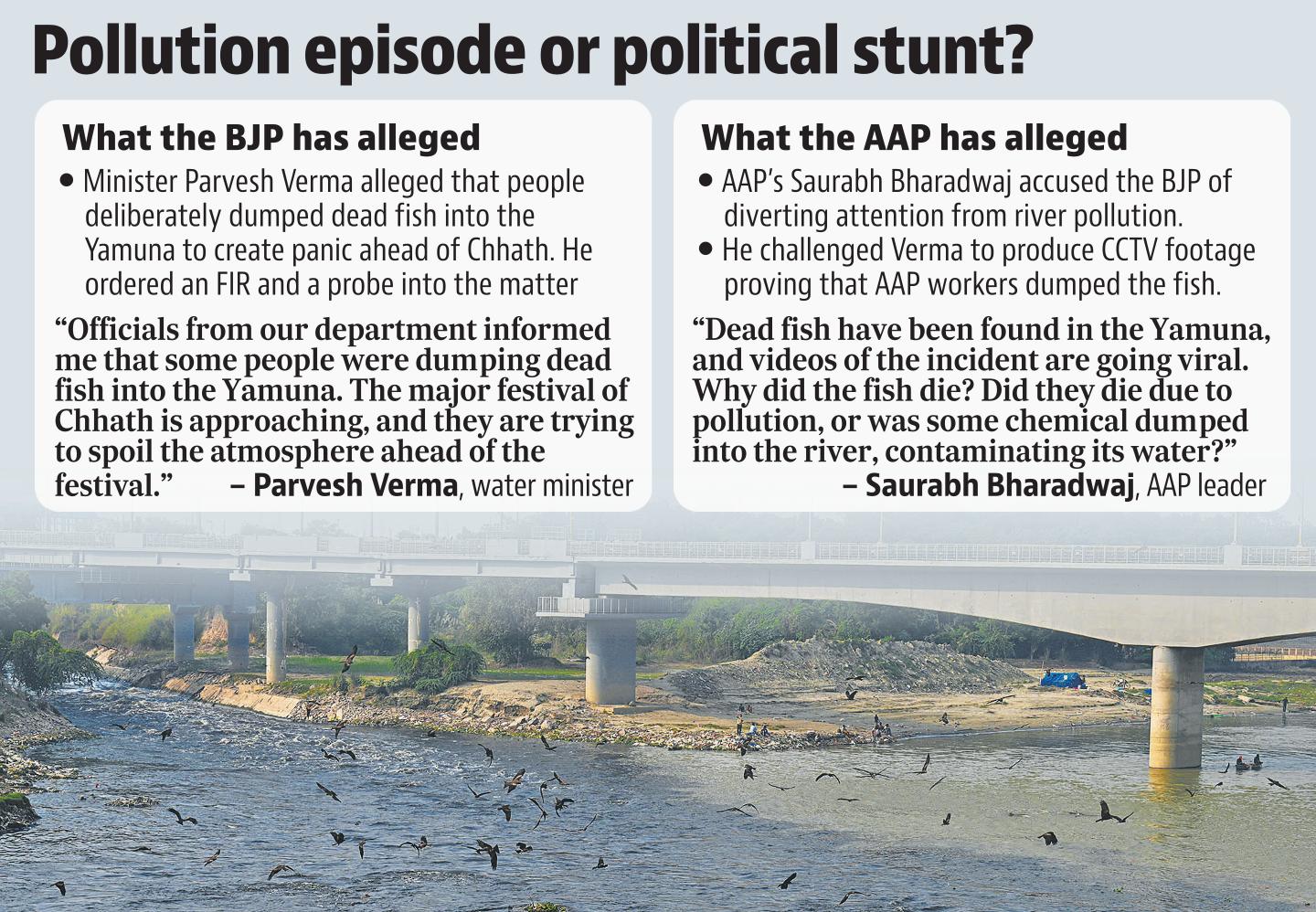
Delhi irrigation and flood control minister Parvesh Verma on Thursday alleged that groups of people were “deliberately dumping” dead fish into the river to create panic ahead of Chhath and malign the BJP government. He said his department had been instructed to file an FIR and identify those involved.
In a letter dated November 12, accessed by HT, an executive engineer of the irrigation and flood control department’s civil division-4 approached the SHO of Sonia Vihar police station, seeking an FIR and an investigation into what it described as the circulation of fake news on social media about chemicals being sprayed into the Yamuna.
“Some unidentified individuals are spreading fake information on social media platforms, alleging that chemicals are being sprayed into the Yamuna thereby disturbing aquatic life. Such information appears to be circulated with malafide intentions to create unnecessary panic among the public and tarnish the image of the Delhi government,” the letter stated. It sought the identification of those behind the posts and preventive action.
Also Read | Why rising ammonia in Yamuna threatens Delhi’s drinking water supply
Verma also alleged that dead fish were dumped into the river a day after the launch of the Yamuna cruise service, in an attempt to disrupt the festival. He said an investigation would establish whether those involved had links with AAP workers.
“As soon as ferry services started operating on the Yamuna, just a day later, officials from our department informed me that some people were dumping dead fish into the Yamuna. The major festival of Chhath is approaching, and they are trying to spoil the atmosphere ahead of the festival,” Verma said.
“An investigation will be conducted to identify who these people are and whether they have any connection with AAP. Everything will become clear once the investigation is completed, and the truth will come out,” he added.
AAP challenges BJP’s claims
Hitting back, AAP Delhi chief Saurabh Bharadwaj accused the BJP government of trying to divert attention from pollution in the river. He said the deaths of thousands of fish had exposed the government’s claims of cleaning the Yamuna and challenged Verma to produce CCTV footage to substantiate his allegation.
“Dead fish have been found in the Yamuna, and videos of the incident are going viral on social media. Why did the fish die? Did they die due to pollution, or was some harmful chemical dumped into the river, contaminating its water?” Bharadwaj said.
“Parvesh Verma is claiming that I dumped the dead fish into the river… To procure fish in such numbers, we would have had to source them from the sea or from a large market in Delhi. CCTV cameras are installed across Delhi. Verma must produce footage showing where I dumped the dead fish,” he added.
Also Read | Experts say impact of cruise on Yamuna ecology not studied
Ammonia levels under watch
The political exchange came amid concerns over pollution in the Yamuna affecting water treatment. The New Delhi Municipal Council (NDMC) said on Wednesday that a sudden rise in pollution levels in raw Yamuna water had led to curtailed production at the Sonia Vihar water treatment plant (WTP).
A Delhi Jal Board (DJB) official had told HT on Wednesday, on condition of anonymity, that ammonia levels of around 1.5-2 parts per million (ppm) were being recorded at the Yamuna’s inlet point, against a disruption threshold of 0.9 ppm. However, the DJB said on Thursday that ammonia levels near the Wazirabad barrage were around 0.5 ppm, within the manageable range, and that water treatment and supply operations were continuing normally.
Ammonia enters water bodies mainly through untreated sewage, industrial effluents and agricultural runoff. High concentrations make water harder to treat for drinking. Delhi’s treatment plants can handle levels of around 1 ppm through conventional chlorination; beyond that, treatment may need to be curtailed and polluted water diluted with cleaner supplies to avoid the formation of toxic chloramines.
Also Read | Yamuna cruise draws visitors, but pollution and high fares spoil the excitement
The problem is particularly acute at the Wazirabad and Chandrawal plants, which draw water from the Yamuna. The NDMC had warned that supply to parts of New Delhi dependent on the Sonia Vihar plant could be affected. The plant normally draws raw water from the Upper Ganga Canal, whose operations had only recently resumed after annual maintenance.
The DJB has repeatedly blamed ammonia spikes on untreated industrial discharge entering the Yamuna upstream of Wazirabad, including from the Panipat industrial drain and the mixing of industrial wastewater with freshwater canals in Sonipat. Haryana has denied the presence of leaking pollution sources in its industrial areas. Work to prevent the mixing of wastewater and freshwater through a pipeline is under way following directions from the National Green Tribunal.
Such episodes are more common between November and March, when lower river flows reduce the dilution of pollutants. Delhi typically records 15-22 episodes a year in which ammonia levels cross 1 ppm, sometimes remaining elevated for several days.
Frequently Asked Questions




Stay updated with all top Cities including, Bengaluru, Delhi, Mumbai and more across India. Stay informed on the latest happenings in World News along with Delhi Election 2025 and Delhi Election Result 2025 Live, New Delhi Election Result Live, Kalkaji Election Result Live at Hindustan Times.


