
 E-Paper



Delhi Houses: Gates like lace and verandah sit-out
In the older colonies of the city there are still lanes where the verandah is in daily use

 Prefer HTon Google


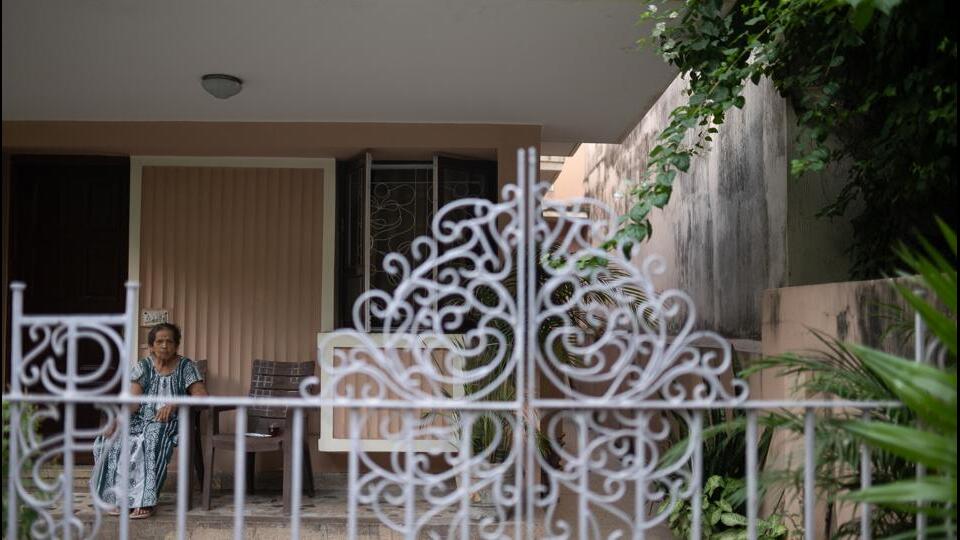
In the older colonies of the city there are still lanes where the verandah is in daily use. It is found at first light, when the elder of the house brings a chair out through a gate welded 40-50 years ago and sets it down within speaking distance of a neighbour who has done the same across a waist-high wall. Most of these elders remember Partition, the displacement that followed, and the slow building of a house from very little. They regard the house with a pride that has been earned. The verandah is where that pride faces the street, which is why they sit in it. The plots under them are now worth many times the houses standing on them, and in most of these families the house will be pulled down and rebuilt soon after the elder dies, so that the surviving verandahs are kept in place by the lives of the people who use them.
The break is usually placed in 2011, when Delhi began to build houses on stilts, with the ground floor given to parking and the living floors raised above it. Bungalows are now divided into apartments, front gardens are paved for cars, and the roof has become a place for water tanks and the condensers of air conditioners. The house is no longer attached to the ground it stands on, and it requires significantly more of everything than the single-storey house had — more water, more power, more steel and cement.
When documenting the city my gaze is archaeological, where the domestic too is historic. It is the social history of the people of the city. Houses built in Delhi used to have the boundary wall, low enough to talk across, and the verandah, neither house nor street. The grill closed the verandah against rain and thieves and still let the eye through, and the gate was an artistic introduction to the house by means of the grill, the name plate, the foliage.
The gates were the best of it. Iron was bent into vines, flowers opened at the hinges, sunbursts were set above the lintel, and geometric grids were drawn by hand. Gates from the 1970s often took a baroque turn in their scrolls and curves, and many families used the welder’s art to soften the entrance of the house. The lohar was an artist, and his art was in the joining. He bent rod and strip over a former until it held the curve of a petal or a tendril, and he fused the pieces so that a dozen separate lengths read as a single line, leaving the bead of each joint flat or raised as his own judgement dictated. Sometimes he knew the creepers growing in that particular garden and let the vines in the gate answer them, and sometimes he shaped the gate to suit the lady of the house, who had her own views on how her front door should look from the road.
The gate that resulted worked like lace, translucent enough to give a glimpse of the house in its humble pride while keeping its interior to itself. Gates differed from one another as handwriting does, because each carried the habits of the person who made it, and some ran in a loose cursive while others stood in strong capitals, so that a lane could be read as a row of signatures.
In a few decades, the lace did not last. A sheet of white or green was fixed behind the gate, first to cut the view and then to settle the matter, and the porch, which had belonged to a lane of acquaintances, came to belong to one household, while the street came to belong to nobody. The openness that had made the gates admired turned into their weakness, since ironwork of that kind is easy to breach for a house that no longer wishes to be open to the street. In a city where everyone no longer knows everyone, the neighbours had stopped being a form of protection.
The gates now going up carry no one’s name. They are cut in a factory from standard steel sections to catalogue sizes, powder coated and delivered finished, and they are made to fortify an entrance and to add nothing to it. One of them could be fitted to any house in any colony, and the buyer is paying for exactly that sameness.
It would be a mistake to turn this into a lament, since the lace gate was also a security device and a property marker. The case for an archive of Delhi Houses is a plainer one. These objects record an arrangement of trust, craft and public space that is being taken apart house by house, protected only by a timetable set by the lives of the generation that built them. Soon the next phase of city life will come, where one social history will fade into another, where houses with verandahs and lace-like gates will become houses that have sealed themselves from a city that is breaching the silence of the house.
Anica Mann works on archaeology and contemporary art in Delhi. The views expressed are personal

Stay updated with all top Cities including, Bengaluru, Delhi, Mumbai and more across India. Stay informed on the latest happenings in World News along with Delhi Election 2025 and Delhi Election Result 2025 Live, New Delhi Election Result Live, Kalkaji Election Result Live at Hindustan Times.


