
 E-Paper



Does Delhi govt has no control over admin in 3 exempt subjects? SC
The remark came while the court was hearing the ongoing power tussle between the Delhi government and the Centre over who controls transfer and posting of bureaucrats in Delhi.


The Supreme Court on Tuesday asked the Aam Aadmi Party (AAP) government in Delhi whether it conceded that it had no executive control over bureaucrats involved in public order, land and police duties as these are subjects on which the Delhi government is exempted from making laws.
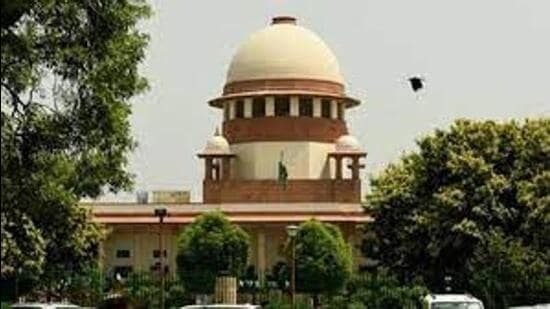
A Constitution bench headed by Chief Justice of India (CJI) Dhananjaya Y Chandrachud said, “You (Delhi) have to concede one thing. Entries 1 (public order), 2 (police) and 18 (land) of List II fall outside your purview. If civil servants are posted within these entries, it will be outside your purview.”
The remark came while the court was hearing the ongoing power tussle between the Delhi government and the Centre over who controls transfer and posting of bureaucrats in Delhi.
Representing the Delhi government, senior advocate Abhishek Manu Singhvi sought time to come back on the remark made by the bench, also comprising justices MR Shah, Krishna Murari, Hima Kohli and PS Narasimha. The arguments in the case will continue on Wednesday.
“Today, all that is happening is that the LG is saying I will decide on everything. It is a matter of moment as Delhi’s running has come to a standstill on every petty issue. How can you conceive of a dual power structure within a state,” said Singhvi, who was assisted by advocate Shadan Farasat, in his opening arguments.
Singhvi argued that executive power is essential and “co-extensive” with legislative power, and it was inconceivable for a Union Territory to have no control over “public service” under Entry 41 of State List. He was referring to the May 2021 notification by which power to post and transfer bureaucrats in Delhi was vested in the Centre.
Later, the Centre introduced the Government of National Capital Territory of Delhi (Amendment) Act 2021 giving wide powers to the LG in the administration of the Capital. By this amendment, LG’s nod was made mandatory for executing any policy approved by the council of ministers. The Centre had justified the amendment claiming that the LG was not kept in the loop over crucial executive decisions.
Both the notification and the law was challenged by the Arvind Kejriwal government on the ground that it violates the principle of federalism and is contrary to a Supreme Court decision of 2018 which held that LG is to act on the aid and advice of the council of ministers. The only exception is provided in Article 239AA by which the Centre, and not the Delhi government, can decide on subjects of public order, police and land in Delhi.
However, the two judges on the bench differed on the issue of services and the aspect was referred to a larger bench and later to the Constitution bench on Centre’s request.
Singhvi argued, “There are examples of Delhi assembly executing legislative power on issues concerning civil service by creation of bodies such as Delhi Minorities Commission, Delhi Commission for Women, Lokayukta, Delhi Fire Services among others which deals with creation of posts and removal of staff.”
He also cited the example of the recently enacted Jammu and Kashmir Reorganisation Act, 2019, which provides the Union Territory of Jammu and Kashmir a legislature with powers to make law on the subject of ‘public service’. “It is evident that the Parliament has exercised this power, in particular the power to create ‘Services’ and a Public Service Commission for the UT of J&K, under Entry 41 of List II of Seventh Schedule of the Constitution of India. Thus, provisions of this Act authoritatively disprove the argument that Entry 41 is not available to Union Territories,” Singhvi said in his submission.
The senior advocate said that excluding services from the ambit of Delhi’s executive power negates people’s will and leads to complete insubordination among officers. “Government through political power administers policies. The implementation of policies depends on civil service. The exclusion means an impossible-to-conceive situation where as a minister, I am charged with making policy, but those who have to implement it are under a different master. When you know that your master is different, there is complete insubordination,” Singvi said.
In two separate affidavits filed in November last year, Delhi deputy chief minister Manish Sisodia had accused the LG of encouraging “recalcitrance of civil servants” towards the elected AAP government.
He said, “The unconstitutional and undemocratic encroachment of the powers of a duly elected government has made governance in Delhi challenging and unnecessarily difficult for the elected government.” Sisodia further alleged that LG was running a parallel system of governance in Delhi by abrogating to himself the powers of an elected government.

Stay updated with all top Cities including, Bengaluru, Delhi, Mumbai and more across India. Stay informed on the latest happenings in World News along with Delhi Election 2025 and Delhi Election Result 2025 Live, New Delhi Election Result Live, Kalkaji Election Result Live at Hindustan Times.


