
 E-Paper



Foreigner among 3 held as NCB raids drug-making labs in Gr Noida
New Delhi/Noida: The Narcotics Control Bureau (NCB) on Saturday busted two clandestine drug-manufacturing laboratories used to manufacture methamphetamine, running from a three-storey house at Jahanabad Kadalpur village in Greater Noida, and arrested two persons, including a foreign national, Union home minister Amit Shah announced

 Prefer HTon Google


New Delhi/Noida: The Narcotics Control Bureau (NCB) on Saturday busted two clandestine drug-manufacturing laboratories used to manufacture methamphetamine, running from a three-storey house at Jahanabad Kadalpur village in Greater Noida, and arrested two persons, including a foreign national, Union home minister Amit Shah announced.
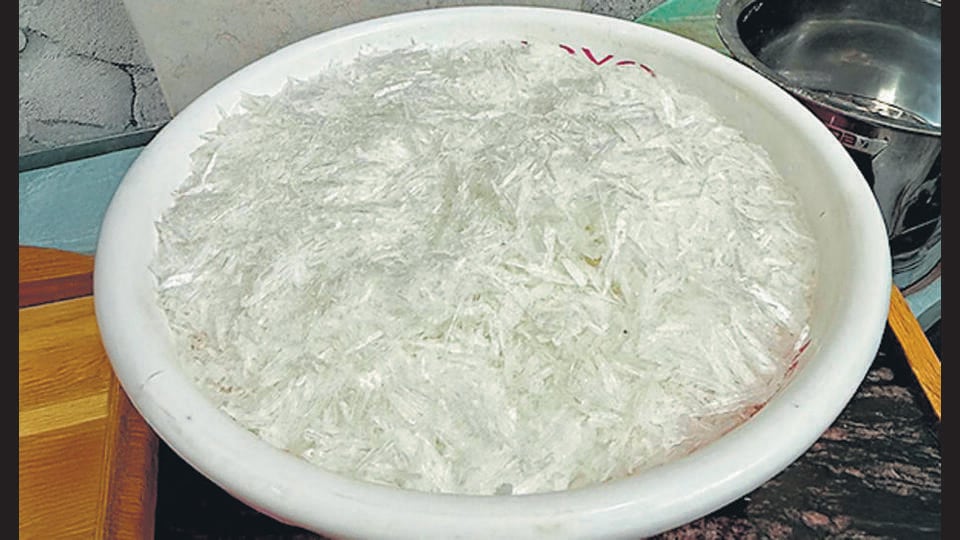
In a post on X, Shah termed the arrests and recovery of nearly 400kg of the drug-making material a major milestone in the fight against drugs.
The agency identified the two accused as Destiny Abraham Dumbiri, who claimed to be Nigerian, and Lallawmzuali alias Olivia Lalchawimawii, a resident of Mizoram.
“Immigration records establish that Dumbiri entered India in January 2020 as Francis Kalokoh, a Sierra Leone national, on a tourist visa valid until December 2020. Olivia was previously arrested in a case investigated by the Directorate of Revenue Intelligence (DRI), Goa, involving the seizure of 313 grams of heroin-containing powder (commercial quantity) from her checked-in baggage at Dabolim Airport, Goa, in March 2026 and is presently on bail,” an NCB official said.
People aware of the matter said prima facie, the two accusedhad finished preparing at least four batches of methamphetamine in the past 3-4 months and shipped them to their buyers. NCB officials are verifying their claims and identifying the buyers.
The NCB said that the operation, termed “Crystal Hunt”, resulted in the recovery of 379.74 kg of amphetamine-containing material—4.26 kg crystalline, 157.70 kg semi-crystalline and 217.78 kg liquid material—and 10kg of pseudoephedrine. “The recovered crystalline and semi-crystalline material is estimated to yield approximately 56kg of finished crystalline amphetamine, with an indicative illicit market value of about ₹45 crore. The seizure also included large quantities of chemicals including hydrochloric acid, acetone, toluene, sulphuric acid, potassium permanganate etc. which go into the manufacturing of methamphetamine,” the agency said in a statement.
Shah said on X: “A major milestone has been achieved with the busting of two clandestine drug laboratories in Greater Noida, Uttar Pradesh. The operation led to the seizure of huge quantities of synthetic drugs, drug precursors and equipment, and the arrest of two individuals, including one foreign national.”
Drug cartels running clandestine labs in different parts of the country have become a new challenge in the government’s fight against drugs. According to the NCB’s 2025 annual report released earlier this year, they vary in scale and sophistication, but mephedrone is the most common drug. Laboratories mushrooming in different parts of the country are manufacturing synthetic drugs by diverting precursor chemicals. In 2025, drug enforcement agencies busted 30 such labs across the country.
This is the second bust in Greater Noida. In October 2024, NCB had busted one laboratory run by five men, including a Mexican national, who was sent by Cártel de Jalisco Nueva Generación (CJNG), to open a drug operation in India.
At a conference of the anti-narcotics task force(ANTF) chiefs of all states and UTs, Shah told the officers last month that for emerging challenges such as synthetic drugs, diversion of precursor chemicals, new communication technologies, dark-net, drug markets, crypto, dead-drop delivery systems, and international drug networks, a team of officers who think out of the box should be constituted in every state, and success should be shared and implemented across the entire nation.
The NCB on Saturday urged landlords, property dealers, housing societies, residents’ welfare associations and security personnel to report credible concerns, including unusual chemical odours; frequent movement or unexplained storage of chemical drums or laboratory equipment, and suspicious storage or disposal of chemical waste to the National Narcotics Helpline MANAS – 1933.
NCB chief Anurag Garg, in a letter to the police chiefs across the country, listed red flags that police personnel should look out for to identify such labs. Some of the red flags mentioned were buildings with covered or blacked windows, CCTV around the perimeter; strong odours of chemicals like ammonia, solvents, vinegar, or cat urine; unusual ventilation equipment or external ducting; unusually high electricity usage in a premises; presence of large quantities of household or industrial chemicals; discarded lab equipment, gloves, plastic containers or tubing found in garbage; complaints from locals about burning eyes, headaches or strange smells; frequent deliveries of unlabelled boxes of containers, often in small trucks; and residents of such premises showing signs of paranoia, evasiveness or denying access.

Stay updated with all top Cities including, Bengaluru, Delhi, Mumbai and more across India. Stay informed on the latest happenings in World News along with Delhi Election 2025 and Delhi Election Result 2025 Live, New Delhi Election Result Live, Kalkaji Election Result Live at Hindustan Times.


