
 E-Paper



The failing last stand of Yamuna in Delhi
Water quality data from the Delhi Pollution Control Committee (DPCC) shows that despite no major drains and sewage outfalls in this stretch, the river’s dissolved oxygen (DO) levels—which support aquatic life—fall by an average of 30-40% between the Palla and Wazirabad

 Prefer HTon Google


Delhi’s toxic relationship with the Yamuna is well established now, with the past decade defined by toxic foam, foul stench and unending pollution. While the stretch from Wazirabad to Okhla is routinely choked with raw sewage, plastic waste and industrial effluents—which manifest as foam downstream—a 21-kilometre stretch between Palla and Wazirabad, which was considered clean, seems to be succumbing to the Yamuna toxification.
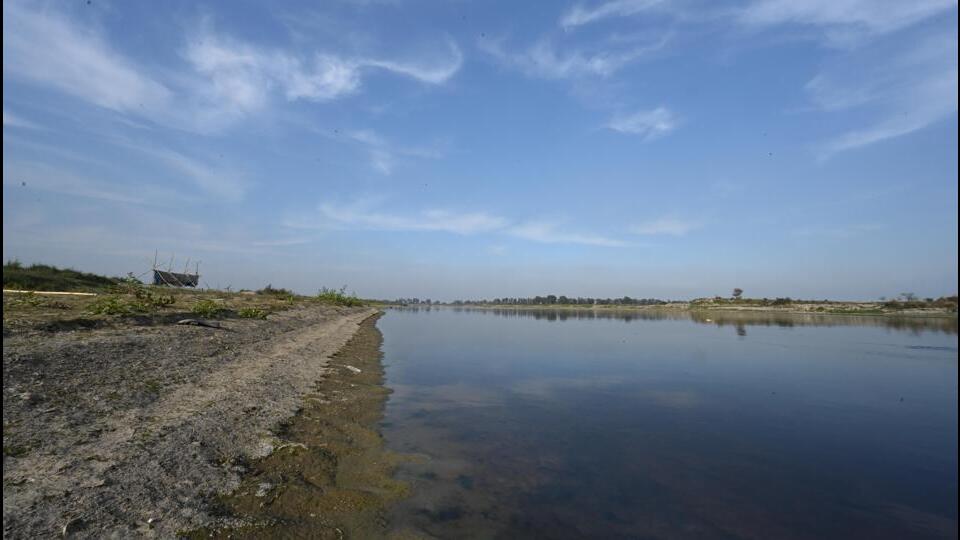
Delhi draws its drinking water from Wazirabad, before the bulk of drains empty into the Yamuna just ahead of this stretch, defined by floodplains that host fields of marigold, strawberry and other seasonal produce, perpetuating a belief that this was Delhi’s last breath of fresh water.
However, water quality data from the Delhi Pollution Control Committee (DPCC) shows that despite no major drains and sewage outfalls in this stretch, the river’s dissolved oxygen (DO) levels—which support aquatic life—fall by an average of 30-40% between the Palla and Wazirabad. The biological oxygen demand (BOD), a marker of organic pollution, roughly doubles in the same segment.
The state government, since taking office in February, has pledged to rejuvenate the Yamuna on a priority. In June, the government launched a 45-point action plan, specifying strict timelines for ongoing work, including 35 sewage treatment plants (STPs), upgrade of STPs to meet stricter norms, real-time water quality monitoring at 32 locations, trapping 22 major drains that discharge sewage into the river and providing sewer connections to unauthorised colonies. The plan also includes monitoring pollution at 67 key points and using drone surveys.
Key markers
DPCC’s latest water quality report from July 1, 2025, shows the DO dips from 4.4 mg/l at Palla to 3.4 mg/l by the time it reaches Wazirabad. In June, this dips from 9.2 mg/l to 6.3 mg/l, a dip which occurs without any major drain inflowing into the river. The first of the 18 large drains, beginning with the Najafgarh drain, that reach the Yamuna flow into the river beyond Wazirabad. The July report also showed the BOD —which has a permissible limit of 3 mg/l—rising from 8mg/l at Palla to 11mg/l at Wazirabad. In June, this rose from 5 mg/l to 8 mg/l.
Faecal coliform, an indicator of sewage inflow into the river, shows a similar trend. It increases from 2,700MPN/100ml (most probable number/100 ml) at Palla to 3,900 units at Wazirabad in July and from 2,100 to 2,600 units in June, which experts say shows sewage from surrounding settlements, including Burari and Sonia Vihar, is a cause for concern. The standard for faecal coliform is 2500MPN/100 ml.
“This clearly shows sewage is entering the river and alongside it, possibly effluents from industries running in the vicinity. With no major drain in this segment, such a deterioration should not happen,” said Bhim Singh Rawat, a Yamuna activist and member of the South Asia Network on Dams, Rivers and People (SANDRP).
To be sure, the deteriorating trend is not confined to this year.
A report from October 2024 shows a similar trend. The DO dips from 7.1mg/l at Palla to 4.2mg/l by the time the river reaches Wazirabad. Similarly, BOD increased multifold, from 4mg/l to 9mg/l. Faecal coliform was at 920 units at Palla, but shot up to 1,600 units at Wazirabad.
Contamination from nearby localities
Residents and experts believe the problem originates from trunk drain number 8, a large stormwater drain which is meant to bring clean water to the Capital for drinking purposes, that is increasingly facing contamination from a parallel drain, number 6, which carries industrial effluents.
Residents of Sungarpur, Jagatpur and Sonia Vihar allege that the water is visibly dirtier and foam-prone on certain mornings. “There are days when the river looks completely dark grey. If you stood in the river earlier, you were able to see your feet. That is not always the case these days,” said Mohammad Faheem, 26, a farmer who grows vegetables near Palla.
Rawat said that while local sources may cause a spike in pollution, trunk drain number 8 is playing a key role in the river’s deterioration. “We can call it a combination of factors. Clearly, sewage is reaching the river from neighbouring settlements at Sonia Vihar and Burari. At the same time, contamination from this major trunk drain means Delhi’s water starts to get polluted by the time it reaches the Wazirabad water treatment plant,” he said.
While the eye test clearly points to contamination, consistent documentation also backs it up.
Since January 2024, there have been at least six major ammonia spikes in the river, impacting the treatment of the Wazirabad water treatment plant (WTP).
Wazirabad, Okhla and Chandrawal plants directly lift water from the Yamuna. DJB can treat up to 1 ppm of ammonia level in raw water, but beyond such a high level, neutralisation of ammonia with chlorine gas regularly leads to toxic chloramine compounds. In cases of ammonia spike episodes, DJB diverts raw water from other sources for dilution so that plants can remain operational at reduced capacity.
DJB currently operates nine water treatment plants across Delhi, which, along with groundwater resources, supply around 1000 million gallons per day (mgd) of water to the city. The water demand of the city, however, is estimated to be around 1,250mgd (based on the “50 gallon per capita per day” formula)—indicating a 250mgd gap.
In addition, two large-scale fish death incidents near Burari are an indication of DO falling to zero in these pockets.
Unregulated activity
Adding to the concern is industrial activity along the fringes of Sonia Vihar, where several small-scale electroplating and scrap-recycling units operate in what are effectively unregulated pockets.
Experts said a majority of these were running illegally.
“Units are functioning in this stretch and releasing effluents directly into the river too. The government, based on the data it is sharing through DPCC, needs to examine why this is the case and why the river’s DO is dipping so rapidly in what should be a clean stretch,” said Pankaj Kumar, who goes by the handle of Earth Warrior on X.
Kumar said he has documented run-offs from several such units involved in electroplating and dyeing near Sonia Vihar.
All such industries need to either have effluent treatment plants (ETPs) in place or be connected to a common effluent treatment plant (CETP). Industries involved in activities along the river are known to release acids, heavy metals such as chromium, copper and zinc; phosphates, which cause frothing and bleaching agents, such as sodium hypochlorite and hydrogen peroxide.
A DPCC official said regular drives are conducted to check plants for ETPs, along with a consent to operate (CTO) and a Consent to Establish (CTE). “Those found functioning illegally or without due safeguards are issued a showcause notice and shut down immediately,” said a DPCC official, stating drives to shut down illegal dyeing units are ongoing in the city since 2021.
And yet, so far, this stretch has received no major clean-up attention.
Most pollution abatement projects—from interceptor sewers to in situ cleaning—have been focused on downstream areas, particularly between ITO and Okhla. This may change soon, with the government announcing plans last month to release treated water from the Coronation Pillar and Yamuna Vihar sewage treatment plants near Wazirabad through a closed-duct system, in a bid to increase the river’s environmental flow.
Experts said that while this may make the river cleaner, due to more water being released into it, the long-term solution remains identifying sources. “We need to fix trunk drain number 8 on a priority basis. We also need to scan the floodplains to identify local sources contaminating this stretch,” Rawat said.


Stay updated with all top Cities including, Bengaluru, Delhi, Mumbai and more across India. Stay informed on the latest happenings in World News along with Delhi Election 2025 and Delhi Election Result 2025 Live, New Delhi Election Result Live, Kalkaji Election Result Live at Hindustan Times.


