E-Paper



Lucknow's ‘waste-side’ story: ‘Swacch’ on paper, stench on ground as open waste dumping site raises questions
The site is close to Nehru Enclave and Eldeco Greens, with residents reporting foul odour and concerns over black leachate from accumulated waste.

 Prefer HTon Google


Two consecutive years of civic recognition have put Lucknow on the national map for cleanliness and air quality management. But on the ground, an open waste dumping site in the middle of the city is raising questions about how consistently the city’s waste management systems are being implemented.
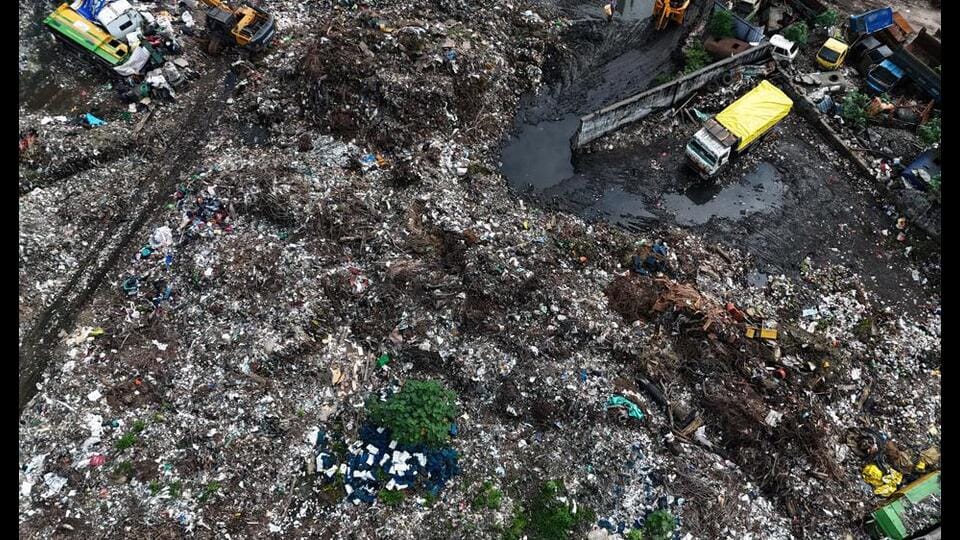
The contradiction became visible during an HT ground visit on Wednesday when multiple waste-carrying vehicles were seen entering a site along the stretch connecting Samta Mulak Chowk with Kukrail and unloading waste. The site lies close to residential colonies, including Nehru Enclave and Eldeco Greens, and directly opposite the camp office of the municipal commissioner in Gomti Nagar area.
Also read: Delhi residents flag gaps in waste management amid new rules, user fee levy
Civic awards contrast with ground reality
The development comes after Lucknow received recognition in the Swachh Vayu Survekshan 2025-26 and also secured recognition in previous year’s national cleanliness assessment. Swachh Survekshan assessments include both field assessment and citizen feedback, while the air quality survey assesses cities on parameters linked to air quality improvement.
However, the scene witnessed at the site presented a different picture of day-to-day waste handling.
Around 2:15pm, HT observed more than 10 waste-carrying vehicles entering the site within roughly 15-20 minutes. More than four vehicles were seen leaving after unloading material.
Also read: Bittu Tabahi's Yamuna cleanup is 'tight slap on administration', says IITian CEO
LSA, LMC vehicles use location
Vehicles operated by private agency Lucknow Swachhata Abhiyan (LSA), which handles door-to-door waste collection, were among those entering the site. LMC vehicles carrying green waste were also seen using the location.
The repeated movement of waste vehicles raises a basic question: if waste collected from households is being taken to this location, what is the status of the site and under what system is the material being stored before final processing or disposal?
The issue is particularly significant because the site is not an isolated location on the outskirts of the city. It sits amid a green stretch frequented by commuters and close to residential settlements.
People travelling on the Samta Mulak-Kukrail stretch are also exposed to the site.
Civic body promises site clearance
LMC environmental engineer Sanjeev Pradhan said waste and silt had accumulated at the site, and this would be removed. He added that waste had been accumulating on the land for years, but the civic body is also sending the waste from the site to the Shivri plant for processing on daily basis.
He said the site would be cleared within a few days and that the silt would subsequently be used to fill a low-lying area along the same alignment.
Pradhan also confirmed that the land is divided between LMC and the Cantonment area, with one portion belonging to the civic body.
The official, however, did not clarify how long the waste-carrying vehicles had been using the location or who had authorised the activity.
Also read: MCG issues notice to firm over waste dumping in Gurugram’s Sec 23
Residents complain of foul odour
Residents living nearby said the site had begun affecting their daily lives. Nehru Enclave resident Anju Varshney said residents face a persistent foul odour from the garbage transport facility, which she described as a “mini-sewage plant”.
Residents questioned its location near residential colonies, saying the stench affects Nehru Place and Eldeco Greens. They also raised concerns over black leachate and its alleged health risk.
Also read: India can unlock economic value through smarter waste management
LSA regional head Abhay Ranjan said authorities had earlier planned to construct portable compact transfer stations (PCTS) stations at the site. However, a land ownership dispute between Army and LMC led authorities to drop the plan.
He said the absence of PCTS stations resulted in authorities dumping waste from the surrounding catchment areas at the site for years, with more than 40 tonnes of waste arriving daily.
Ranjan also highlighted the lack of adequate space for silt disposal. He said the LMC and other departments dumped silt at the site, leading to a large accumulation of silt and waste.
He added that the authorities do not treat silt at Shivri, while they also lack designated facilities to process horticultural waste, causing further accumulation at the site.
What rules say
The Centre’s solid waste framework requires local bodies to scientifically manage municipal solid waste, including segregation, collection, processing and safe disposal. The ministry of environment, forest and climate change also lists the Solid Waste Management Rules, 2026, which came into force on April 1, 2026.
The 2026 rules define a buffer zone around solid waste processing and disposal facilities with installed capacity exceeding five tonnes a day. The zone is intended to minimise environmental impacts and is to be maintained within the facility’s allotted area.
Also read: MCG issues new guidelines for C&D waste disposal
The regulatory framework requires waste to be channelled through systems for segregation, processing, recovery and safe disposal rather than being allowed to accumulate through uncontrolled dumping.