
 E-Paper



Woman, partner sentenced to death in ‘blue drum’ murder case
Muskan and Sahil were produced separately before the court through video conferencing from jail and given an opportunity to present their views. Both told the court that they had nothing to say

 Prefer HTon Google


MEERUT A court in Meerut on Wednesday sentenced Muskan Rastogi and her partner Sahil Shukla to death for the murder of her husband, Saurabh Rajput, whose body was dismembered and cemented inside a blue drum. The merchant navy officer was killed on March 3, 2025, and his body discovered two weeks later. The killing captured national headlines for its grisly details.
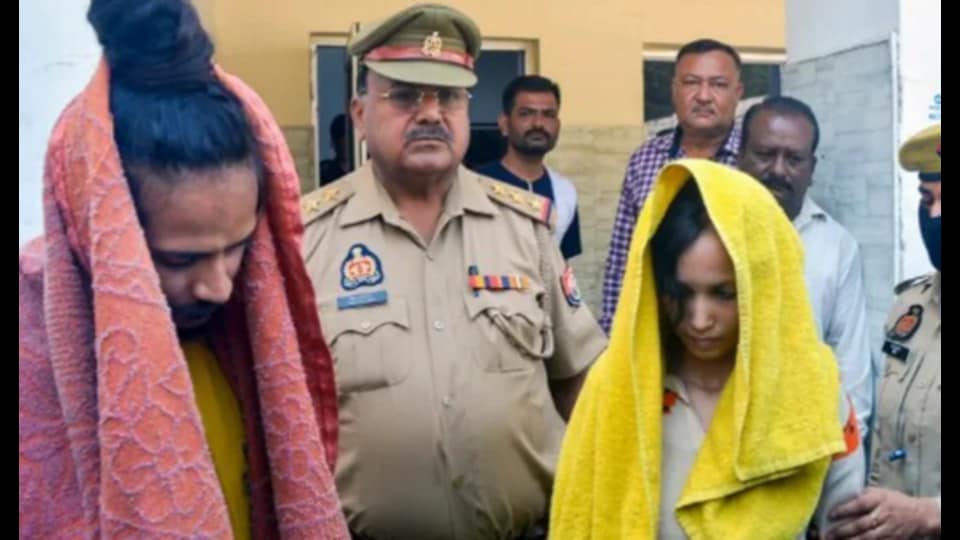
District judge Arvind Kumar Mishra pronounced the verdict -- that came after 126 hearings during a 13-month trial -- in the case dubbed the “blue drum case”, court officials said.
Muskan, who has two daughters, one seven years and the other 10 months, and Sahil became emotional after hearing the verdict. They were produced separately before the court through video conferencing from jail and given an opportunity to present their views. Both told the court that they had nothing to say.
The prosecution sought death penalty, citing the brutality of the murder, the dismemberment of the victim’s body and attempts to conceal it inside a blue drum using cement. The defence, represented by advocate Rekha Jain, urged the court to show leniency, citing the future and upbringing of Muskan’s two daughters.
District government counsel Krishna Kumar Chaubey represented the prosecution. He argued that Muskan and Sahil had conspired to murder Saurabh and that the manner in which the crime was committed warranted the harshest punishment.
According to senior jail superintendent Viresh Raj Sharma, both convicts appeared anxious ahead of the verdict. They had eaten less than usual during dinner the previous night and breakfast on Wednesday morning and had not slept properly, according to information provided by the jail administration.
Sharma also said Muskan had been requesting permission to meet her elder daughter, aged around seven, for the preceding three to four days. However, the child was not brought to the jail to meet her.
The case came to light after Saurabh’s brother Bablu lodged a missing-person complaint on March 18, 2025, expressing suspicion about Muskan and Sahil. According to investigating officer Ramakant Pachauri, who was then the station house officer of Brahmpuri police station, police registered an FIR and began investigating Saurabh’s disappearance.
The investigation eventually led police to recover Saurabh’s dismembered body from a blue drum kept inside the house.
According to the police investigation, Saurabh had brought ‘kofta’ curry from his mother Renu Devi’s house on the night of the murder. Muskan allegedly laced the food with a sedative. After Saurabh became unconscious, Sahil was allegedly called to the house.
Police said Saurabh was subsequently murdered and his body dismembered in the washroom. The accused allegedly first attempted to place the body inside a briefcase, but abandoned the plan after its hook broke. The body was then placed inside a bed before being concealed in a blue drum.
Investigators said a statement made by Muskan during questioning raised suspicions and prompted further interrogation and evidence collection.
With no eyewitnesses to the murder, investigators relied on circumstantial, electronic and forensic evidence to establish the sequence of events and the alleged involvement of the accused.
Police questioned the cab driver in whose vehicle Muskan and Sahil reportedly travelled after the crime. Investigators also collected statements and CCTV footage from the hotel where the two were said to have stayed.
Call detail records (CDRs), mobile phone location data, hotel registers and forensic reports were also examined. Chaubey said this evidence played an important role in strengthening the prosecution’s case.
The police compiled the evidence and presented it before the court during the trial.
The trial involved statements from 22 prosecution witnesses. Chaubey said the then district judge had directed day-to-day proceedings in view of the seriousness of the case. The final arguments from both sides were completed before Wednesday’s sentencing hearing.
‘I prayed everyday that they be given death sentence’
Saurabh Rajput’s mother, Renu Devi, expressed profound relief and gratitude over the court’s decision, emphasising that justice had finally been served.
“My son cannot come back, but I prayed everyday for the last 18 months that they be given death sentence. I am thankful to Mata Rani (goddess) for hearing my prayers,” she said.
“I am sure, this kind of sentence will serve as a deterrent and will save many mothers from the trauma I have experienced,” added Renu Devi.
Saurabh’s family had consistently sought stringent punishment for the two convicts. His elder brother Rahul had earlier said the family wanted nothing less than the death penalty. He had also spoken about the considerable mental distress the family endured during the legal proceedings.


