
 E-Paper



MCD engineers get crash courses in new parking plans
Under the programme, officials are being trained how to make PMAPs for different localities in a way that they meet parking requirement of those neighbourhoods.

 Prefer HTon Google


The South Delhi Municipal Corporation (SDMC) has started training its officials, mostly engineers, on the modalities of parking management area plans (PMAP) and how to implement them in neighbourhoods as part of the new parking policy.
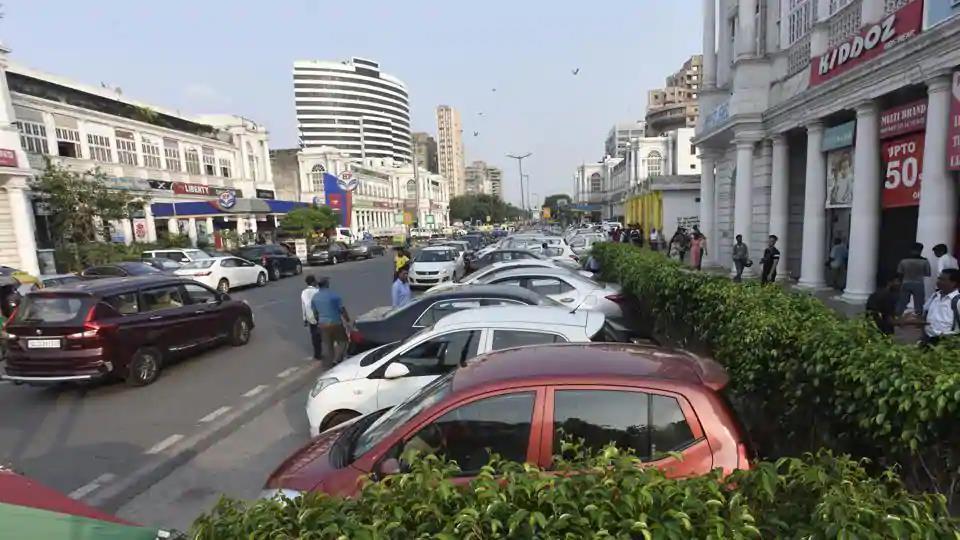
Under the programme, officials are being trained how to make PMAPs for different localities in a way that they meet parking requirement of those neighbourhoods.
To deal with the issue of chaotic and illegal parking on roads, the Delhi government had notified the Delhi Maintenance and Management of Parking Places Rules, 2019, on September 23 last year.
Under the policy, municipal agencies have to make parking management plans with neighbourhood-specific solutions. The plan primarily aims at giving priority to pedestrians, cyclists, emergency vehicles and vending zones by improving availability of on-street and off-street parking in any area.
According to SDMC officials, south civic body engineers will be trained on Friday while that of their north counterparts is over. Officials from east Delhi will undergo training next week.
The SDMC is the nodal agency to impart the training and is helping other civic bodies in implementing the parking policy guidelines.
Civic officials said the move to develop area-specific parking management plans was on hold due to Covid-19 pandemic but now they are slowly reviving the initiative.
“We have now started training our engineers and other required staff to impart specific training in connection with the formulation and implementation of PMAPs. We are also training engineers of other civic bodies,” Prem Shankar Jha, deputy commissioner, remunerative project cell at SDMC, said.
Anumita Roychowdhury, executive director-research and advocacy, Centre for Science and Environment said this training was part of a preparatory exercise to submit a roll-out plan before the Supreme Court for areas beyond pilot projects.
“The Supreme Court, a few weeks ago, had asked civic agencies to go beyond pilot projects and give a complete roll-out plan for the city. For this, civic bodies will have to form PMAPs in large numbers and for that, they need to develop capacity within their institutions. Hence training sessions have been started,” Roychowdhury said.
Lajpat Nagar-III in South Delhi, Krishna Nagar in east and Kamla Nagar in North Delhi were three localities where these rules were implemented on a pilot basis.
Roychowdhury said the authorities earlier used to opt for site-specific solutions but now parking issues will have to be regularised across the city by formulating parking management plans. She said parking had always been a problem in residential colonies near markets. “Area-specific parking plans will ensure there is no spill-over from market areas and the parking space in colonies is used mainly by residents. However, the plans will also suggest a shared parking facility, which means that if a residential area is close to the market, residents can use the market parking at night,” she said.
The policy also recommended that parking be allowed only in demarcated areas in residential colonies and vehicles on footpaths will be towed away. On residential streets, a lane must be earmarked for unhindered movement of emergency vehicles such as ambulances, fire tenders police vehicles, etc.
Similarly, for market areas, the policy recommends dynamic pricing mechanisms such as peak and non-peak fees and an exponential increase per hour to discourage on-street parking for a long duration .
In June this year, vehicular movement was allowed on pedestrianised stretches in Krishna Nagar, Karol Bagh and Kamla Nagar on traders’ demand due to the coronavirus pandemic.
BS Vohra, president of East Delhi United RWA Front said, “In Krishna Nagar, people who come to shop park their vehicles in our colonies leaving no parking space for residents. The parking management plan was only implemented in the market areas while residential areas were left out. The authorities need to seriously implement the recommendations of parking policy. Half-hearted implementation will only lead to chaos.”


