
 E-Paper



A decade later, no home in sight for HDIL flat buyers
Nearly 5,000 apartment buyers in other HDIL projects are left to grapple with a lifelong legal battle.

 Prefer HTon Google


Mumbai: When Dr Haresh Manglani booked a three-bedroom apartment in 2010 in Whispering Towers, a project executed by Housing Development and Infrastructure Limited (HDIL) in Mulund West, he believed he was securing his family’s future.
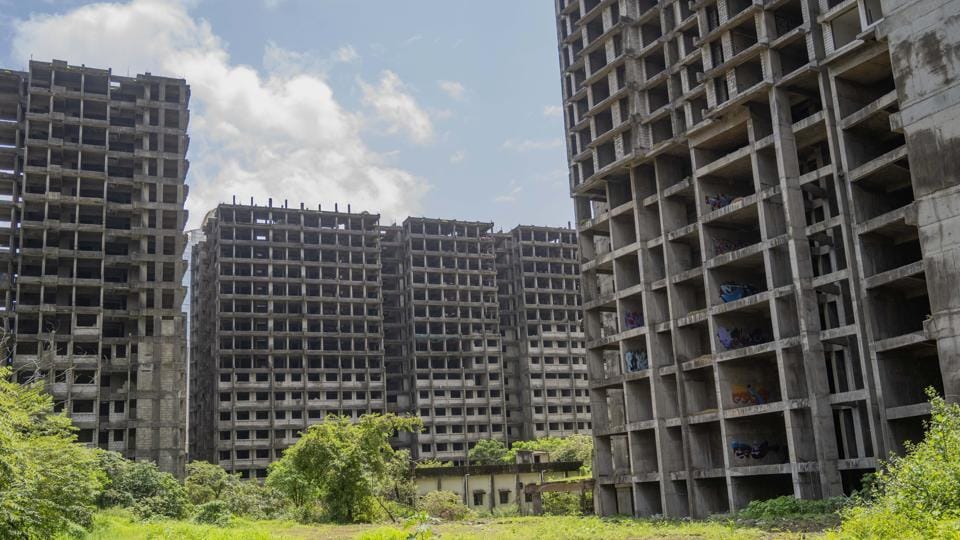
Sixteen years later, the belief has turned to dust, as HDIL remains embroiled in the Corporate Insolvency Resolution Process (CIRP) under the National Company Law Tribunal (NCLT). Work on the company’s projects in Mulund, Nahur, Palghar and Kurla came to a standstill after the firm filed for bankruptcy, while Dr Manglani’s father, co-owner of the apartment in Whispering Towers, died around three years back without seeing their family home completed.
“It’s been a decade since construction at HDIL Whispering Towers came to a halt and we still do not have a timeline in place for when we might get our homes,” Dr Manglani, who heads the Whispering Towers Flat Owners Welfare Association, told Hindustan Times. “This entire case is a Pandora’s box.”
The fate of nearly 5,000 apartment buyers in other HDIL projects is similar, as they are left to grapple with a lifelong legal battle, competing creditor claims and uncertainty about when their dream homes might be ready.
“This seems to be never ending. I don’t know how many of us will stay alive by the time we actually get our homes,” said Girish Matangey, a core committee member of the flat owners’ association at Majestic Towers, an incomplete HDIL project at Nahur.
Dreams turn sour
Shyam Chittari, an entrepreneur, had booked an apartment in Whispering Towers by paying ₹60.71 lakh. Though he had hoped the flat would be his retirement home, construction work came to a halt in 2015, forcing him to replan his life and priorities.
“Uncertainty regarding the project’s deadline was there from the beginning,” he told HT. “For instance, agreements for sale for apartments in the same wing cited dates ranging from May 2015 till December 2018, while the MahaRERA possession date was May 2019.”
While none of the buildings were completed or handed over, in 2025, Chittari’s claim amount was verified at ₹2.03 crore, but there was no clarity on when work would restart.
For the 4,838 families who booked apartments in HDIL’s Paradise City in Palghar, spread across 86.9 acres, the wait has been longer. Among them is Pankaj Bari, who booked a flat in 2011, three years after the project was launched. Here too, construction began slowing around 2015, though HDIL managed to complete and hand over possession of nearly a dozen buildings that were part of the first phase, restoring some confidence among homebuyers. But subsequent phases of the project remained stuck.
“A resolution plan that was proposed got rejected in early 2025 because it failed to secure approval from HDIL’s Committee of Creditors (CoC),” Bari explained. “Thus, the way this case is progressing, we are staring at an uncertain future.”
The association subsequently approached the National Company Law Appellate Tribunal (NCLAT), where the matter remains pending.
From promise to bankruptcy
HDIL, promoted by Rakesh Wadhawan and his son Sarang Wadhawan, filed for bankruptcy in August 2019, shortly before the collapse of the Punjab and Maharashtra Cooperative (PMC) Bank, which had extended loans worth ₹6,500 crore to the company – amounting to 73% of its total loan book and four times the regulatory cap.
In October 2019, the Wadhawans were arrested in connection with the PMC Bank collapse, and insolvency proceedings were initiated against the company, paving the way for lenders to try and recover their money.
In January 2022, the beleaguered PMC Bank was merged with Unity Small Finance Bank. The latter subsequently put HDIL’s 426-acre land parcel in Dahisar up for auction, to recover ₹2,059.30 crore from HDIL, Ravijyot Finance and Leasing Pvt Ltd and the Wadhawan father-son duo. The reserve price for the plot, which served as a salt pan earlier, was fixed at ₹1,234.62 crore in October 2025, but it failed to attract any bidders. In July this year, the reserve price was reduced to ₹1,000 crore.
Environmentalist and Executive Trustee of the Conservation Action Trust, Debi Goenka, said even if takers are found for the Dahisar plot, there are complications that would need to be addressed. Citing a January 2011 Supreme Court judgment, he said that though the land had not been used for salt manufacturing for more than three decades, it stood notified as a reserve forest, and thus required protection.
Elsewhere, creditors are pursuing other HDIL assets to recover their dues. In April, Infrastructure Leasing & Financial Services (IL&FS), through international property consultant Cushman & Wakefield, launched the third round of sale of flats in HDIL’s Virar project, with 59 apartments on offer. The flats were owned by an IL&FS subsidiary.
In May, the sixth floor of HDIL’s head office in Bandra East, HDIL Towers, was transferred to the Slum Rehabilitation Authority for ₹39 crore, according to documents sourced from prop-tech platform Property Science. The same floor had been sold in 2005 to DHFL, the Wadhawan family’s non-banking financial company, which also went bankrupt in 2019; hence, Piramal Finance received the amount towards DHFL’s dues.
In November 2022, HDIL’s Committee of Creditors approved resolution plans for six realty projects. Adani Properties was selected to take over Project BKC, while a consortium of Khyati Realtors and Dosti Realty was selected for Majestic Towers in Nahur, Whispering Towers in Mulund and Premier Residences in Kurla.
Nearly four years later, the resolution plan is still awaiting NCLT approval.
Uncertain future
Even if the resolution plan is approved by the NCLT, homebuyers in Whispering Tower and Majestic Towers face another painful prospect, of existing structures being demolished and rebuilt. For instance, in August this year, the Mumbai Metropolitan Region Development Authority (MMRDA) initiated demolition of an unoccupied rehabilitation building in Kurla which was constructed by HDIL in 2005.
In case other developers take over HDIL’s stalled projects, they would also get rights to construct and sell additional housing stock, which could benefit homebuyers. But there is no clarity on if and when that might happen and who would bear the cost of the insolvency process itself.
For instance, Matangey and Bari said approximately ₹160 crore was due to the Corporate Resolution Professional (CRP), who was appointed to manage the insolvency proceeding ensuring best outcomes for all stakeholders.
“It is not clear who will foot this bill, especially since neither the creditors nor we are not getting what we are rightfully supposed to get,” Matangey said.
HDIL’s CRP Abhay Narayan Manudhane declined to comment on the issue, saying, “I am a court appointee.” Attempts to contact HDIL promoter Sarang Wadhawan via phone also did not elicit a response.
Matangey believes that though the Insolvency and Bankruptcy Code (IBC), enacted in 2016 to create a structured and time-bound mechanism for resolving insolvency while maximising the value of assets, is well-drafted, the CIRP framework has contributed to the delay.
“Under the CIRP, the creator of the problem is also allowed to object to the resolution plan. If the company was managed by the promoter, they should not be allowed to create a nuisance by objecting to the road to recovery, as is happening in our case,” he said.
With hearings under the NCLT continuing and homes still out of reach, flatbuyers in HDIL projects are left enduring “tareekh pe tareekh”, a line immortalised in the 1993 Hindi film Damini.

Stay updated with all the Breaking News and Latest News from Mumbai. Click here for comprehensive coverage of top Cities including Bengaluru, Delhi, Hyderabad, and more across India along with Stay informed on the latest happenings in World News.


