
 E-Paper



BMC calls meeting with priests after hundreds of fish die at Banganga following Pitru Paksha rituals
MUMBAI: With the deaths of hundreds of fish in the city’s historic Banganga Tank in Walkeshwar becoming an annual concern during Pitru Paksha, the Brihanmumbai Municipal Corporation (BMC) has summoned local residents and priests who conduct rituals at the heritage water body for a meeting on Monday to discuss measures to prevent further deaths

 Prefer HTon Google


MUMBAI: With the deaths of hundreds of fish in the city’s historic Banganga Tank in Walkeshwar becoming an annual concern during Pitru Paksha, the Brihanmumbai Municipal Corporation (BMC) has summoned local residents and priests who conduct rituals at the heritage water body for a meeting on Monday to discuss measures to prevent further deaths.
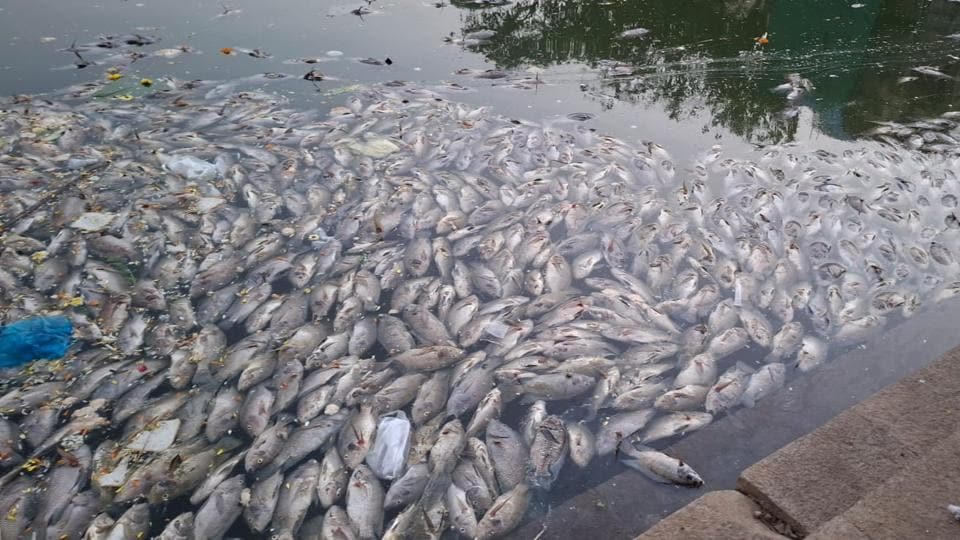
The meeting will be held at the civic body’s D ward office and will focus on preventing food and other ritual offerings from entering the water body which has a freshwater aquatic ecosystem and is home to several fish species. Civic officials said the organic material and food waste increases the pollution load and reduces dissolved oxygen levels in the water, creating conditions that suffocate fish.
Pitru Paksha, which this year is being observed between September 26 and October 10, is a fortnight during which people perform rituals to pay homage to their ancestors. At Banganga, devotees immerse offerings such as rice or flour dumplings, sweets, milk, oil and floral waste in the water.
Santosh Salunkhe, assistant municipal commissioner, D ward, said the BMC planned to involve priests in preventing the pollution because their appeals could influence devotees. “The priests will be asked to undertake measures to prevent the death of fish. The main cause is apparently putting oil in the water, which forms an oily layer affecting the oxygen levels of the water. Flour dumplings are another major cause. If priests appeal to people to prevent such polluting measures, their word will carry some weight and help avoid the death of fishes,” Salunkhe told HT.
The civic body has also stepped up cleaning operations and plans to increase manpower at the tank. It has installed a pump for aeration and will undertake pumping out and refilling of the tank to improve its oxygen content. “People come to Banganga from faraway places during Pitru Paksha. They make a slurry from flour and pour it into the tank along with milk, which reduces the oxygen level in the water. I visited the site last evening,” Salunkhe said.
The problem is not new. In 2025, the BMC removed around 10,000 kg of dead fish, floral waste and other organic material from Banganga over three days following Pitru Paksha. The civic administration had attributed the deaths to increased pollution and depletion of dissolved oxygen in the tank, and deployed aerators and dewatering pumps to improve water quality.
The BMC has in the past provided collection bins and appealed to devotees to dispose of food and floral offerings in them rather than immerse them in the tank. However, residents said a significant amount of ritual material continues to enter the water.
Sanjay Shirke, a Walkeshwar resident who has also filed a public interest litigation seeking measures to protect the historic tank, said rice-flour dumplings used during the rituals were particularly harmful to the fish.
“Thousands of fish in Banganga died during pind daan. During Pitru Paksha, people use flour for the rituals and immerse it in the water,” he said. Shirke questioned why similar preventive measures could not be adopted during Pitru Paksha as during Ganeshotsav, when the tank was barricaded and idol immersion was prevented to protect the water body from pollution.
“What prevents the BMC from adopting a similar measure at this point of time?” he said.
The BMC, however, has said its ability to intervene at the site is limited because Banganga is privately owned and falls under the Archaeological Survey of India (ASI).
“Banganga Tank is private property under the Archaeological Survey of India. The BMC cannot construct an artificial tank there. We have the authority only to clean and desilt the tank,” Salunkhe said.
Residents have called for an alternative facility where devotees can perform the rituals without affecting the heritage water body.
Banganga is one of Mumbai’s historic water bodies and an important pilgrimage site dating back to the 12th century. According to local belief, Lord Rama created a tributary of the Ganga here by shooting an arrow into the ground to quench his thirst before worshipping Lord Shiva.


Stay updated with all the Breaking News and Latest News from Mumbai. Click here for comprehensive coverage of top Cities including Bengaluru, Delhi, Hyderabad, and more across India along with Stay informed on the latest happenings in World News.


