
 E-Paper



Uddhav Thackeray: The last man standing
As a movement, the Shiv Sena has espoused the cause of the ‘Marathi manoos’ and the Hindus. But, as a party, it adopted the ideology of political pragmatism.

 Prefer HTon Google


Shiv Sena (UBT) has been in the news recently after it joined hands with a consortium of socialist parties in the state. On October 15, party chief Uddhav Thackeray met 21 leaders of various socialist parties under the broad platform of Samajwadi Janata Parivar (SJP) in Mumbai and forged an alliance with them ahead of the Lok Sabha and the state assembly elections next year.
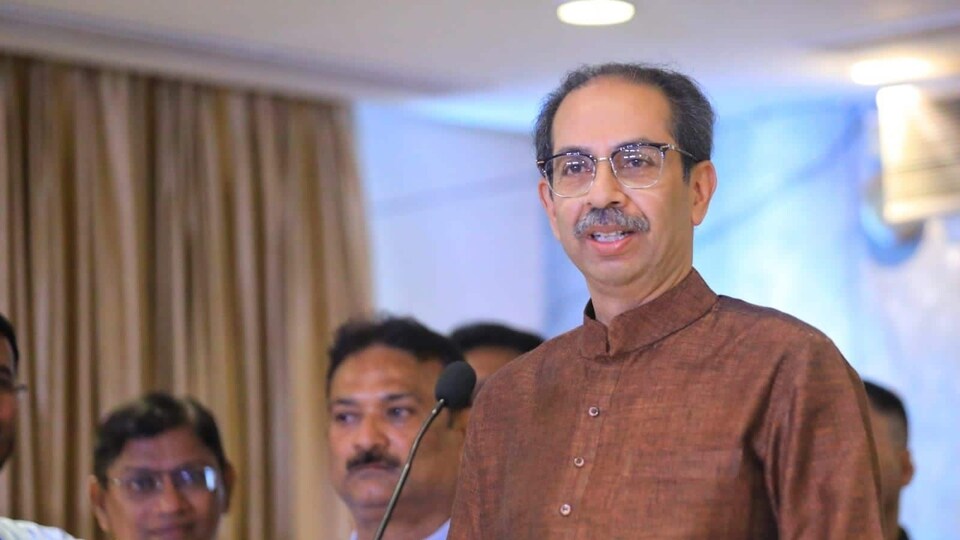
In the past year, the Sena has joined hands with several parties, organisations and individuals whose ideological and political positions are strikingly opposite to its core ideology.
Shiv Sena’s decision to induct Sushama Andhare as a leader, joining hands with Prakash Ambedkar-led Vanchit Bahujan Aghadi and the support it received from the Communist Party of India and left organisations during the Andheri bypoll elections held in November 2022 are seen as attempts in social and political engineering to expand Sena’s support base. It is also seen as an attempt by Thackeray to put up a front against its old ally and currently the biggest political foe -- the BJP.
While these ‘unnatural’ alliances are making headlines and creating a media buzz, it is important to look at them in the broader socio-political context. Shiv Sena gained support in Mumbai and Maharashtra first over the issue of the “sons of soil” narrative and then for its espousal of aggressive Hindutva under founder Bal Thackeray, who was regarded as the ‘Hindu Hriday Samrat’ (an emperor of Hindu hearts).
But what distinguishes the Shiv Sena from most right wing parties and organisations is the distinction that exists between the party’s narrative or ideology and the party itself.
As a movement, the Shiv Sena has always espoused the cause of the ‘Marathi manoos’ and the Hindus; linguistic and religious antagonism has been the very basis of its politics for many years.
However, as a party, it adopted the ideology of political pragmatism since its inception. Very early on after its foundation, it grew with the direct and indirect support it received from Congress leaders across various factions in the party. Three more striking examples: Its alliance with the Praja Socialist Party (PSP) in 1968, RPI (Gawai faction) in 1973 and the Muslim League in 1979.
Its support of the Emergency of 1975 was also an attempt to stay politically pragmatic and was, in fact, criticised by many staunch supporters.
Finally, its decision to part ways with long-term ally BJP and become a part of the Maha Vikas Aghadi with Congress and NCP was yet another strategic move in 2019. It actually helped the party to broaden its support base and gave Thackeray an opportunity to be chief minister for two and a half years.
It is thus not new for the Sena to make practical political alliances, which go beyond its core ideology for better political prospects.
However, the current scenario becomes interesting as a wide array of political actors at the local, state and national level are joining hands with Shiv Sena. The party has shown possibly the highest amount of ideological and political flexibility in forging such alliances over the last year.
It is important here to understand and assess the possible reasons for Shiv Sena’s sudden popularity as an opposition party across the political spectrum.
One of the most significant pull factors is Thackeray’s staunch attack on the BJP and his attempt to put up a strong front against the party’s divisive politics. His scathing remarks on the Sangh Parivar and the BJP after the breakup of the Sena-BJP alliance in 2019 still continue a year after old-time Sena leader Eknath Shinde joined hands with the saffron party with 39 other MLAs and 13 MPs claiming ownership over the Sena brand.
In the current scenario as the BJP grows in power and ambition, there is very little space for voices critical to it. Thus, Thackeray’s constant critique of the party and its politics has a newfound appeal among the liberal, left-leaning and socialist parties.
Bearing testimony to this is the fact that Thackeray recently played a key role in hosting a meeting of the INDIA alliance in Mumbai, a political front put up by opposition parties across the country to counter BJP’s ‘divisive and anti-democratic politics.’
His popularity as the Sena chief, as founder Bal Thackeray’s heir apparent and most recently as an able chief minister for the work he did during Covid-19 in Maharashtra, is something that the opposition parties want to strongly capitalise on.
Shiv Sena under Thackeray also commands a huge following among the Sena cadre even after the unprecedented crisis in the party after the exit of the Shinde-led MLAs and MPs. He has the capacity to pull huge crowds as Sena’s grassroots cadre, which mostly operates through ‘shakhas’, and local networks continues to back him.
Political meetings organised by him are closely tracked and covered by the media, and for socialist and left parties, being with Thackeray at such gatherings means visibility. With elections to Lok Sabha and the Maharashtra assembly due next year, media visibility and show of strength in meetings and rallies would play a crucial role for the opposition.
Similarly, Sena’s established patronage network in Mumbai and Maharashtra and its hold on the country’s richest civic body the BMC -- where it held power for long – are important factors that can help Thackeray attract more supporters and consolidate his support base. This, along with the popularity of the party at the grassroots makes it an attractive choice for the opposition.
On the one hand, the core supporter of the Shiv Sena, which idolises Bal Thackeray and is thus loyal to the current leader, will continue to support him and will only see new political alliances as a pat on the back for his leadership and popularity.
On the other hand, minorities and liberal-leaning voters are likely to see the Shiv Sena as viable and a rational electoral choice to counter the BJP. Many small parties and organisations are only likely to benefit from Sena’s current political posturing which is a mix of soft Hindutva and inclusive politics at the same time.
While only time will tell how much the Sena or the alliance parties will gain from this partnership electorally, it is definitely worth highlighting that in Maharashtra’s political spectrum, Uddhav Thackeray is being seen as the last man standing against the BJP’s powerful machinery.
Dr Sanjay Patil’s doctoral work looks at the journey of Shiv Sena between 1985 and 2022. He works at the University of Mumbai and has been chronicling the Shiv Sena’s journey for the last ten years.


