
 E-Paper



Uran to face twice-weekly water cuts from Oct 27 as Ransai dam runs low
The restrictions follow the state government’s directive for a 10% water cut from October 16. Ransai dam’s water level is reportedly declining by around an inch daily, prompting MIDC to urge consumers to conserve water

 Prefer HTon Google


NAVI MUMBAI: Uran’s water shortage is set to worsen, with the Maharashtra Industrial Development Corporation (MIDC) introducing twice-weekly water cuts from October 27 as falling levels at Ransai dam force rationing nearly two months earlier than last year. The cuts will affect Uran town, rural settlements and industrial establishments, amid deficient monsoon rainfall and an intensifying El Niño weather pattern.
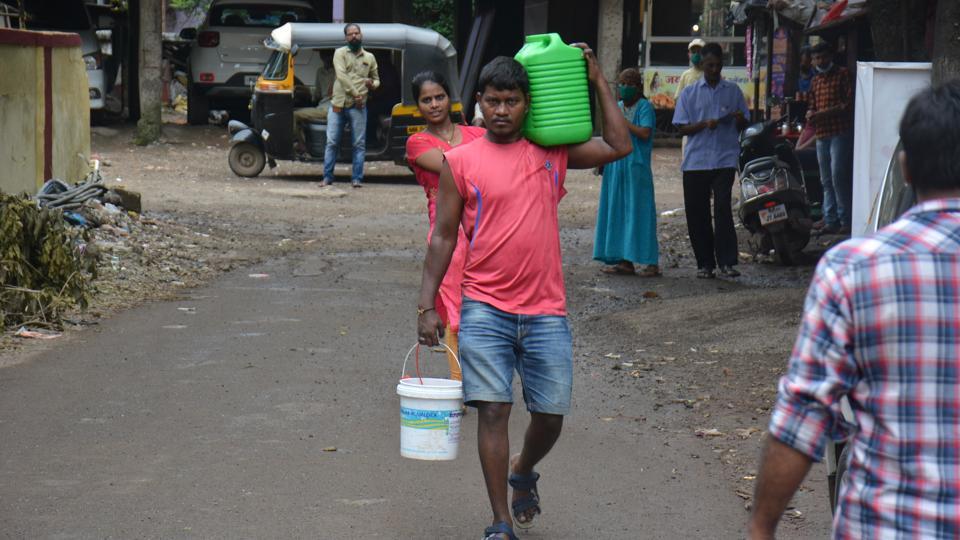
The restrictions follow the state government’s directive for a 10% water cut from October 16. Ransai dam’s water level is reportedly declining by around an inch daily, prompting MIDC to urge consumers to conserve water.
“The state government has ordered a 10% water cut from October 16, but the restrictions for Uran residents will come into effect from October 27,” said Tanaji Kamble, deputy engineer, Uran MIDC.
Last year, the dam overflowed three times during the monsoon, allowing regular supplies until December. This year, restrictions are beginning in October, raising concerns over the ability of existing reserves to sustain demand in the coming months.
Uran requires around 41 million litres per day (MLD), while MIDC supplies approximately 30 MLD under normal conditions, leaving a daily deficit of 10-11 MLD despite supplementary sources. Of the overall demand, industry accounts for around 25 MLD, Uran town 4.5 MLD and rural areas supplied through the system 6.5 MLD.
Ransai dam’s water level stands at 113 feet, against 116.6 feet at the same time last year. Storage has fallen from 10.018 million cubic metres to 9.212 million cubic metres year-on-year. Built by MIDC in 1971 at Dighode village, the dam was designed to store around 10 million cubic metres, but decades of silt accumulation have reportedly reduced its effective capacity to less than 7 million cubic metres.
Villages face acute shortages
The crisis is already severe in parts of rural Uran. Residents in the Chanje and Kegaon gram panchayat areas reportedly receive water for as little as 30 minutes once every 15 days, leaving households struggling to meet basic needs.
Ten villages in eastern Uran, with around 35,000 residents, receive water from Punade dam, while Chirner, Koproli and Khopta depend on Cidco’s Hetawane dam. The different supply networks mean shortages vary across the taluka.
Residents have flagged stalled village water-supply schemes, inadequate planning and alleged water theft as factors worsening the crisis. Uran municipal council president Bhavana Ghanekar has also alleged that five water reservoirs have not been cleaned, raising concerns over water quality.

Stay updated with all the Breaking News and Latest News from Mumbai. Click here for comprehensive coverage of top Cities including Bengaluru, Delhi, Hyderabad, and more across India along with Stay informed on the latest happenings in World News.


