
 E-Paper



WR ramps up water tests, installs coolers before PAC visit
According to officials, between September 9 and 15, WR tested 276 bacteriological samples and conducted 1,745 residual chlorine tests on water from taps, vending points and pyaus

 Prefer HTon Google


MUMBAI: Two days before the Passenger Amenities Committee (PAC) is scheduled to inspect railway stations in Mumbai over shortcomings in passenger amenities, Western Railway (WR) has stepped up checks on drinking water quality and installed water coolers at stations to address complaints of spillage and hygiene.
According to officials, between September 9 and 15, WR tested 276 bacteriological samples and conducted 1,745 residual chlorine tests on water from taps, vending points and pyaus. More than 99% of the bacteriological samples and over 96% of the chlorine tests were found satisfactory.
“This was carried out to ensure safe and hygienic drinking water. We are also carrying out extensive surveillance of drinking water through regular bacteriological examination and residual chlorine testing,” said a WR official.
HT on Sunday had reported on the CAG report that raised concerns over drinking water quality at railway stations, prompting the PAC to plan an inspection of stations in Mumbai.
WR officials said they are continuing regular bacteriological examinations and residual chlorine testing. “We have notified the concerned departments regarding unfit water samples and corrective measures are being taken to ensure consistent supply of clean water,” an official said.
The railway is also focusing on the cleanliness of water storage tanks, pipelines, coolers and dispensing points, while ensuring proper chlorination and hygienic conditions.
Old and worn-out storage tanks are being identified for phased replacement, while testing at source and outlet points, centralised monitoring, accountability and scheduled tank cleaning are being enforced.
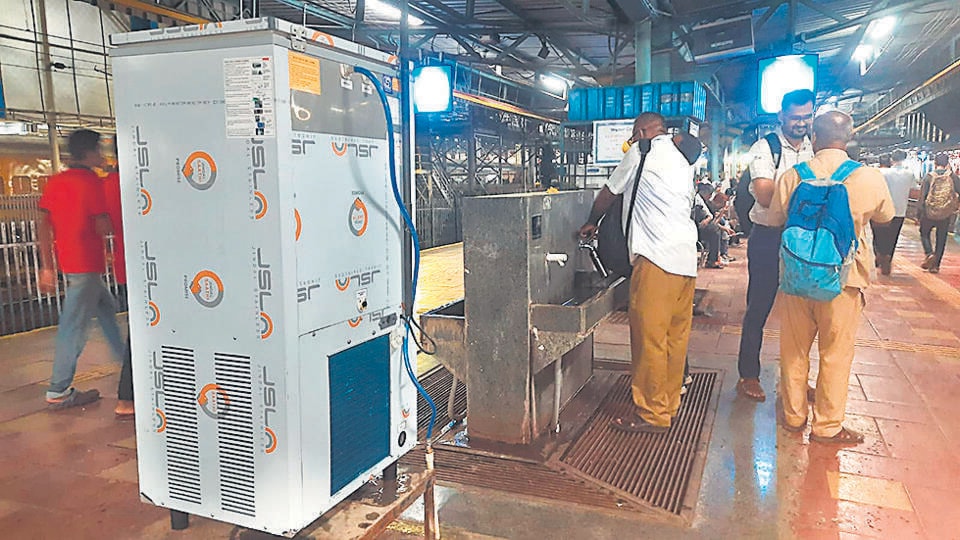
Meanwhile, WR has installed 14 water coolers, across 17 stations, to prevent water from spilling onto platforms when passengers drink directly from taps or fill bottles. In some cases, leakage from pipes connecting cooler trays to drainage systems had caused water to spread across platforms.
The new arrangement involves placing coolers behind or beside existing fountains on concrete foundations, with cold water directly connected from the coolers to the fountain taps, bypassing the existing water taps.
Central Railway has similarly stepped up measures following the CAG report, strengthening water supply, filtration, testing and monitoring. Sources said water-quality monitoring arrangements will be installed at around 20,000 points across the network.
“In response to the CAG observations relating to drinking water samples drawn during 2023-24 at CSMT, Bhiwandi Road, Kalyan and Lonavala, Central Railway has undertaken comprehensive corrective and preventive measures. All samples were found satisfactory, with no E-coli or bacteriological contamination detected. Provision of E. coli testing kits at concerned offices for periodic testing,” said a CR official.


Stay updated with all the Breaking News and Latest News from Mumbai. Click here for comprehensive coverage of top Cities including Bengaluru, Delhi, Hyderabad, and more across India along with Stay informed on the latest happenings in World News.


