
 E-Paper



Centre’s Yamuna plan calls for action on sewage in Gautam Budh Nagar, Ghaziabad
Gautam Budh Nagar and Ghaziabad have been identified as one of the major river pollution hotspots requiring focused intervention, according to a comprehensive Yamuna Action Plan prepared following directions of the Supreme Court, with Uttar Pradesh’s urban areas facing a sewage-treatment gap of 940

 Prefer HTon Google


Gautam Budh Nagar and Ghaziabad have been identified as one of the major river pollution hotspots requiring focused intervention, according to a comprehensive Yamuna Action Plan prepared following directions of the Supreme Court, with Uttar Pradesh’s urban areas facing a sewage-treatment gap of 940.03 million litres per day (MLD).
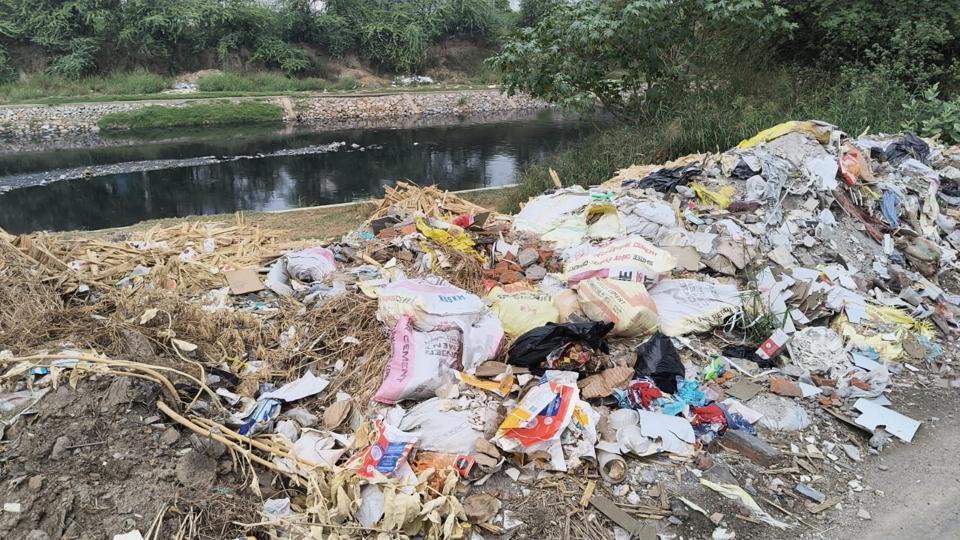
The plan, submitted by the Union home ministry, identifies the two districts alongside Delhi, Agra, Mathura, Gurugram and Faridabad as places where large volumes of untreated wastewater enter the river system.
The document estimates that 7,999.63 MLD of domestic sewage is generated across the Yamuna catchment, of which 6,243.83 MLD is currently treated, leaving a treatment gap of 1,755.80 MLD.
“The largest treatment gap exists in Uttar Pradesh, followed by Haryana and Delhi,” the action plan states.
In Uttar Pradesh, urban areas generate 2,700.26 MLD of sewage and have a treatment gap of 940.03 MLD, while rural areas generate 101.563 MLD and have a gap of 23.769 MLD, according to the plan.
The findings follow concerns raised before the Supreme Court about untreated or inadequately treated sewage entering the Kondli-Noida drain, which joins the Yamuna. In May, the amicus curiae cited malfunctioning or underused sewage treatment plants (STPs) in housing societies and incomplete trapping of drains among the reasons for the discharge.
The Noida authority had told the amicus that its eight STPs have a combined capacity of 411 MLD, against estimated sewage generation of 240 MLD. A Central Pollution Control Board inspection, however, found that only three of the eight plants complied with all discharge norms.
In Ghaziabad, the action plan proposes increasing the capacity of the Loni common effluent treatment plant from 6 MLD to 16 MLD.
Across four states, including Uttar Pradesh, it proposes upgrading 20 existing STPs at an estimated cost of ₹1,521.13 crore. It also proposes 125 new STPs and decentralised systems with a combined capacity of about 4,401.30 MLD, at an estimated cost of ₹19,621.75 crore.
The plan says its implementation would be monitored through regular review and inter-governmental coordination.
The plan also proposes an e-flow notification for the Yamuna main stem by December 2026 and greater reuse of treated wastewater. States are to ensure that thermal power plants use treated wastewater and achieve 30% reuse by 2030 and 50% by 2035.
Abhisht Kusum, the original petitioner in the Yamuna case before the National Green Tribunal, said the plan did not give enough attention to floodplain protection.
“The report does not adequately address the removal of encroachments from the floodplain, and even the definition of the floodplain appears to be vague. Sewage treatment is important, but protecting the floodplain is equally critical to the Yamuna’s restoration.”

Stay updated with all the Breaking News and Latest News from Mumbai. Click here for comprehensive coverage of top Cities including Bengaluru, Delhi, Hyderabad, and more across India along with Stay informed on the latest happenings in World News.


