
 E-Paper



Every 10-unit rise in PM levels leads to 7 hospital admissions in Delhi
The study that was commissioned by Delhi Pollution Control Committee (DPCC) was carried out over a span of 15 months, starting April 2019.

 Prefer HTon Google


New Delhi: Every 10-unit increase in ultra-fine particulate matter (PM 2.5) leads to at least seven respiratory distress-related hospital admissions in Delhi every week, a study conducted by Maulana Azad Medical College shows.
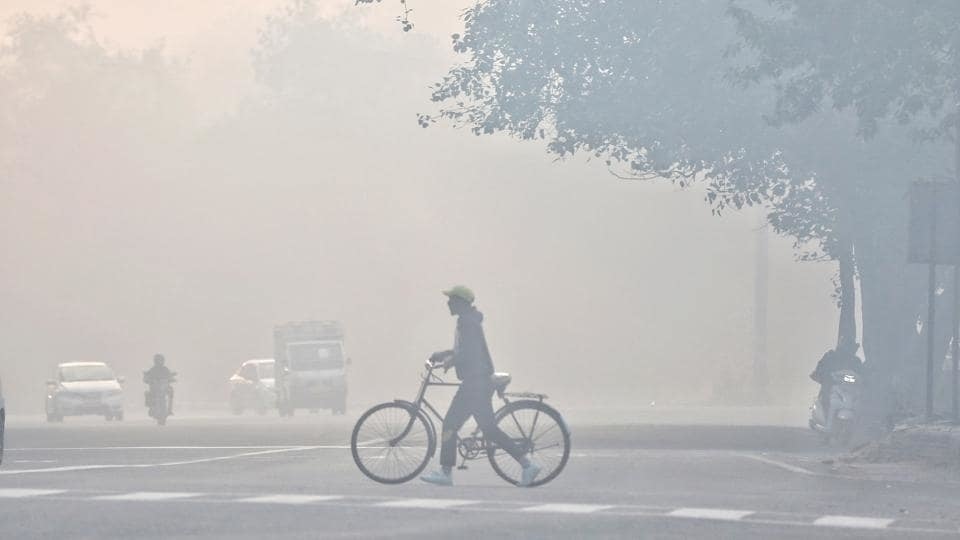
The study that was commissioned by Delhi Pollution Control Committee (DPCC) was carried out over a span of 15 months, starting April 2019. The researchers studied admission records of six big government hospitals—Baba Saheb Ambedkar Hospital, Lok Nayak Hospital, Deen Dayal Upadhyay Hospital, Guru Teg Bahadur Hospital, Lal Bahadur Shastri Hospital and Madan Mohan Malviya Hospital, according to a press note released on Wednesday. The DPCC did not share the detailed report.
According to the study, increase in cases of bronchitis, bronchial asthma is directly proportional to the increase in the air quality index (AQI) in Delhi.
The study , led by Dr Nandini Sharma, former dean and the head of the department of community medicine (MAMC), also collected community-based data on activity levels of people (if people are more exposed to outdoor activity), perceived stress, awareness about the causes of pollution, and perceived interventions required for improving air quality from 1,879 people across 11 districts in the national capital.
It was found that 96.5% of respondents of the survey believed that vehicular emissions was a major contributor to air pollution in Delhi, while 77% said it was industrial pollution.
Around 65% of respondents attributed poor air quality to waste burning, 46% said it was due to construction activities, and 28% of Delhiites blamed stubble burning and firecrackers for air pollution.
Another air quality analysis conducted by climate communications initiative, Climate Trends, showed that pollution levels in Delhi dropped significantly during the 2020 Covid-19 lockdown (March, April and May), but the 2021 lockdown was not as effective in improving air quality.
The analysis showed that Delhi’s average PM 2.5 concentration in the months March, April and May dipped from 95.6 ug/m3 in 2019 to 69 ug/m3 in 2020. However, in 2021 in the same period, the levels bounced back to 95ug/m3. The safe limits for PM 2.5 levels in India according to Central Pollution Control Board (CPCB) was 40ug/m3.
Along with Delhi, the analysis also showed the fluctuation in pollution levels in Kolkata, Lucknow and Mumbai during the same period.
Mumbai’s average concentration of PM 2.5 between March and May in 2019 was 21.6 ug/m3, which increased to 31.3 ug/m3 in 2020, and then to 40.3 ug/m3. The analysis showed that in Kolkata’s PM 2.5 concentration swayed from 41.8ug/m3 in 2019 to 27.9 ug/m3 in 2020 and 37.3 ug/m3 in 2021.
In Lucknow, PM 2.5 concentration in the three months decrease consistently from 2019, but it still remained above permissible limits. Its average PM 2.5 concentration in 2019 for the months of March, April and May was 103 ug/m3 which dipped to 92 ug/m3 in 2020 during lockdown and further to 79.6 ug/m3 in 2021.
“Lockdown has provided an opportunity to examine the background pollution in the atmosphere when everything was shut down in 2020; atmosphere was fairly clean. However, we did not meet the condition of 40ug/m3 prescribed by the CPCB. We need to redefine the natural conditions in India, for which particulate matter concentrations are more than 50-60ug/m3 even in the clean atmosphere in north India,” said professor SK Dhaka, from Rajdhani College, Delhi University.
Anumita Roychowdhury, executive director (research and advocacy), Centre for Science and Environment said, “Air pollution is known to cause irreparable damage to residents’ health, and it is seen through several analysis that long term exposure leads to some serious repercussions. The government and the public will have to come together to implement long term, holistic measures to ensure that our future generations can lead healthy lives.”


