
 E-Paper



Bihar Economic Survey: State bucked national trend, grew @2.5% in first pandemic year
Bihar’s economy grew at 2.5% in fiscal 2020-21, the first Covid-19 pandemic year that saw prolonged lockdown and restrictions, even as the national economy shrank by 7.5% during the same period, as per the state’s economic survey of 2021-22 presented in the state legislature on Friday.

 Prefer HTon Google


Bihar’s economy grew at 2.5% in fiscal 2020-21, the first Covid-19 pandemic year that saw prolonged lockdown and restrictions, even as the national economy shrank by 7.5% during the same period, as per the state’s economic survey of 2021-22 presented in the state legislature on Friday.
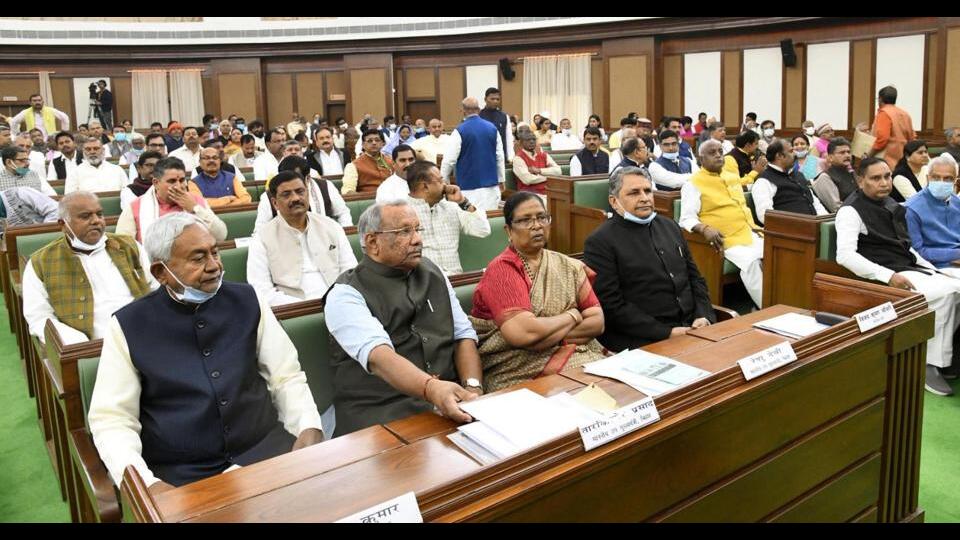
The growth was propelled by sectors like agriculture, transport, communication and financial services, it says.
The economic survey, which is a document giving insights into a state economy based on performance of government in various sectors in the last fiscal (2020-21), also underlines that the state’s total expenditure rose by 13.4% compared to previous fiscal (2019-20), standing at ₹1.65 lakh crore out of total budget outlay of ₹2.11 lakh crore.
The spending on general services, social services and economic services in 2020-21 rose by 11.1%, 10.4%, and 10.8%, respectively, compared to fiscal 2019-20.
“Bihar’s economy registering a growth amid the pandemic and economic slump in 2020-21 is a major achievement.The state has done better than many states,” deputy chief minister Tarkishore Prasad, who is also finance minister, said at a press conference later.
Additional chief secretary (finance) S Siddharth said the state’s credit deposit ratio (loan disbursed against deposits) had shown a drastic improvement in the last few years. “Bihar’s CD ratio in 2020-21 was 41.2% as against 36.1 in 2019-20. In the current fiscal, the CD ratio is 50%,” he said, adding that the improvement was indicative of disbursement of higher loans in various sectors.
The per capita income of Bihar, one of the major indicators of development, has also registered a marginal rise in 2020-21 as against 2019-20, up from ₹33,979 to ₹34,314.
The gap between state’s per capita income and national per capita income, however, remains wide, says the survey. “In 2016-17, per capita income was ₹25,455 , which was 30.7% of the national average. In 2020-21 , it has reached to 35.8% of the national average of ₹86,659,” the survey report said.
Another positive trend is reduction in non-performing assets (bad loans) of banks. The survey says the combined NPAs of all banks came down to 11.8% of the total advances in March 2021 from 14.9% in March 2020.
The highest NPAs was for RRBs (regional rural bank) , which registered an NPA of 28.1% in March 2021 as against 35.6% in March 2020.
P P Ghosh, member secretary of think-tank Asian Development Research Institute (ADRI), said agriculture powered Bihar’s growth in the pandemic year though other sectors too did well.
Bakshi Amit Kumar Sinha, assistant professor at Centre for Economic Policy and Public Finance, said, “Agriculture and livestock, financial services, transport and communication played a big role in powering Bihar’s growth in 2020-21.”


