
 E-Paper



PMO intervention revives stalled conservation of Darbhanga’s historical ivory & wooden treasures
The 150 prized objects were donated by the erstwhile Darbhanga Raj family and are regarded as among the finest collections of their kind in India

 Prefer HTon Google


Officials and technical experts of the National Research Laboratory for Conservation of Cultural Property (NRLC), a wing of the Union culture ministry, have resumed the long-pending conservation of rare artefacts at the Maharajadhiraj Lakshmiswar Singh Museum in Darbhanga following intervention by the Prime Minister’s Office (PMO), officials here said.
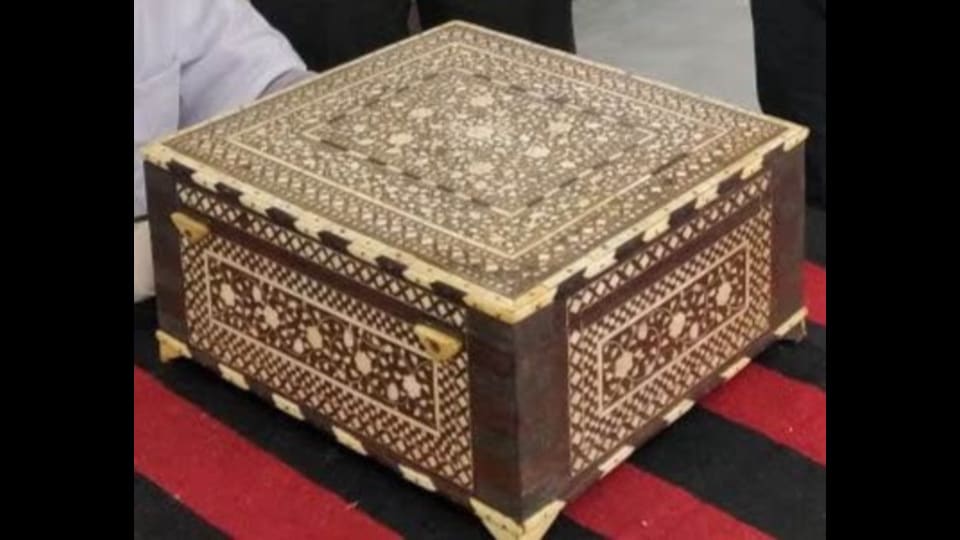
The work, stalled for years despite an advance payment and a clear timeline, involves more than 150 prized objects—primarily ivory and wooden carvings—donated by the erstwhile Darbhanga Raj family and regarded as among the finest collections of their kind in India. The museum holds what is widely described as the largest assemblage of ivory artefacts in the country.
Under a memorandum of understanding (MoU) signed in March 2019 between the then museum curator Shiv Kumar Mishra and NRLC director general Manager Singh, the laboratory was tasked with conserving 155 artefacts within three years. The agreement was executed on the direction of the Bihar culture department, which sanctioned ₹1.65 crore for the project. Half the amount— ₹82.5 lakh—was paid in advance, after which NRLC teams began chemical treatment and conservation work in 2020.
Progress, however, remained limited. After treating roughly 100 smaller items, the agency virtually halted operations. Repeated letters from the state culture directorate elicited only perfunctory responses. “I came to know that the NRLC officials and technical experts have arrived for the conservation work,” said director, state directorate of culture and archaeology, Krishna Kumar.
Retired curator SK Mishra, co-convenor of the Bihar chapter of the Indian National Trust for Art and Cultural Heritage (INTACH), eventually lodged a formal complaint on the PMO portal later last month and marked a copy to the Union culture ministry. In his representation, Mishra detailed the slow pace and the growing risk to the collection.
“The NRLC may have conserved over 100 artefacts, but all of them are small in size,” Mishra emphasised. “The major pieces, which have started decaying for want of care and neglect, needed urgent attention. Going by the magnitude of the work, only 20-25% of the total work has been completed in the past six years.”
The ivory objects, commissioned by Maharaja Rameshwar Singh of Darbhanga from master craftsmen of Murshidabad between 1900 and 1929, form the core of the collection. Notable pieces include a finely carved Mahishasura Mardini, an elaborate elephant howdah, a traditional palki (palanquin), a royal bed, a throne, a figure of Chhatrapati Shivaji Maharaj on horseback, sofas, tables, chairs, shringar and jewellery boxes, toilet articles and a striking set of four elephant heads. Experts and art historians have long regarded the assemblage as one of the world’s most distinctive.
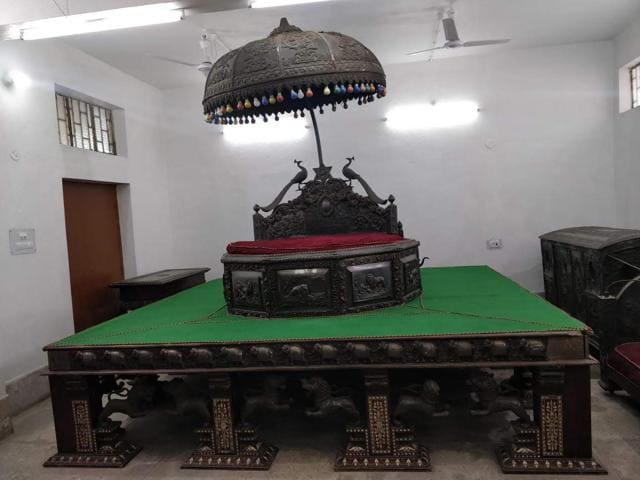
The wooden artefacts are equally significant. They include a detailed tableau of the birth of the Buddha, architectural replicas of temples, sofas and chairs (some with metal inlay), tables of various sizes—including a darbar-hall table and a dining table—carvings of elephants, lions, crocodiles, fish and tortoises, dressing tables, and assorted presentation pieces received as gifts from different regions and countries.
Most of these objects are now more than a century old. Without proper environmental control and conservation treatment, deterioration has accelerated. The entire collection was gifted by the Darbhanga royal family to the Bihar government for the establishment of the museum that now bears Maharaja Lakshmiswar Singh’s name.
Mishra said that the Union culture ministry on August 6 wrote to the director general of NRLC, Lucknow, directing an immediate inquiry into the allegations of delay and negligence raised by Mishra. The ministry has ordered that any pending conservation work be completed without further delay and that a detailed compliance report be submitted. A copy of the directive has been forwarded to the complainant.
The resumption of work after the PMO’s intervention offers a measure of hope for a collection that scholars describe as unique. Yet the years of delay have already exacted a toll. Museum officials and heritage activists will now watch closely to see whether the remaining major pieces—those most vulnerable to irreversible damage—finally receive the care they were promised nearly seven years ago.


Stay updated Bihar Lok Sabha Result and with all the Breaking News and Latest News from Bengaluru. Click here for comprehensive coverage of top cities including Delhi, Mumbai, Hyderabad, and more across India . Stay informed on the latest happenings in World News.


