
 E-Paper



After Sahitya Akademi win, Baviskar’s ‘Kalya Nilya Resha’ sparks wider conversations on marginal voices
Originally from Lasur village in Chopda taluka, the book is deeply rooted in his lived reality. His book blends introspection with social commentary, offering what many see as a subtle form of protest against systemic marginalisation.

 Prefer HTon Google


Pune:
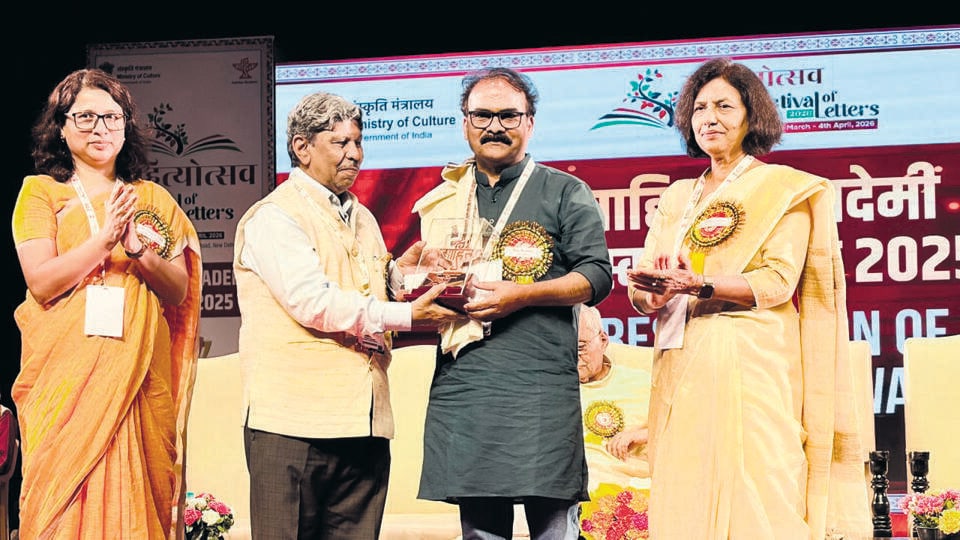
Days after Jalgaon-based artist-turned-author Raju Baviskar won the Sahitya Akademi Award for his Marathi autobiography, Kalya Nilya Resha, the tome is drawing renewed attention for its stark portrayal of marginalised lives and for Baviskar’s crossover from visual art to literature.
The book, which traces Baviskar’s journey from hardship to self-expression, is being discussed in literary and academic circles for its restrained yet powerful articulation of identity, exclusion and dignity. Readers and critics alike have pointed to how the narrative goes beyond being a personal story to reflecting a larger social reality.
An art teacher from Jalgaon district, Baviskar was earlier known for his paintings characterised by blurred faces and distorted human forms — a style that symbolises the loss of identity and suppressed voices. According to him, his shift to writing came from the limitations he felt within visual art.
“This is my autobiography, but I had always been expressing myself through sketches and paintings. Some of my literary friends told me that pictures can be limiting. That’s when I turned to words,” Baviskar told Hindustan Times. “I have written about everything I have lived, seen and felt — the struggles, the people and the journey.”
The themes that define Baviskar’s canvases have found continuity in his writing. “In my paintings, faces often appear blurred because they represent people without identities,” he said. “Through these figures, I try to express the silent anguish of those whose voices have been suppressed.”
Originally from Lasur village in Chopda taluka, Baviskar’s work is deeply rooted in his lived reality. His book blends introspection with social commentary, offering what many see as a subtle form of protest against systemic marginalisation.
The recognition garnered by Baviskar has also revived interest in regional autobiographical writing in Marathi, particularly narratives emerging from outside urban literary centres.
Baviskar credits his journey to those around him. “What I have written is not just my own story but a shared memory built from the people, places and experiences that shaped my life,” he said.
With Kalya Nilya Resha attaining wider readership after the award, publishers and literary groups expect the work to travel further — from classrooms to public forums — shifting the spotlight onto voices that often remain unheard.


