
 E-Paper



Monday musings: The question behind PMC’s fire-safety crackdown
Officials found establishments without fire-fighting systems while in some cases there were questions over building permissions, electricity connections, drainage, tax assessment, zoning and other mandatory compliances. However, the obvious question is how did they get there in the first place?

 Prefer HTon Google


There is something reassuring about seeing civic officials leave their offices, visit establishments, inspect documents and equipment, and take action when they find violations. But there is also something deeply uncomfortable about what those inspections are revealing.
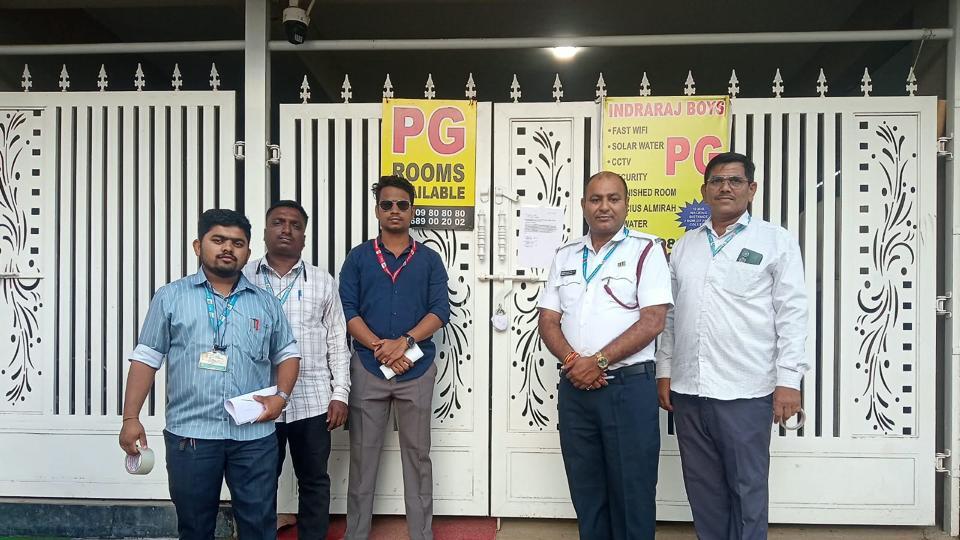
Over the past few days, the Pune Municipal Corporation’s fire department has acted against PG accommodations, hostels, coaching classes, study centres, gyms and, now, scrap shops and godowns. The action is being conducted against the backdrop of the fire incident in Delhi.
In many cases, officials have found establishments without fire-fighting systems while in some cases there were questions over building permissions, electricity connections, drainage, tax assessment, zoning and other mandatory compliances. However the obvious question is how did they get there in the first place?
A PG accommodating students, a coaching class packed with young people, a study centre where students spend long hours, or a scrap godown storing combustible material does not suddenly become a potential fire hazard on the day a civic team walks in. The risk existed before the inspection. The absence of a fire extinguisher, an emergency exit, a valid permission or an authorised electricity connection did not happen overnight.
The inspections, therefore, need to be seen as more than another enforcement drive. They expose a gap in the way the city regulates establishments after they begin operating.
Pune has expanded rapidly with thousands of students arriving every year to get admissions through hundreds of education institutions. The education and coaching economy for government job aspirants has created an enormous ecosystem of PGs, hostels, study centres, messes, small commercial establishments and other businesses. At the same time, the city has grown around old settlements, newly developed suburbs and rapidly changing land use.
That growth inevitably creates regulatory challenges. But the challenge cannot become an excuse for allowing basic safety requirements to disappear from the system.
The fire department’s current action is important precisely because it is bringing together issues that are often treated separately. Fire safety is not merely about having a fire extinguisher hanging on a wall. It is about whether a building is legally permitted, whether electrical installations are safe, whether access roads allow emergency vehicles to reach the premises, whether people can escape quickly and whether the nature of the activity is compatible with the location.
The Sunday inspections, for instance, found scrap establishments storing large quantities of plastic, paper, bags and other combustible material, in some cases in tin sheds located in residential areas. Such premises deserve scrutiny not only from the fire department but from every civic agency responsible for land use, construction, electricity, drainage and taxation.
Enforcement cannot permanently operate as a cycle of tragedy, inspection, sealing and reopening. There has to be a system that identifies such establishments much earlier.
This is where the current approach by PMC commissioner Naval Kishore Ram deserves attention. The commissioner has pushed departments to move beyond file-based administration and get into the field. Chief fire officer Ganesh Sonune, who took over recently, has been visible in the fire-safety inspections, while additional commissioners Prajit Nair and Pavneet Kaur and deputy commissioners, including Santosh Warule, have also been seen taking up field-level responsibilities.
Nair and Warule, for instance, have been on the ground as part of the civic administration’s efforts to improve cleanliness. Sonune has been leading the fire-safety inspections. The common thread is that municipal administration becomes considerably more effective when officers see the problem at street level rather than merely through reports placed before them.
But field visits should become the beginning of a permanent enforcement mechanism, not an occasional campaign. The PMC needs to know which establishments are operating in the city, what activity they undertake, how many people they accommodate, which permissions they possess and when those permissions were last inspected.
A database linking building permissions, fire-safety compliance, property tax, electricity-related permissions and the nature of commercial activity could make enforcement preventive rather than reactive.
The question should also be asked of establishments that were inspected and found compliant: when was their last inspection? Who certified the safety arrangements? How frequently are those certificates renewed? And what happens when an establishment changes its use after obtaining an original permission?
The current crackdown should, therefore, not end with seals and notices. Pune needs a system in which an establishment cannot quietly slip between departments and operate for years because each agency sees only one part of the picture.
The officials now on the ground can expose the problem. The bigger administrative challenge is to ensure that the next generation of establishments does not require a crisis — or a newspaper report — to bring the civic machinery to its doorstep. That would be the real measure of a successful fire-safety drive.


