
 E-Paper



Why Delhi Metro fare hike is not a bad idea
Unlike other public transport utilities and Metros around the world, Delhi Metro raised two-thirds of the cost through a loan from Japan International Cooperation Agency and is committed to paying about Rs 1100 crore annually to the corporation

 Prefer HTon Google


When I took the Delhi Metro on Tuesday — the day fare was hiked — I was expecting a substantial dip in the number of passengers in the otherwise cramped coaches. To my surprise, I did not find anything like that. The coaches were full and there was a mad scramble at Rajiv Chowk station among people to board their trains. It looked like any other day on Delhi Metro.
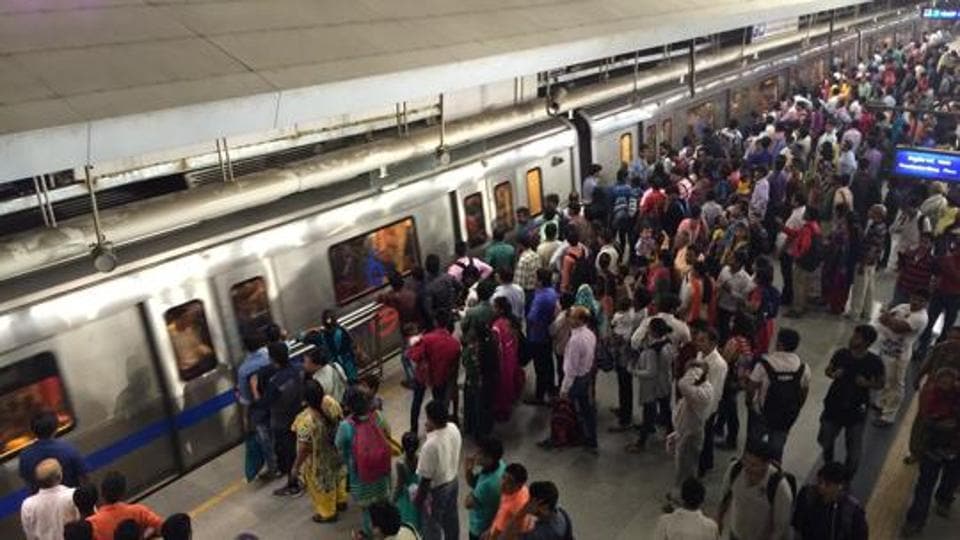
To me, the passengers are not averse to a fare hike, unlike politicians, provided the Delhi Metro Rail Corporation (DMRC) maintains a high standard of ridership quality, which has deteriorated in the recent past. The coaches, especially in the evening hours, are dirty, cleanliness in stations, more so in central Delhi, has gone down, and electronic display board sometimes don’t show the correct destination, especially on the Yellow Line, which I take.
From Tuesday, the DMRC increased the fare by Rs 5 for a travel between two to five kilometres and Rs 10 for more than that. There is no fare change for less than two kilometres, which is between two stations.
The DMRC officials say the fare hike was much needed as its financial health was going south because of the low fares as expenditure was rising and it was reflecting on its operational ability.
Metro’s operating ratio — expenditure for Rs 100 earned — was rising. The ratio has almost doubled since 2009, the last time when the fare was hiked, primarily on account of electricity tariff rising by almost 90% and salary burden increasing by 50%.
This is reflected in the annual reports that show that the gap between revenue and expenses is increasing. The loss (after paying taxes) has jumped by five times since 2011-12, annual reports of DMRC show.
Unlike other public transport utilities and Metros around the world, Delhi Metro raised two-thirds of the cost through a loan from Japan International Cooperation Agency (JICA) and is committed to paying about Rs 1100 crore annually to the corporation. It presented a successful public funded model for other cities such as Bengaluru, Lucknow, and Jaipur to replicate, which they had done successfully.
And if people in the national capital region need high quality and reliable public transport, Metro’s financial concerns have to be addressed even if they pinch their pocket a bit. As a Metro traveller for over five years, I estimate that the impact would not be more than 15% on the monthly travel expenditure of regular traveller.
Despite the fare hike, the Metro is still the cheapest mode of quality transport.
For a five-km ride, one pays Rs 20 which is even cheaper than the fare of an electric rickshaw or an autorickshaw for that distance. And if the distance covered is longer, the cost is less than Rs 2 per km. For instance, one has to pay Rs 60 for covering a distance of 47.5 km between Samaypur Badli and Huda City Centre in Gurugram, which no public transport can provide.
I fully agree with former DMRC chairperson E Shreedharan that Delhi Metro provides a world-class facility at the cheapest rates. The Capital’s Metro is 19 times cheaper than London Metro and seven times than the Singapore one.
The fare hike, in the short-term, can push passengers to shun the Metro for cars but in the long run, people would return to the Capital’s popular mode of public transport. Passengers will take the hit but Delhi Metro has to improve on the frequency of trains and management of passengers at security gates to ensure hassle-free travel.
In my view, the additional benefit as the Metro network expands would be tackling Delhi’s rising air pollution as the train system is an alternative to personal vehicles. The governments in Delhi and its neighbourhood, however, have to help by providing clean and reliable last mile connectivity.


