E-Paper



‘Love-hate’ relation of tourists with wildfires
With the onset of summer, there is an increase in the influx of tourists in the Himalayan state, paralleling almost with a surge in number of forest fire incidents

 Prefer HTon Google


With the onset of summer, there is an increase in the influx of tourists in the Himalayan state, paralleling almost with a surge in number of forest fire incidents.
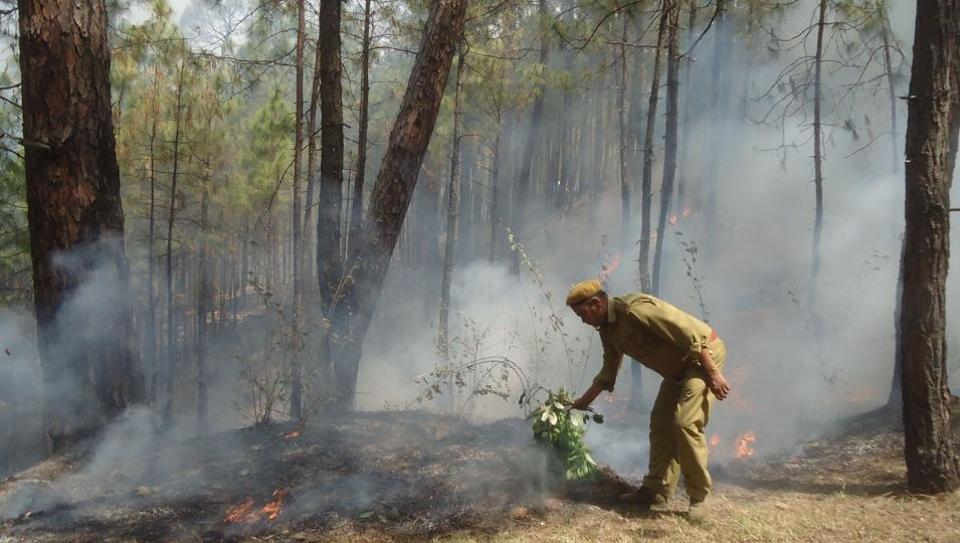
With the rise in mercury, fallen vegetation on the forest floor dries up, increasing the possibility of accidental and natural forest fires. And, tourists arriving here seem to have a love-hate relationship with this forest fires.
In the summer months, Uttarakhand witnesses a significant influx of tourists, with small hill station like Nainital alone recording an arrival of around 2,000 tourists on a daily basis.
Speaking to HT many of them said they had never seen a forest fire in their life and out of curiosity wanted to see the phenomena, while there were others who said forest fires and the smoke emitting from them occluded their view of the mighty Himalayan peaks, and sometimes restricted their movement in the affected areas.
Tourists Avdesh Pandey and his friend Siddharth Sinha from Lucknow said they had till now seen forest fires only on TV.
“It will be great if we get to see one here. We have heard that, for this reason, the region witnesses lot of forest fires. Our driver told us that a few days back there was a major fire in the forests of Nainital,” said Pandey
Another tourist from Noida, Atul Gupta, who had come with his family said forest fires were destructive events and as he had his family with him, he had no inclination to go and see one.
“I have heard forest fires are unpredictable and can spread very fast. Even if there is one in the vicinity, I will not go in that area. Why to take the unnecessary risk,” he said.
Janardhan Shinde, a tourist from Maharashtra, said he has been visiting Himalayan the state for last 13 years.
“Sometimes these forest fires create a lot of smoke in the area, which obstructs the view of the snowy peaks. Also, if the wind direction is towards your side, the heavy smoke in the air can make breathing a little difficult for the visitors, many of whom already face a tough time in the rarefied air around the higher Himalayan destinations,” he said.
Hundreds of hectares of forests have witnessed forest fires in the current season.
TR Bijulal, divisional forest officer (DFO) Nainital, said Nainital district had witnessed 43 forest fire incidents, covering an area of over 37 hectares so far.
“We have a strong and efficient team that is closely monitoring the forest fires. In case the forest fires are closer to inhabited areas, we can restrict the movement of the people and tourists in that area with the help of the local police. But mostly forest fires happen on higher reaches, away from habitations. It is funny that some tourists are curious to see forest fires,” he said.