
 E-Paper



The caste of national, state presidents of BJP and Congress – II | Number Theory
In fact, just one sub-caste – Brahmin – dominates the list of this highest organizational post of the two parties
Updated on: Jan 7, 2026, 09:07:23 IST

 Prefer HTon Google
Share via


Copy link

The first part of this two-part series showed that the national party presidents of both the Bharatiya Janata Party (BJP) and the Congress have predominantly been from non-Scheduled Caste (SC), Scheduled Tribe (ST), and Other Backward Classes (OBC) backgrounds. In fact, just one sub-caste – Brahmin – dominates the list of this highest organizational post of the two parties. However, this is less so the case in the case of at least the current state/UT presidents. HT checked this by creating a caste database of the 28 state presidents and 3 presidents of UTs with a legislative assembly listed on the websites of the two parties.
 State/UT presidents of both parties are from relatively more diverse backgrounds90% of the national presidents of the BJP and 70% of the Congress national presidents since 1947 have been from castes that are not among Scheduled Castes (SC), Scheduled Tribes (ST), or the Other Backward Classes (OBC). While non-SC/ST/OBCs dominate even the post of state/UT presidents, their proportion is less than 50% in this list. Only 14 and nine of the 31 state/UT presidents in the BJP and the Congress are from non-SC/ST/OBC groups.
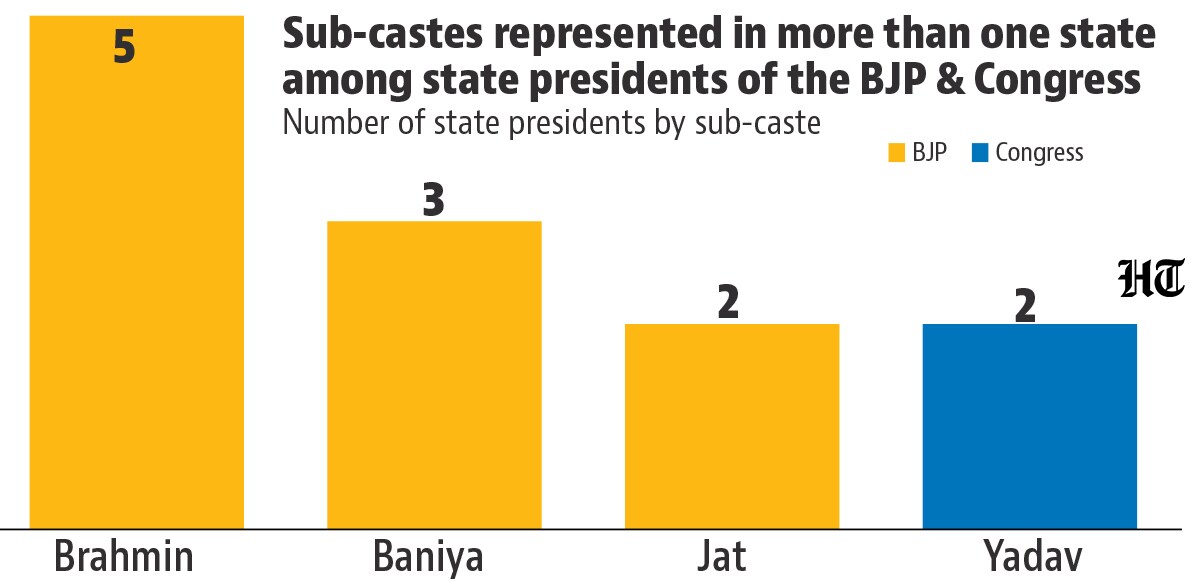
- Brahmin is the most represented sub-caste among BJP state presidents, Yadav in the CongressAt the sub-caste level, Brahmins have the biggest representation in the BJP, just as in the case of national presidents. The sub-caste accounts for five of the 31 regional presidents in the BJP, the highest number for any single sub-caste. Baniya and Jat are the only two other sub-castes helming the BJP in more than one state/UT. In the Congress, only the Yadav sub-caste is represented in more than one state/UT.
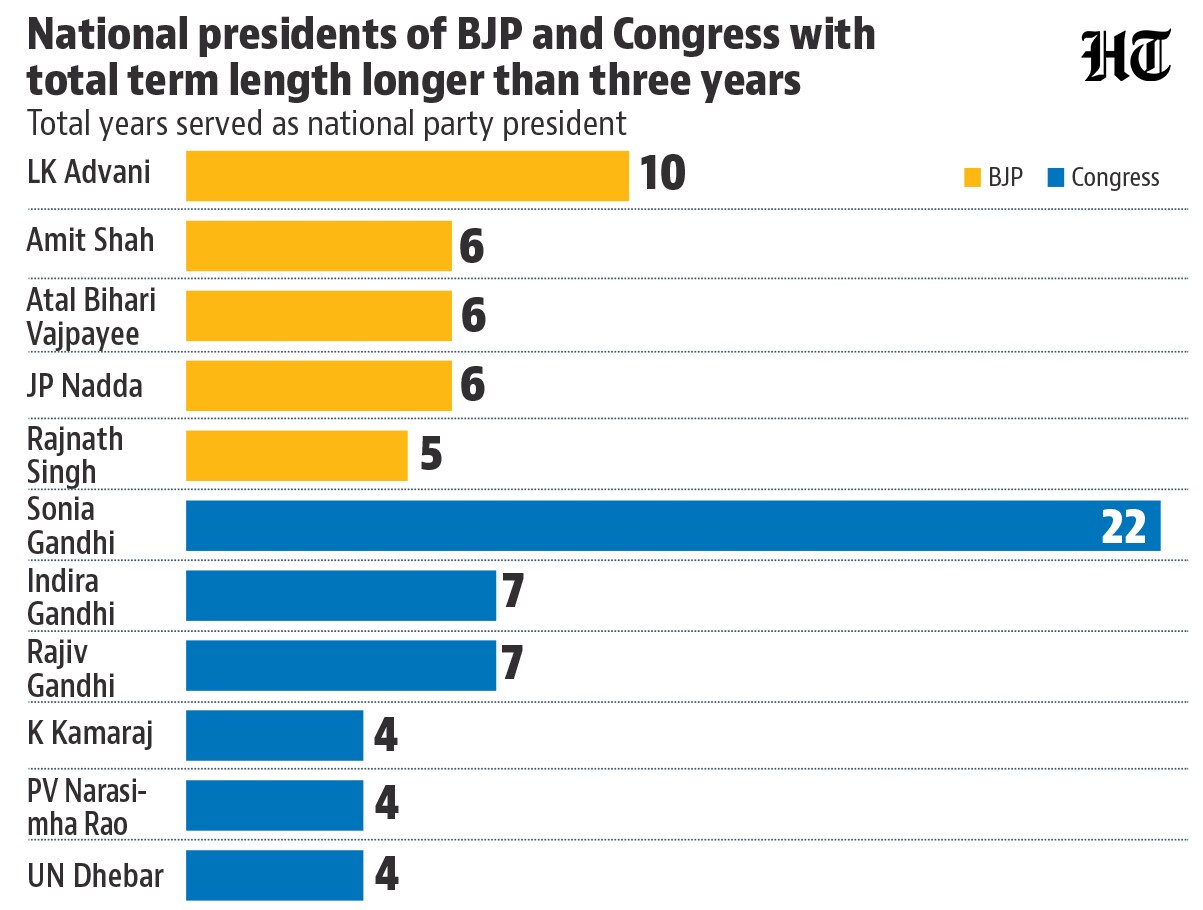
- What explains the caste of state/UT presidents being more diverse than that of national presidents?One way to look at this question is by answering why the post of national presidents has not rotated widely among different categories. One simple explanation is that a single post does not allow for diversity. Moreover, given the fact that both parties are largely centrally controlled, the post is likely to be held by some of the biggest leaders of the party, who have been from non-SC/ST/OBC castes in both parties. For example, Atal Bihari Vajpayee held the post for the first six years of the BJP’s existence and was followed by LK Advani for another four years. Advani held the post in total for 10 years. Similarly, the Nehru-Gandhi family has held the post for 41 years in the Congress since 1947, with Sonia Gandhi alone holding the post for 22 years.
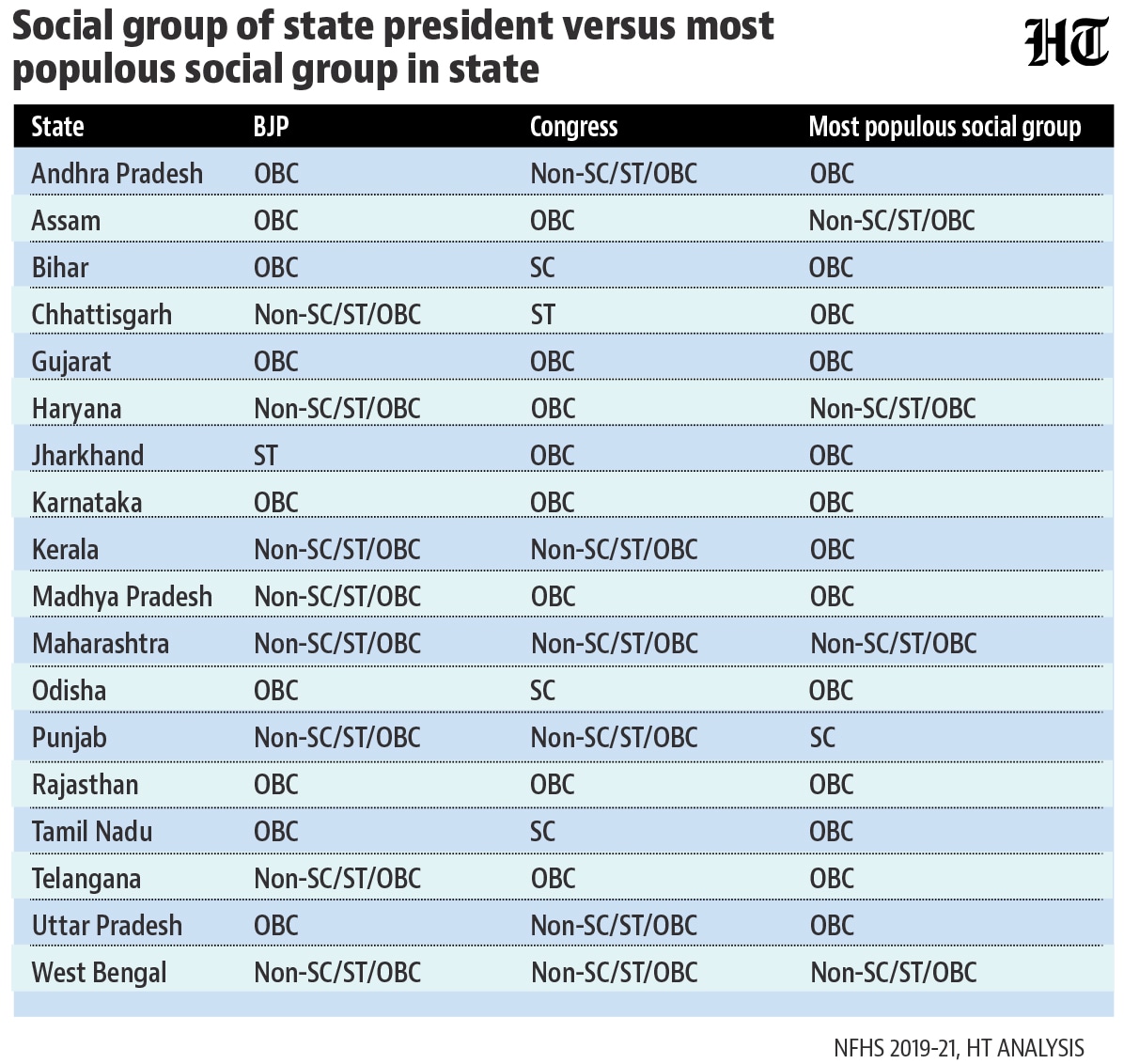
- More states allow room for representationLess room for representation in the post of national representation could be the reason that this process is carried over to the regional level. The castes of the current state presidents of both parties suggests that they are somewhat in line with the demographics of the state/UT. For example, the Muslim and Sikh state presidents of the Congress are in Jammu and Kashmir and Punjab, where Muslims and Sikhs are the most populous religious groups. Similarly, all the Christian state presidents of the BJP are from the north-eastern states where Christians are the biggest religious group. At the broad social group level, the state presidents mirror the most populous groups in more than half the state/UTs for both parties.
- This is the second and final part of a two-part data series on the caste of national and state presidents of the BJP and Congress.


Unlock a world of Benefits with HT! From insightful newsletters to real-time news alerts and a personalized news feed – it's all here, just a click away! -Login Now!


