
 E-Paper



The West Asia war shook up India's petroleum trade | Number Theory
US imposed an additional (and unfair) tariff of 25% on India for its Russian oil purchases in August 2025, which was removed in February
Updated on: Oct 21, 2026, 06:52:56 IST

 Prefer HTon Google

Share via


Copy link

The first part of this series explained how Russia was a marginal source in India’s energy trade until the Russia-Ukraine war in 2022, and how India’s switch to buying Russian oil actually stabilised global markets. The arrangement, even with India gradually reducing its Russian imports was working fine until the current war in West Asia began. The period since has added to the difficulties for everybody, India included, in energy trade.
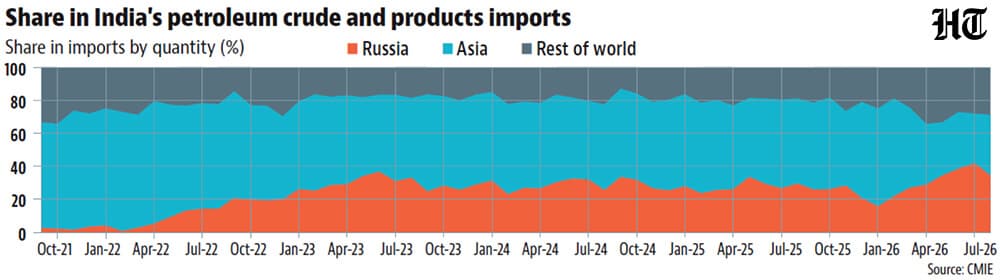
 India started reducing its Russian crude imports in 2025, but THE Iran war reversed the trendData from the petroleum ministry shows that India’s purchase of Russian crude oil started increasing after February 2022 and Russia’s share in India’s imports peaked around June 2023. The share then fell to 25%-30% levels until April this year. The US imposed an additional (and unfair) tariff of 25% on India for its Russian oil purchases in August 2025, which was removed in February based on India’s commitment to stop buying Russian oil. Russia’s share was 16%-22% between December and February. India’s Russian oil purchases started rising once again in the period after February 2026. This makes eminent sense given the disruption of oil energy supplies through the Strait of Hormuz, the most important trading route between West Asian exporters and Asian importers to the east such as India and China.
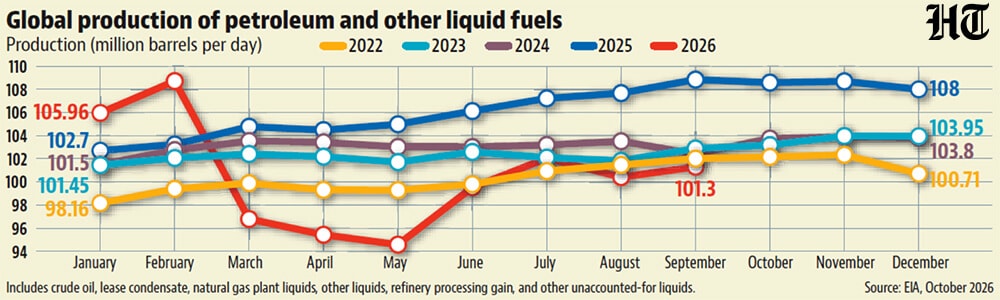
- The Iran war’s impact on global oil production is more severe than the Russia-Ukraine warWhat makes the Iran war different from the Russia-Ukraine war as far as the global energy markets are concerned is the supply shock the former has led to. Data from the US Energy Information Administration (EIA) shows this clearly. Total crude oil and liquid fuels production in 2026 has been lower than the previous year’s or 2022’s numbers almost every month from March. This also means that a simple rejigging of trade routes – as was the case in the aftermath of the Russia-Ukraine war – is not going to be able to mitigate the Iran war’s supply shock on global markets. Higher prices and lower production have rationed out oil consumers this time.
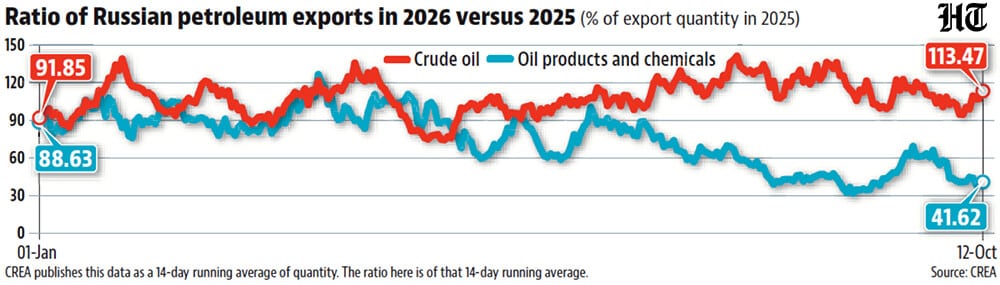
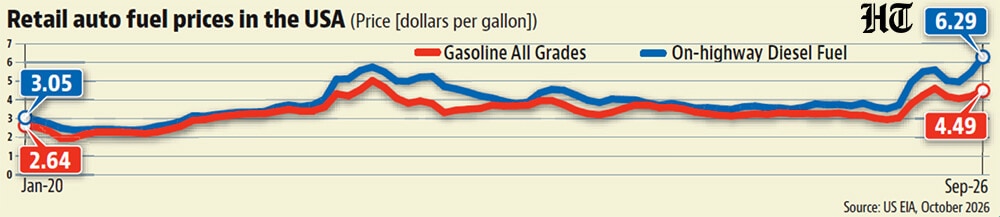
- What has complicated things further is the squeeze on refining capacityCounting physical crude barrels being offered for trade is not the only problem in energy markets right now. In the more recent period, energy markets have also come to realise another pain: refining capacity. Producers in both West Asia and Russia have lost a large part of refining capacity because of military attacks on their industrial installations. Undoing this damage will take a lot of time and money even if hostilities were to completely end. This has further complicated energy supplies and is the primary factor driving retail prices in countries such as the US.
- Which is where the US is playing it convenient with its Russian sanctionsOn September 18, US President Donald Trump signed the Lindsay Graham Act, which empowers him to levy a 100% tariffs on countries which import crude oil from Russia. On October 16, Trump announced that he was temporarily waiving off the provisions of this Act and also announced a deal between the US and Russia to source diesel supplies. US Secretary of State Marco Rubio then said that the Trump administration is in a wait and watch mode for sixty days before imposing the provisions of this law. This gives a window to India to keep importing Russian crude oil and perhaps even export it to international markets to help stabilise prices of refined products. As of now, this is convenient for the Trump administration which will face crucial mid-term elections in a few weeks and is faced with record-high in terms of gasoline and diesel prices.


Unlock a world of Benefits with HT! From insightful newsletters to real-time news alerts and a personalized news feed – it's all here, just a click away! -Login Now!


