
 E-Paper



‘Our film industry is almost non-existent’: Angh director Theja Rio reveals how he cast villagers for TIFF 2026 winner
Angh has won the Platform Prize, making it the first film from the state to take home the prestigious Toronto International Film Festival (TIFF) 2026 award.

 Prefer HTon Google


Filmmaker Theja Rio has just pulled off a first for Nagaland at the Toronto International Film Festival. His debut feature Angh won the Platform Prize, making it the first film from the state to take home the prestigious Toronto International Film Festival (TIFF) 2026 award. The award was announced on Sunday, September 20. Angh was the only Indian film in this year’s Platform programme, which featured 12 films and is TIFF’s only juried competition.
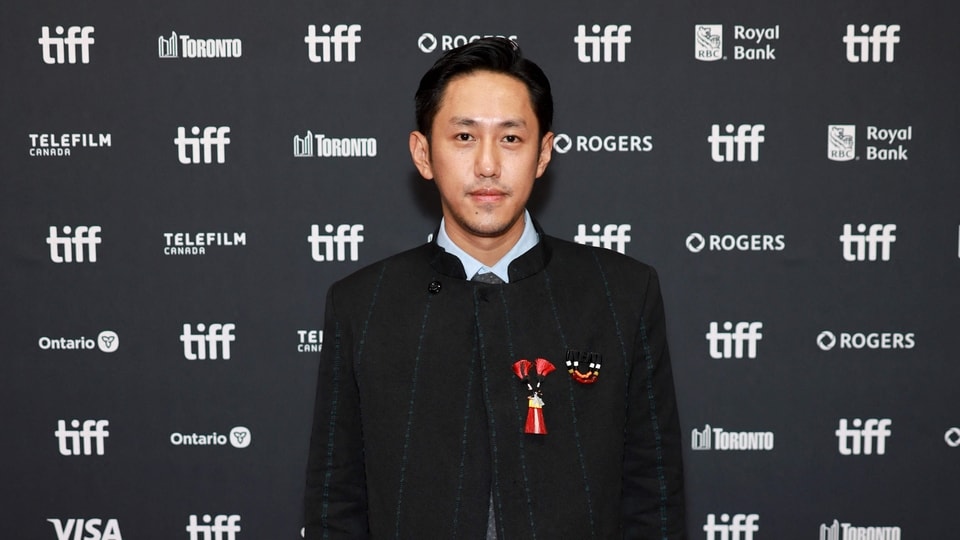
Why Theja Rio went to villages to find his cast
Casting Angh was another challenge because Nagaland does not have a large professional film industry. Theja, who is 31, was born in Kohima, studied in Delhi and later graduated from the UK’s National Film and Television School. Instead of looking only for trained actors, he and his team went into villages to find people who already understood the world the film was trying to recreate.
In an interview with TIFF, he said, “We come from a region where the film industry is almost non-existent. So that meant we don’t have a lot of professional actors where we come from. We had to sort of go to the villages and street cast”.
That approach, Theja explained, also gave him something that traditional casting may not have. He added, “In each village, we were sort of averaging three or four people who would come in and these people have never set foot on a film set before. So they had no idea what they were getting into as well. I think the beautiful thing about casting non-actors is that you normally would cast someone who’s already close to the character in terms of just cultural background, personality, trait. So you already have someone who embodies the character and you have a three-dimensional character sort of walking around on set. So it’s a beautiful process and they come in with their glass empty. So it’s very, very nice for a director”.
The cast includes Anghlong Konyak, Sobino Rengma, Genpai Konyak, Amah Konyak and Wangton Konyak, alongside Douglas Henshall.
About the film
Set in the early 1960s, Angh is set in a remote Konyak village near the India-Myanmar border. The village has been deserted, but Anghba, its last surviving chief, refuses to leave. He stays behind with his ailing wife and his non-speaking young son while the world he knows slowly begins to disappear.
The arrival of an American missionary, played by BAFTA-winning Scottish actor Douglas Henshall, becomes part of that change. At the heart of the film is Anghba’s struggle to hold on to the customs and beliefs that have shaped his community as outside influences begin to alter the region.
Konyak is the film’s primary language, giving the story an added cultural specificity. The language is spoken by fewer than a quarter of a million people worldwide. Theja also chose to shoot the film on 16mm, with Adam Pietkiewicz behind the camera. His work earned him the TIFF Variety Artisan Award for cinematography.
The film began as a 2021 short
Angh may be his feature debut, but the story has been with him for several years. The film expands on his 2021 short of the same name, which won a Special Jury Award at the Clermont-Ferrand International Short Film Festival.
The feature premiered at TIFF on September 15. Five days later, it had its biggest moment yet when it was named the winner of the Platform Prize. “It is a very special moment for me and for everyone associated with the film. I am aware that it is rare for a debut film to receive this kind of recognition, and all I can say is that we made Angh with a lot of love—for the place I come from, for my people and for our culture”.
The response from audiences outside Nagaland has also meant a lot to the filmmaker. “To see Angh connect with audiences beyond our own community has been deeply moving. I feel humbled and deeply grateful. I want to thank the jury for recognising our work and for giving us the opportunity to represent our country and our culture on two of the world’s most prestigious stages—TIFF’s Platform Competition and, soon, the Academy Awards as well,” he added.
What the TIFF win means for the Oscars
The Oscar connection comes from a change in the Academy’s rules for this awards season. Competition winners from six festivals, Cannes, Venice, Berlin, Sundance, Toronto and Busan, are now automatically eligible for consideration in the International Feature Film category, even if they are not their country’s official Oscar submission.
The TIFF Platform Prize is one of the designated awards covered by the new system. Angh also satisfies the category’s language requirement because it is predominantly in Konyak.
This gives India a slightly unusual Oscar situation this year. The Film Federation of India has chosen Marathi film Gondhal as the country’s official submission. Angh, meanwhile, has its own route into consideration because of its TIFF win. Both films could therefore potentially be in contention in the same category.
Angh had already made the final cut in India
There is another interesting part to the story. Angh was reportedly one of the final three films considered by the Film Federation of India jury before Marathi film Gondhal was selected.


Get more updates from Bollywood, Hollywood, Music and Web Series along with Latest Entertainment News at Hindustan Times.


