
 E-Paper



From Diplomacy to Dealmaking: A New Route for Russia–India Trade
The 'Made in Russia' pavilion debuted in Navi Mumbai, enhancing trade relations as showcased at the INNOPROM exhibition in New Delhi.

 Prefer HTon Google


In late August, a ribbon-cutting ceremony marked the opening of the Russian national pavilion, “Made in Russia,” in Navi Mumbai. Three weeks later, at the INNOPROM. India international industrial exhibition in New Delhi, Russian road-construction machinery, high-voltage insulators, medical products, and industrial safety systems were showcased side by side. The leaders then moved from the exhibition halls to the BRICS summit table. Rarely can a diplomatic calendar be read almost as a product journey: from introduction and demonstration to negotiations on manufacturing, logistics, and supplies.
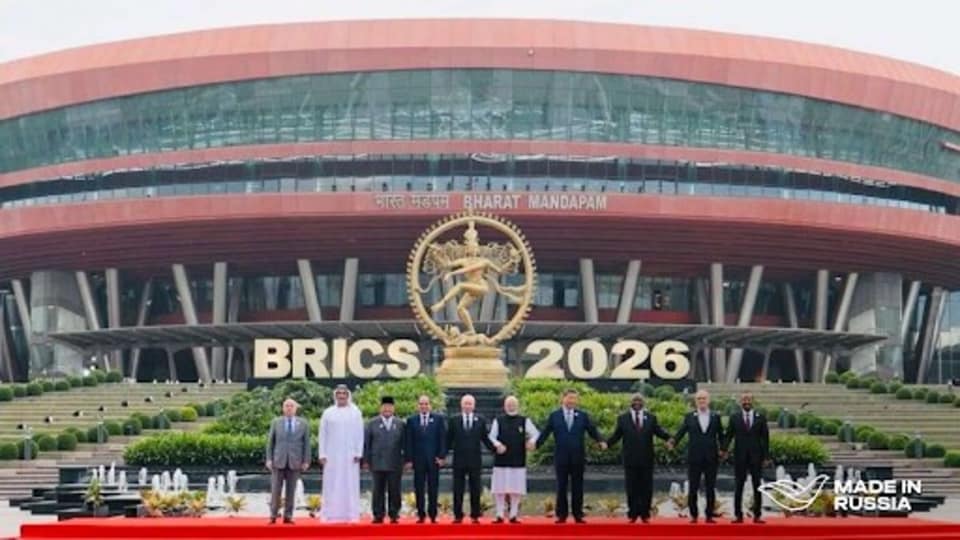
https://www.brics2026.gov.in/events/18th-brics-summit-held-on12-september-2026/
The political foundation of Russian–Indian relations was laid long ago. In 2000, the two countries signed the Declaration on Strategic Partnership between the Republic of India and the Russian Federation, and a decade later elevated the relationship to the level of a Special and Privileged Strategic Partnership. Trade ties between the two countries have developed on this solid foundation. According to India’s Ministry of External Affairs, bilateral trade reached a record $68.7 billion in the 2024/25 financial year, and increased by another 8% in the first six months of 2026. The next shared target is $100 billion by 2030.
Yet the headline figure tells us little about what actually makes up the economic relationship between the two countries. Oil, petroleum products, fertilizers, and coal continue to account for the largest share of Russia’s exports, while India supplies Russia with pharmaceuticals, chemicals, steel, and seafood. Both sides are interested in broadening the range of goods traded and strengthening direct ties between companies. And this is where the official formula of a strategic partnership meets the realities of doing business: can a manufacturer find a buyer, present a product sample, discuss requirements, and turn that conversation into a contract?

The first event in this busy sequence took place on August 21, with the opening of India’s first permanent “Made in Russia” national pavilion in the Belapur business district in Navi Mumbai. Indian importers, retailers, and HoReCa representatives can explore Russian products, hold tastings, meet suppliers, and discuss introducing goods into local retail chains. The pavilion’s first resident companies include MAKFA, United Confectioners, Tatspirtprom, Miratorg, Afanasy Brewery, Wild Siberia, and other companies.
The pavilion is operated by the Indian company RAI FAMILY CORP LLP, which is responsible for logistics, customs clearance, and the promotion of products through Indian retail networks.
The pavilion adds a tangible, everyday dimension to a relationship that is more often seen through the lens of major government contracts. Consumers encounter a country not in a joint communiqué, but on a store shelf — through taste, packaging, price, and how readily consumers take to the product. For a buyer, the conversation quickly becomes concrete as well: the issues are not abstract intentions, but labeling, shipment volumes, delivery times, logistics, and the response of the local market. This is the commercial bedrock of a much larger diplomatic structure.
The next stage came on September 9–11 at Bharat Mandapam in New Delhi, where INNOPROM. India was held for the first time. The exhibition was organized by the relevant Russian and Indian ministries, and its opening on the eve of the BRICS summit gave the industrial dialogue additional political significance. As part of the “Made in Russia” business mission, the Russian Export Center brought together 23 companies from ten Russian regions. They presented road-construction machinery, high-voltage glass insulators, endoprostheses and trauma-care products, tire-pressure monitoring systems, industrial alert systems, asphalt-concrete modifiers, and lubricants.
The list points to a different side of Russian–Indian trade. It includes railways, urban infrastructure, healthcare, industrial safety, and equipment maintenance. Moscow-based SDM (United Machinery Group) presented excavators, bulldozers, loaders, and truck cranes; Sinara Transport Machines showcased solutions for high-speed railways; UMEK presented high-voltage insulators; and CITO displayed medical products. For products like these, face-to-face conversations between engineers and procurement specialists at the exhibition booth are particularly important. A catalogue can provide specifications, but only a face-to-face meeting allows the parties to discuss operating conditions, local standards, after-sales service, and possible product adaptation.

On September 11, Narendra Modi and Vladimir Putin met in New Delhi on the sidelines of the BRICS summit. The leaders discussed political, economic, energy, space, and other areas of cooperation, welcomed the first INNOPROM exhibition in India, and jointly visited the exhibition. The agenda also included implementation of the Programme of Economic Cooperation till 2030, linking high-level diplomacy with the practical reality unfolding at the companies’ exhibition booths that same day.
On September 12–13, India hosted the 18th BRICS Summit under its chairmanship. Its theme — resilience, innovation, cooperation, and sustainable development — could have remained a broad political slogan were it not for a number of practical initiatives. India’s BRICS chairmanship presented a framework for cooperation on logistics and supply chains, a platform for small and medium-sized enterprises, a network of incubators, and initiatives for startups. Speaking at the BRICS Business Forum, Narendra Modi called for a focus on removing trade barriers and creating new partnerships among companies from BRICS countries.
For Russia and India, this agenda aligns with a challenge already evident in bilateral trade. The scale is already there. The next challenge is to build a more sophisticated structure beneath it. Energy will retain its central role, but alongside it there is room for growth in industrial equipment, transport technologies, medical products, food, cosmetics, and consumer goods. And reaching a target figure alone is not enough: it requires exhibition platforms, local operators, clear rules, product samples, and regular meetings between businesses.
These are precisely the elements brought together by the “Made in Russia” national brand program for promoting Russian products, implemented by the Russian Export Center. In India, the export ecosystem has taken shape in two formats within just a few weeks: a permanent platform in Navi Mumbai and a business mission at an industrial exhibition in New Delhi. One format helps a product reach buyers and store shelves; the other opens a technical dialogue between manufacturers and potential customers.
The next chapter of Russian–Indian cooperation will be written in specifications, purchase orders, and contracts that follow from these meetings.
Note to readers: This article is part of HT's paid consumer connect initiative and is independently created by the brand. HT assumes no editorial responsibility for the content, including its accuracy, completeness, or any errors or omissions. Readers are advised to verify all information independently.


