
 E-Paper



Taking a yatra of faith to Kailash Mansarovar
A recent webinar explored the physical and spiritual preparations needed for the Kailash Mansarovar pilgrimage.

 Prefer HTon Google


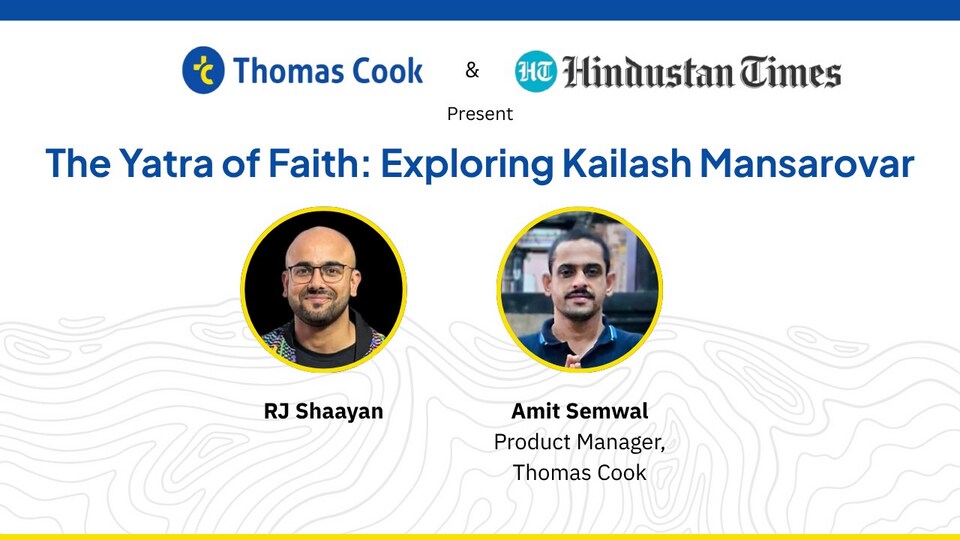
“Faith is the bird that feels the light when the dawn is still dark”: These words by Rabindranath Tagore perfectly captured the spirit of a recent webinar, titled ‘The Yatra of Faith: Exploring Kailash Mansarovar.' The online session served as a spiritual roadmap for those aspiring to visit one of the world’s most sacred pilgrimage sites.
Standing tall at an altitude of 6,638 metres, Mount Kailash is more than just a peak. It is a spiritual axis revered across Hinduism, Buddhism, Jainism, and Bon traditions. While the mountain remains unclimbed out of respect for its sacredness, the journey around it—the 46-kilometre sacred parikrama—is believed to cleanse the sins of a lifetime. For many, the year 2026 holds particular significance, as Tibetan belief suggests that undertaking the yatra during the Year of the Horse is more auspicious.
To provide deeper insights into the logistics of this spiritual quest, the webinar featured a comprehensive session with Amit Semwal, product manager at Thomas Cook & RJ Shaayan. Addressing a range of queries from aspiring yatris, the discussion focused on making this arduous journey accessible through some expert planning.
Navigating the terrain: Difficulty and fitness levels explained
One of the most common concerns for pilgrims is the physical demands of the Kailash Mansarovar yatra. The high altitude remains the primary challenge, particularly during the parikrama, where oxygen levels are low.
“While the terrain can be tough, especially when crossing the Dolma La Pass at 5,630 meters, prior trekking experience is not a strict requirement. Basic physical fitness is helpful, but mental readiness is equally important. We recommend that guests monitor their health closely; for instance, we advise against proceeding with the parikrama if oxygen levels drop below 75 per cent,” explained Semwal.
Inclusivity for all: Senior citizens included
This yatra is not restricted to the young. With routes ranging from 6 to 14 days, including helicopter options from Kathmandu or Lucknow, the journey has become more inclusive over the years.
“We see many yatris in older age groups or with physical limitations completing the journey successfully with proper planning. For senior citizens or those with physical limitations, the parikrama can even be skipped entirely. These guests can stay at Darchen, where shared guesthouse accommodation is managed, while others complete the circuit,” Semwal said.
Life on the trail: Accommodation and food options
In remote Himalayan regions, expectations regarding luxury must be tempered with reality. Thomas Cook ensures the best possible arrangements, providing quality hotels in Kathmandu, Purang, and Darchen. However, during the parikrama, the stay is often in basic guesthouses or shared rooms with 2 to 6 persons. At some locations, the toilets can be shared, and at some locations, there are also dry pits.
Food is another critical aspect of any trip. “We provide strictly vegetarian Indian meals throughout the trip. During the parikrama, yatris receive packed lunches consisting of paratha, juice, and chocolate to maintain energy levels, while dinner typically includes comforting options like dal khichdi and soup,” Semwal further added.
Managing logistics: Permits and documentation
The yatra involves significant cross-border coordination. For this, having a valid passport with at least six months of validity from the date of return is a mandatory requirement. “The process is time-sensitive. We submit group-based Tibet permit applications. Once the permit is approved, we proceed with the Chinese visa, which takes approximately 7 to 10 working days. For this reason, you would need an alternate ID to enter Nepal, like a voter ID card. Timely submission of clear, scanned passport copies and photographs is critical to ensuring a smooth journey. There is no margin for error here because there are 3 countries involved,” Semwal said.
Safety first: Medical support
Safety is paramount in high-altitude environments. Thomas Cook’s tour managers are equipped with essential medical tools, including oximeters and blood pressure monitors, to track the health of yatris regularly and are trained in CPR. In critical situations, local ambulances can be arranged on a direct payment basis, though availability in remote areas may involve a waiting time.
“All groups are accompanied by a tour manager, a medical expert, and a Sherpa who is an expert in the local terrain. While basic medical support like oxygen canisters and first aid is available, it is essential for pilgrims not to ignore their body’s signals,” Semwal said.
Planning the investment
The cost of the yatra varies based on the chosen route and duration. For 2026, packages start at approximately ₹2,37,000 for the 14-day overland route, going up to ₹5,82,000 for the 12-day route via Lhasa by flight. These inclusions typically cover travel via flights, helicopters, or road, along with meals, stays, permits, and logistics.
“The eligible age limit for the yatra is from 10 to 70 years. For others, there is an option of an aerial darshan of Kailash originating from Nepalganj. This is a one-hour flight with a panditji onboard. They can do darshan of Kailash, Mansarovar, and all the rituals are completed on the flight itself,” Semwal further said.
A legacy of faith
The webinar concluded by reflecting on how far the yatra has come. In ancient times, this journey was undertaken on foot across thousands of kilometres, often taking months or years. Today, with structured support and modern logistics, this ‘Yatra of Faith’ remains a challenging but achievable dream for those seeking a sense of peace by embarking on this pilgrimage.
Note to the Reader: This article has been produced on behalf of the brand by HT Brand Studio and does not have journalistic/editorial involvement of Hindustan Times.


