
 E-Paper



Muddy water supply in 5 Gurugram sectors raise health concern among residents
Residents living in the area and in Gurugram’s sectors 9-A, 4, 7 and 5 said the water is supplied from a boosting station operated by the Gurugram Metropolitan Development Authority (GMDA) and that it was a station-specific problem.


Over the last three days, the Bhagri family, which resides in Gurugram’s Sector 9, has been using water sparingly. Laundry has been done once, utensils are being washed only every second day, and they are relying on packaged water for quenching their thirst. These everyday tasks are not only proving to be inconvenient, but expensive as well.
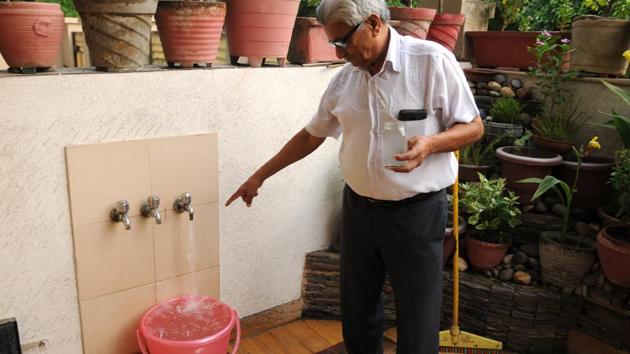
On Tuesday, residents living in the area and in sectors 9-A, 4, 7 and 5 said that their pipeline water supply has turned muddy after the recent spell of rain, raising concern of hygiene and safety. They added that the water is supplied from a boosting station operated by the Gurugram Metropolitan Development Authority (GMDA) and that it was a station-specific problem.
The GMDA officials conceded that the problem lies with the boosting station, which gets its water from the Chandu Budhera plant, one of the two plants that supply water to Gurugram.
Of the 90 million gallons daily (MGD) water supplied to the city, the Basai water plant provides 70 MGD, and the remaining is supplied by the Chandu Budhera plant.
According to GMDA superintending engineer Lalit Arora, the water that reaches the Chandu Budhera plant comes from the Yamuna river near Sonipat. From here, it flows through the 70-km-long NCR Channel and often gets tinged by rainwater during the monsoon. As a result, the water which is channeled to residences in these sectors often ends up being “marginally muddy”.
“Because of the rain in the past few days, we have been receiving marginally muddy water at the Chandu Budhera plant. This is filtered, but it has come to our notice that despite this measure residents are receiving muddy water. Although the current water can be deemed clinically appropriate for use, directions have been issued to increase the doze of ferric alum (Ammonium iron-III sulfate),” Arora said.
Ferric alum is a chemical agent dissolved in raw water drawn from canals or rivers to filter impurities.
Despite the reassurance from GMDA, however, residents of the area are reluctant to use the water currently being provided to them. They are concerned about the impact the water quality could have on their health.
“We have approached the Municipal Corporation of Gurugram (MCG) officials, who directed us to GMDA citing that it is their issue. We want the problem to be resolved at the earliest to ensure nobody in the area catches any water-borne diseases,” MP Soni, general secretary of Sector 9 residents’ welfare association (RWA) said.


Stay updated with all the Breaking News and Latest News from Mumbai. Click here for comprehensive coverage of top Cities including Bengaluru, Delhi, Hyderabad, and more across India along with Stay informed on the latest happenings in World News.


