E-Paper



From astronomical observatory to grievance hub: How Jantar Mantar’s place in Delhi’s protest map changed
Police have named 3 grounds to succeed Jantar Mantar, raising the question again: how protests can be regulated without shutting the space for dissent.

 Prefer HTon Google


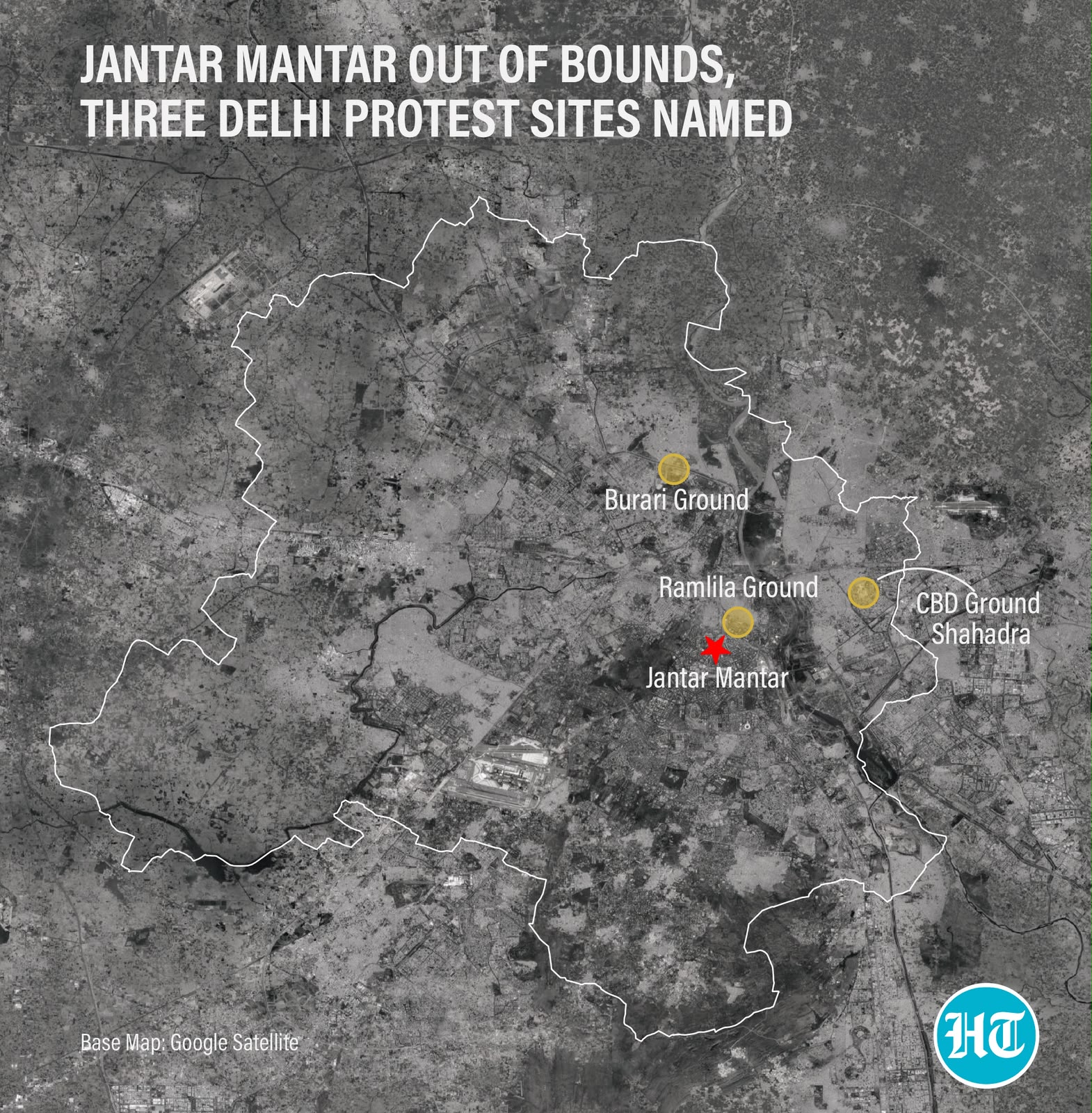
Delhi Police on Monday de-notified Jantar Mantar in Lutyen’s Delhi as a designated protest venue, naming Ramlila Ground, Burari Ground and CBD Ground in Shahdara – spread out across the city, as the new sites for demonstrations.
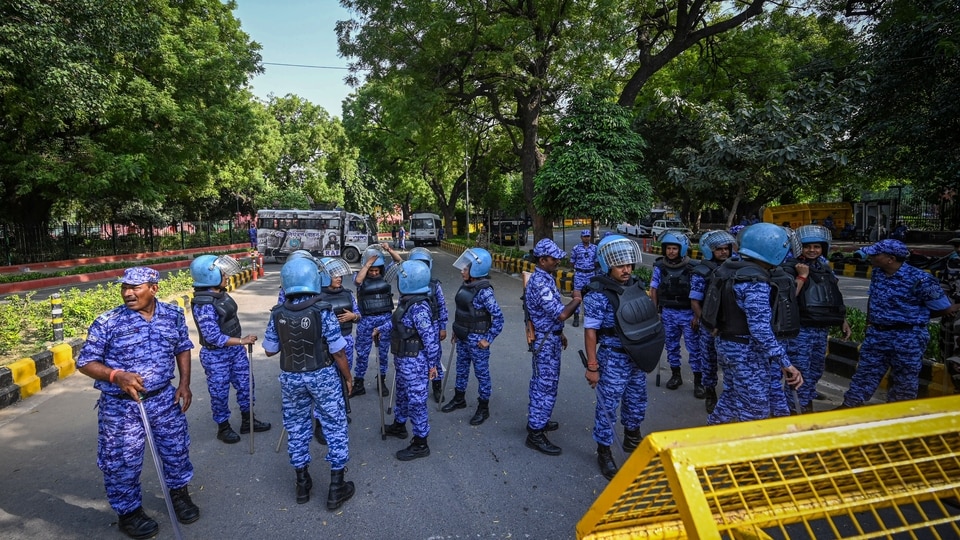
The move comes two days after the Supreme Court called for authorities to consider better-equipped alternatives, but it revives a constitutional question the court confronted in 2018: how can the State regulate protests without effectively shutting down a space for dissent?
How Jantar Mantar became a protest hub
Jantar Mantar was built as an astronomical observatory, but its adjoining road gradually acquired another role. It became a place where citizens could make their grievances visible to the political establishment. After demonstrations at the Boat Club lawns near India Gate were restricted following a major farmers’ agitation in the 1980s, Jantar Mantar became, from around 1993, the principal venue where protests in the capital were permitted.
Its appeal lay not only in its central location. Protesters could gather within sight of Parliament and government offices, and the compact stretch of road made demonstrations easier to contain than large marches through the city. The 2018 Supreme Court judgment recorded arguments that the site offered protesters greater visibility and that shifting them farther away risked diluting their message.
The venue hosted demonstrations by farmers, trade unions, political parties, students, civil-society groups and individuals pursuing personal causes. Some gatherings were brief; others became prolonged occupations, with tents and temporary structures remaining in place. That persistence, and the accompanying use of loudspeakers and public-address systems, soon became a source of conflict with residents.
The 2017 NGT ban
In October 2017, the National Green Tribunal (NGT) accepted a complaint by residents of Jantar Mantar Road, noting that demonstrations had become continuous and were causing noise and air pollution, sanitation problems and disruption to their daily lives. Residents also complained that protesters had put up tents and other structures and that some had remained for months or years.
The NGT’s October 2017 order directed the Delhi government, New Delhi Municipal Council and Delhi police commissioner to stop dharnas, protests, public speeches and loudspeaker use on Jantar Mantar Road. It also ordered the removal of temporary structures and waste, and directed that protesters be shifted to Ramlila Maidan.
The order brought the site’s role as a protest venue to an abrupt halt. It framed the dispute primarily as one of environmental harm and residents’ rights, but the protesters and supporting organisations argued that a complete prohibition also cut off a practical, visible platform for peaceful assembly proximate to the seat of government.
Also read: A testament to democracy: Looking back at Jantar Mantar's legacy of dissent
Why the Supreme Court lifted it
The NGT order was challenged in the Supreme Court by the Mazdoor Kisan Shakti Sangathan and other appellants, including organisations representing farmers and ex-servicemen, as well as an individual protester. Their central argument was that the ban infringed the rights to free speech and peaceful assembly under Articles 19(1)(a) and 19(1)(b) of the Constitution.
On July 23, 2018, the Supreme Court set aside the blanket prohibition. It held that peaceful demonstrations are a fundamental right, while recognising that the right is subject to reasonable restrictions in the interests of public order and the rights of others. The court’s answer was regulation, not an outright ban. It underlined that authorities could impose conditions to protect residents, traffic and public order, but could not prohibit peaceful protests altogether.
The judgment also addressed repeated prohibitory orders under Section 144 of the Code of Criminal Procedure (now replaced by Section 163 of BNSS), which had been used to restrict gatherings across parts of central Delhi. The court noted that such orders are meant for temporary, emergent situations and cannot be used as a continuing substitute for a permanent ban. It directed the Delhi Police Commissioner, in consultation with the authorities concerned, to frame guidelines governing demonstrations at Jantar Mantar and the Boat Club area.
The ruling did not give protest organisers an unrestricted right to occupy any public space, or to hold a demonstration without permission. It required the state to balance the right to protest against residents’ rights and the need to maintain public order. Nor did it make Jantar Mantar the only constitutionally permissible protest site. Its broader warning was against a blanket prohibition that leaves no meaningful avenue for peaceful assembly.
New venues but an old question
The latest change follows the Supreme Court’s October 9 observations that Delhi should consider a larger alternative site with basic facilities, including toilets, drinking water, medical assistance and space for emergency access. A bench, comprising Chief Justice of India Surya Kant and justices Joymalya Bagchi and V Mohana, said the city should identify a venue that would allow peaceful demonstrations while protecting public safety and access to essential services.
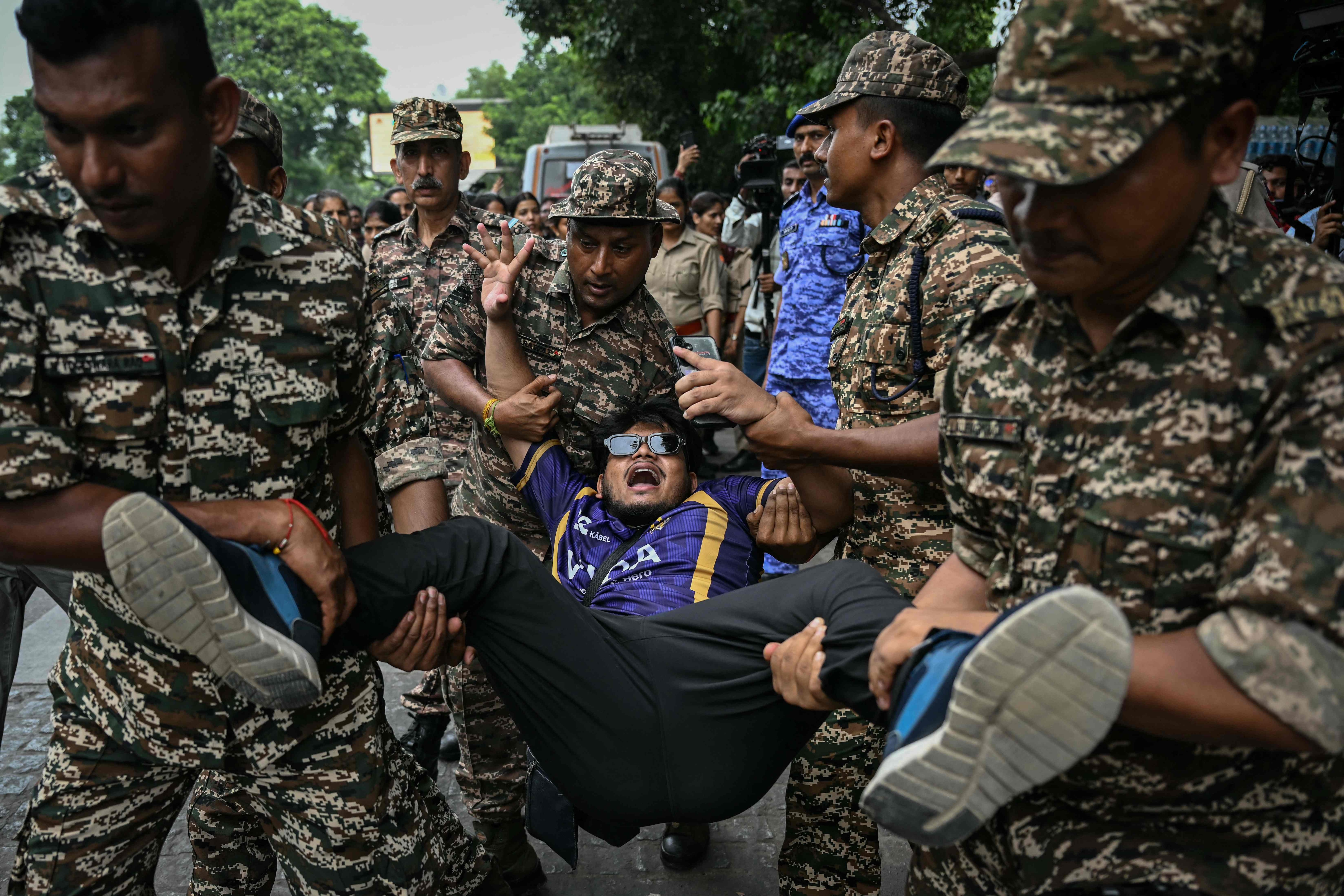
The immediate discussion arose after Delhi Police denied permission for the proposed October 10 demonstration at Jantar Mantar, while imposing extensive security measures, including restrictions on metro services and railway movements. The protest, called by the Cockroach Janata Party and other groups, seeks the resignation of chief election commissioner Gyanesh Kumar over alleged irregularities in electoral-roll revisions.
According to the circular issued by the Delhi police commissioner, the de-notification followed a committee constituted by the Ministry of Home Affairs to examine alternative venues.
Delhi Police’s circular names Ramlila Ground, Burari Ground and CBD Ground as designated venues, with revised standard operating procedures to follow. The order does not, by itself, answer how applications will be assessed, what conditions will apply, or whether the new sites will provide facilities comparable to those sought by the Supreme Court.
The practical test will be whether the new venues remain accessible and usable for ordinary citizens, including small groups with limited resources, while meeting legitimate concerns about sanitation, traffic, noise and emergency services. Location matters: a protest site can be orderly and well-equipped, yet lose much of its purpose if it is too far from the institutions or audiences the protesters seek to reach.
The Supreme Court’s 2018 judgment thus remains a crucial reference point. It recognised that authorities may designate and regulate protest spaces, but cautioned against turning regulation into prohibition. The de-notification of Jantar Mantar, therefore, marks a significant change in Delhi’s protest map, but whether it preserves a meaningful space for dissent will depend on how the alternative sites and permission rules work in practice. Moreover, the de-notification itself may now face a legal challenge before the Supreme Court, which is already seized of a clutch of petitions concerning protests, alleged police excesses and restrictions claimed to be unreasonable.