E-Paper



Trump boasted of stopping an ‘obscure’ UN agency’s ‘carbon tax’: What the IMO plan for shipping industry involves
International shipping accounts for 2% of global greenhouse emissions. US-led opposition stalled the IMO plan in 2025. Talks with begin again in December.

 Prefer HTon Google


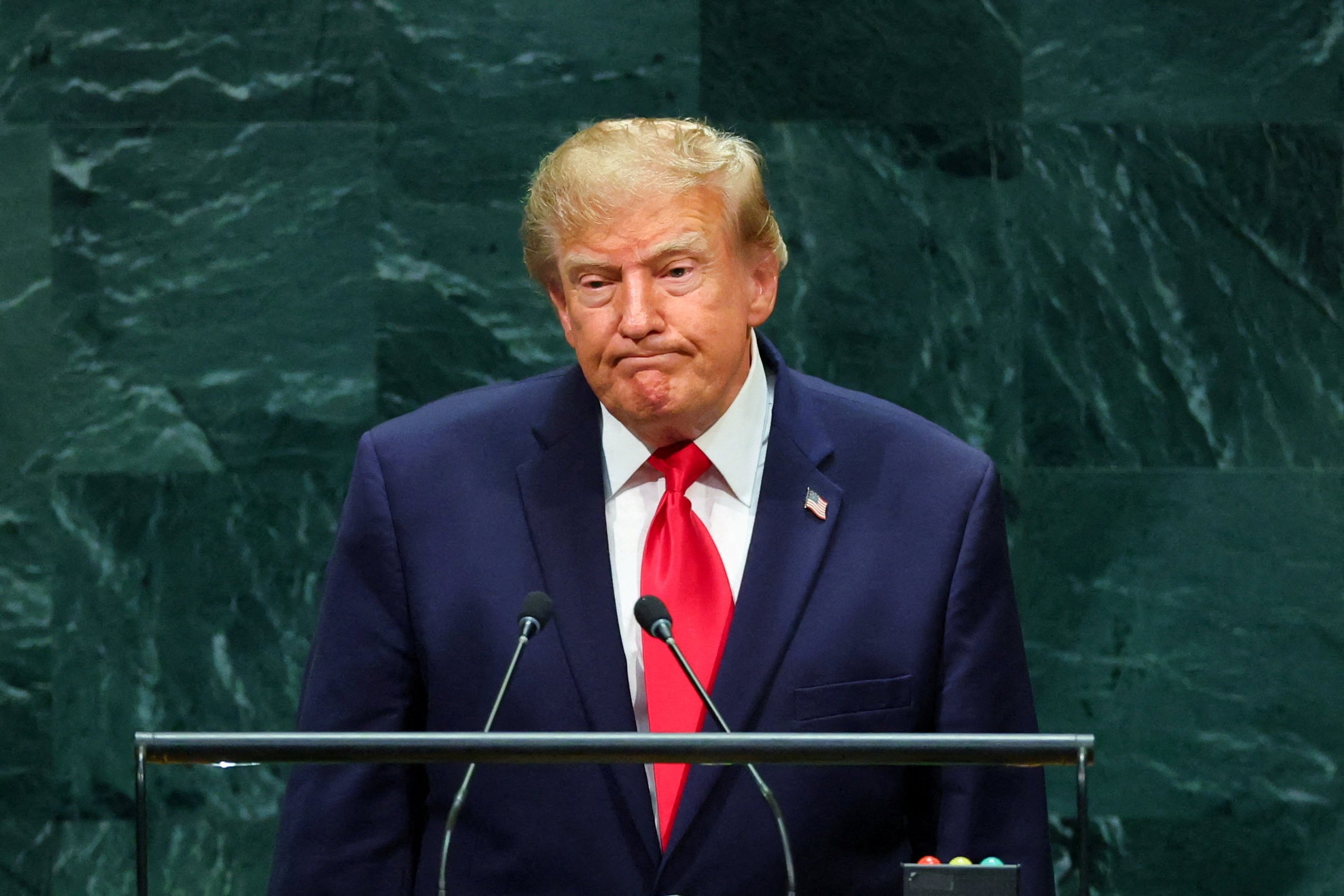
US President Donald Trump used his address to the United Nations General Assembly earlier in the week to attack a plan by the International Maritime Organization (IMO) to cut greenhouse gas emissions from global shipping. He called it a “first-ever global carbon tax” that his administration had stepped in to stop.
“Last year, my administration was forced to intervene to stop an obscure UN body, the International Maritime Organization, from secretly establishing a first-ever global carbon tax – very expensive tax – to raise international shipping costs by 10 to 20%, and maybe even more than that,” Trump said. “There is no global government, and while I'm president, there will be no global taxes,” he claimed.
The IMO’s Net-Zero Framework (NZF) is not formally classified as a tax. It pairs mandatory emissions standards for ships with a global greenhouse gas pricing mechanism. Countries agreed to it in principle in April 2025, but opposition led by the US has delayed its formal adoption, and it remains under negotiation.
Also read: Himalayan glaciers melting 65% faster, black carbon to blame: Study
IMO and the shipping industry
The IMO is the UN’s specialised agency for regulating international shipping. The organisation has worked on carbon emissions from ships for decades, and its member states first voted on a resolution to address carbon dioxide (CO2) emissions in 1997.
In 2011, the IMO introduced the Energy Efficiency Design Index, which set mandatory efficiency standards for new ships. Member states adopted an initial greenhouse gas strategy in 2018. They followed it in 2023 with a more ambitious strategy, which calls for international shipping to reach net-zero greenhouse gas emissions “by or around 2050”, with interim targets for 2030 and 2040.
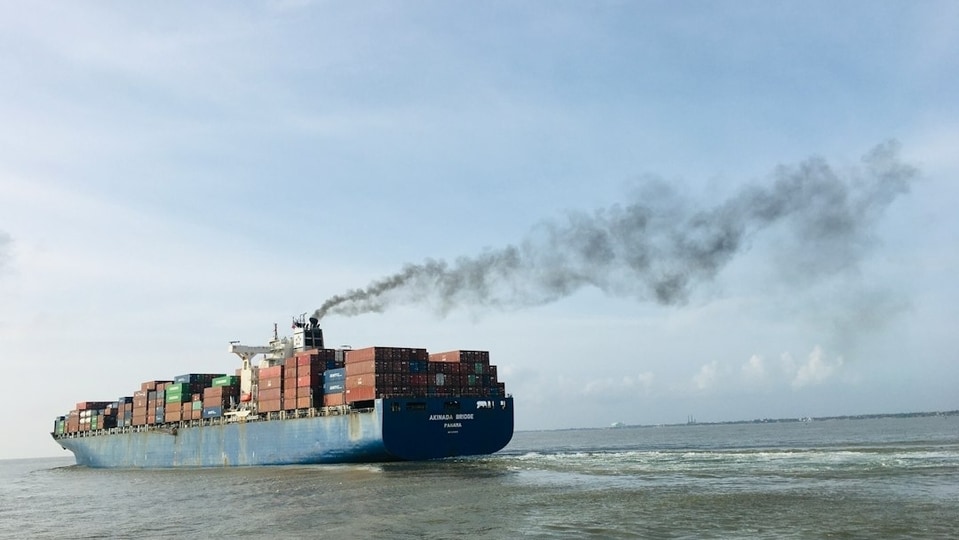
International shipping accounts for more than 2% of global emissions, according to the climate policy website Carbon Brief. It is not directly covered by the emissions targets of the Paris Agreement.
The Net-Zero Framework
The IMO drew up the framework to turn its 2023 climate ambitions into binding rules for the industry. The version its Marine Environment Protection Committee (MEPC) approved in April 2025 has two parts: a global fuel standard and an economic measure tied to greenhouse gas emissions.
The fuel standard would require ships to progressively cut their greenhouse gas fuel intensity, the amount of greenhouse gases they emit for each unit of energy they use.
Under the economic measure, ships that exceed specified emissions-intensity thresholds would have to acquire “remedial units” to cover the shortfall. Ships running on zero- or near-zero-emission technologies could instead become eligible for financial rewards. Ships with surplus compliance units could transfer them to other vessels or bank them for later use.
The rules would apply to large ocean-going ships above 5,000 gross tonnage, which the IMO says account for about 85% of CO2 emissions from international shipping.
Also read: Why carbon markets cannot close India’s nature-finance gap
Trump calls it a ‘carbon tax’
The IMO calls the proposal a “global pricing mechanism” and an “economic measure”, under which ships make payments linked to their emissions performance. Those payments could still add up to a substantial revenue stream, which Carbon Brief reported would flow into a proposed IMO Net-Zero Fund.
The framework sets two intensity targets each year, a stricter “direct compliance” target and a looser “base” target. A ship that meets the base target but misses the stricter one covers the gap with Tier 1 units. A ship that misses the base target must also buy the costlier Tier 2 units for its emissions above that line.
Carbon Brief reported prices of $100 per Tier 1 unit and $380 per Tier 2 unit. Each unit covers one tonne of CO2-equivalent.
The fund was estimated to raise about $10 billion to $15 billion a year in its early years. The money would support low-emission ships and the development of cleaner fuels, and pay for research, infrastructure, training and technology transfer.
The IMO said the fund would also help mitigate the effects of the transition on vulnerable countries, including small island developing states and least developed countries.
Also read: India knows where the rain falls, but still can't tell a village to run
The US hurdle
The US withdrew from the negotiations midway through the April 2025 meeting, but countries still agreed to the framework in principle. According to Carbon Brief, 63 countries voted in favour, including the European Union, China, India and Brazil. Saudi Arabia, Russia and the UAE were among those that voted against.
Formal adoption was expected in October 2025. The Trump administration strongly opposed the framework and lobbied against its adoption. The same month, US secretary of state Marco Rubio and Sean Duffy, then the transportation secretary, warned governments that backing the framework could bring sanctions, tariffs, additional port fees or visa restrictions for crews.
“This will be the first time that a UN organisation levies a global carbon tax on the world,” Rubio and Duffy wrote in a joint letter, adding: “We will fight hard to protect our economic interests by imposing costs on countries if they support the NZF.”
The extraordinary IMO meeting that followed ended without the agreement needed to formally adopt the framework. Countries voted to adjourn, pushing the decision into 2026.
Talks this year
At the 84th session of the MEPC in April this year, countries debated again whether to proceed with the existing framework or substantially change it. The US, Saudi Arabia, the UAE and other opponents pushed for alternatives that would remove carbon pricing or reduce its role. One significant alternative, proposed by Liberia, Panama and Argentina, would in effect have dropped both the greenhouse gas pricing mechanism and the proposed fund.
The EU, Brazil, Mexico, Kenya, Pacific island states, Australia and the UK backed the original framework. China expressed support for a carbon-pricing system and an IMO fund in a submission ahead of the meeting.
But the meeting did not produce a replacement. Countries agreed to continue work on the original framework as the basis for further negotiations, with more talks planned before the IMO meets in December 2026.
At stake
Governments are divided over how fast international shipping should move away from fossil fuels, and at what cost. The framework was meant to penalise ships with higher emissions and to create financial incentives for cleaner fuels and technologies. Its supporters argue that a common global system could prevent a patchwork of national and regional rules.
Michael Mbaru, a low-carbon shipping expert for Kenya’s climate special envoy, told Carbon Brief that if the global framework breaks down, more regional and unilateral measures could emerge. That, he said, could raise compliance and transaction costs for developing countries.
Opponents argue that the framework could impose significant economic costs. They want a technology-neutral approach with no international carbon pricing. The US has argued that the economic burden would outweigh the benefits of the proposed fund.
The framework has not been adopted. It remains a proposal under negotiation, combining emissions limits, financial penalties and incentives. IMO members are expected to return to it in December this year and decide whether to adopt it, revise it or delay it further.