
 E-Paper



The new 007 and the old habit of recasting heroes as portraits for their times
Robert Pattinson is Batman and now James Bond too. How 9/11 reshaped Daniel Craig’s 007 and Nolan’s Batman amid the war on terror.

 Prefer HTon Google


Robert Pattinson, named on Monday as the seventh actor to play James Bond, takes on a character who has outlived six men in the role by changing with the politics of every decade he has passed through.
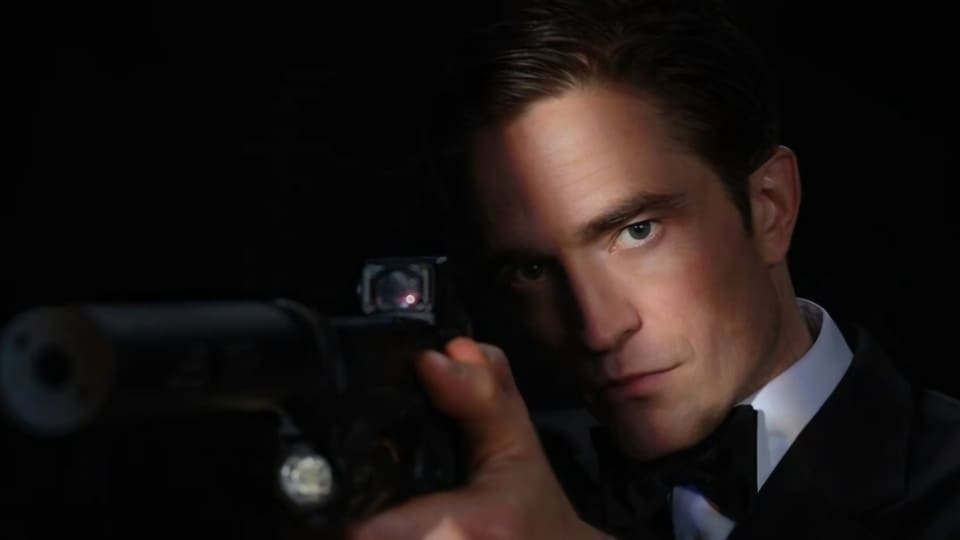
Pattinson, 40, who is filming his second Batman film, is the first Bond chosen since Amazon MGM took over the franchise. A small core of the Bond franchise has stayed the same for 64 years. Nearly everything around it, from the enemies he fights to the way he treats women, has been rewritten with each new actor to suit the mood of the time. Sherlock Holmes, Doctor Who, Batman and Superman have gone through the same process, and their castings, read in order, track the social and political shifts of their decades.
Bond: Mates in eight moves
Umberto Eco, the Italian novelist and critic, mapped Bond’s core in 1965. Ian Fleming’s novels, he argued, ran like a game with fixed moves. M gives Bond a job, the villain shows himself, a woman appears, the villain captures and tortures Bond, and Bond wins the woman until he loses her. Eco boiled the rule down to “Bond moves and mates in eight moves”.
Eco also caught Fleming bending the board to the headlines, dropping Russia as the villain once world events made it look less menacing and handing the job to Spectre, an international criminal gang.
The films took the formula and redressed it for every decade. Connery’s Dr. No (1962) was condemned as immoral by the Vatican and the Kremlin, and screened at the White House for John F Kennedy, a Bond fan.
Tony Bennett, a cultural theorist at Western Sydney University who co-wrote Bond and Beyond, a 1987 study of the character’s politics, wrote that the 1960s Bond embodied “the then prominent ideological themes of classlessness and modernity”, and Connery, a former milkman and labourer from Edinburgh, gave a Britain that wanted to look young and modern a hero it could believe in.
Historian David Cannadine argued in 1979 that Bond also sold a shrinking Britain the comforting fantasy that it was still a great power, a fantasy that grew more useful with every colony it gave up.
By the time Roger Moore took over in 1973, at 45, the oldest debut Bond, the character had become, in Bennett’s words, a figure from a past age. Moore played him with an arched eyebrow, as a joke the audience was in on, and the Cold War softened along with him. In The Spy Who Loved Me (1977), made in the years of detente, the thaw in relations between Washington and Moscow, Bond teams up with a Soviet agent to stop a shipping magnate bent on destroying the world.
Timothy Dalton’s last Bond, Licence to Kill, opened in June 1989. The Berlin Wall fell five months later, and the collapse of the Soviet bloc took away the enemy that had given Bond his purpose for three decades. Bond did not return for six years, and when he did, the series put him on trial. GoldenEye (1995) smashed Soviet symbols in its title sequence and gave Bond a new boss, Judi Dench’s M, who told him he was “a sexist, misogynist dinosaur. A relic of the Cold War”. In one line, the film admitted that his enemies and his attitude to women had aged together.
The Bourne Identity (2002) gave audiences a grittier, more believable spy in a world shaken by 9/11, and next to Jason Bourne, Bond looked like a man in a dinner jacket at a street fight. After the attacks, glamour without consequence looked out of date. Anthony Barker, writing in a 2024 study of 21st-century screen storytelling, argues that Bourne’s success “influenced and updated” the Daniel Craig films. The Associated Press, while greeting Craig’s casting in 2005, wrote, “Blond. James Blond.”
Casino Royale (2006) rebooted the series from scratch. Craig’s Bond bled through five films and told Vesper Lynd, the woman he falls for, “I have no armour left”, as the films let the damage pile up from one instalment to the next.
Sarah Thomas, a film scholar, said Craig’s casting reinvented Bond as “a more brutal (and brutalized) character”. A 2009 collection of essays on Casino Royale, edited by Christoph Lindner of the University of Amsterdam, read the film as a portrait of the secret agent in a post-9/11 world.
In No Time to Die (2021), Bond died – the first time the series has killed its hero, in an ending unthinkable for the untouchable Bond of the 1960s.
Also read: Good evening, Mr Bond. We’ve been expecting you
Holmes: The detective without an owner
Arthur Conan Doyle’s stories went out of copyright in Britain long ago. Since the last of them entered the US public domain on January 1, 2023, anyone can film Sherlock Holmes without asking permission.
Studios have capitalised on this, rarely waiting their turn. In the early 2010s, two television Holmes ran simultaneously – Benedict Cumberbatch’s for the BBC and Jonny Lee Miller’s for the American network CBS – and Robert Downey Jr was playing a Victorian Holmes in two Hollywood films at the same time.
The detective’s screen career has been perceived as a history of film and television.
James Chapman, a film historian at the University of Leicester, argues in Screening Sherlock (2025) that Basil Rathbone’s Holmes, in films made between 1939 and 1946, left Victorian London behind to hunt Nazi agents for the war effort. Decades later, Jeremy Brett starred in Granada Television’s faithful, gaslit series (1984-94), which Chapman calls “Heritage Holmes”. It suited a Britain that had developed a taste for lavish costume drama.
Chapman’s “Action Holmes” was Downey’s, a brawler rebuilt for the superhero age in a 2009 blockbuster that came out a year after the actor first played Iron Man. Cumberbatch’s Sherlock, a genius made for the smartphone era, texted his way round modern London and called himself a “high-functioning sociopath”. Elementary moved Holmes to New York and cast Lucy Liu as Joan Watson. The partnership had travelled a long way from two Victorian gentlemen. Chapman files both of these under chapters titled, “Postmodern Holmes”.
Also read: New monarch, new 007: Royal Family reacts after Robert Pattinson is named next James Bond
Doctor Who: Built to be recast
Doctor Who is one of the few series with the recast written into the plot. In 1966, with William Hartnell too ill to carry on, the Doctor “regenerated” into a new body and a new actor, Patrick Troughton. The show has swapped faces this way ever since.
Danny Nicol, a law academic at the University of Westminster who has written a book on Doctor Who and Britishness, calls the Doctor “a thoroughly British alien, invariably eccentric, often fond of tea”.
That makes every new Doctor an argument about what Britain looks like. The BBC unveiled Jodie Whittaker as the first woman in the role after the Wimbledon men’s final in July 2017, a year after the Brexit referendum had turned the question of who counts as British into a national argument. Ncuti Gatwa, cast in 2022, was born in Rwanda and raised in Scotland, and AP called him the first Black actor to helm “the quintessential British sci-fi show”.
In June, the BBC cancelled this year’s Christmas special and put Doctor Who out to competitive tender, inviting production companies to bid to make it, and Russell T Davies, who ran the show, left. Davies said no actor had been approached to play the next Doctor, and the BBC has not said whether Billie Piper, who appeared as Gatwa’s regenerated Doctor at the end of his final episode, is the next one.
Batman and Superman: America’s mood swings
Batman and Superman, the two biggest heroes at DC Comics, have spent decades on screen swinging between light and dark, with the two tending to move together, in step with the American mood.
Roberta Pearson and William Uricchio, who edited a 1991 academic study of Batman, argued that a few fixed elements hold him together. Those are the costume, Bruce Wayne, his murdered parents and Gotham City, and everything else can be pulled in new directions.
Adam West’s Batman, on television from 1966, was pop-art camp, all bright colours and cartoon sound effects flashing across the screen. Michael Keaton’s casting in Tim Burton’s 1989 film drew protest letters from fans. Burton’s answer was a brooding loner in a gothic Gotham, about as far from West’s pop art as Batman could get. George Clooney’s 1997 outing went back to camp and stalled the series. Audiences, it seemed, no longer wanted Batman as a joke.
Gregory Frame, a film scholar, writes that Christopher Nolan’s trilogy with Christian Bale emerged “at a moment of profound crisis in American society”, between the 9/11 attacks and the 2008 financial crash. In The Dark Knight (2008), Batman turns every phone in Gotham into a listening device to catch the Joker. The film asks how far a protector may spy on the people he protects, a question Americans were putting to their own government at the time. In Frame’s reading, Bruce Wayne also stands in for the good billionaire the right sought to defend after the crash.
Superman has gone through a similar cycle, starting with Christopher Reeve in 1978, four years after Richard Nixon resigned over Watergate. Reeve played him earnest to the bone, a Superman who still believed in the American way when Washington had given Americans reasons not to. Janne Salminen, a University of Helsinki researcher who studied the politics of the Superman films, reads Reeve’s hero as a moderate conservative who could talk to liberals. By Superman IV (1987), Reeve was taking on nuclear weapons.
Brandon Routh’s Superman, released in 2006 at the height of the Iraq war, “uses same tactics as the administration of George W Bush to gain information”, Salminen writes. In his reading, Henry Cavill’s Man of Steel (2013) was the most conservative and individualist Superman of them all, a hero who could not afford compassion.
David Corenswet brought the earnest Superman back in 2025, in the first year of Donald Trump’s second term and his immigration crackdown. His director, James Gunn, told The Times of London that “Superman is the story of America” and described him as an immigrant, a remark that drew a backlash on the right.
Pattinson’s Batman, in Matt Reeves’ The Batman (2022), is a brooding young recluse who works as a detective. He is filming the sequel now.
What Pattinson’s casting says
Bond’s producers have usually picked the lesser-known man. Connery was “in his early 30s and little known” when he made Dr. No, AP noted in his obituary, and Craig was not widely known before he was cast.
This time, AP reported, producers had been expected to pick a younger, less proven actor and chose a star instead. Barbara Broccoli and Michael G Wilson, who produced the films for decades, gave up creative control in 2025, and Amazon’s first Bond is its own choice.
Amazon’s producers, Amy Pascal and David Heyman, said Pattinson’s ability to reinvent himself made him right for “our times”. He has done it before, going from Twilight’s vampire heart-throb to art-house films such as Good Time and The Lighthouse.
Bond 26, directed by Denis Villeneuve from a script by Steven Knight, has no title or release date yet.


