
 E-Paper



India’s mineral security cannot rest on mines alone
India has begun to treat critical minerals as a strategic industrial priority, not simply a line item in its import bill.

 Prefer HTon Google


India has begun to treat critical minerals as a strategic industrial priority, not simply a line item in its import bill. Lithium, rare earths, graphite, cobalt and nickel now sit at the intersection of electric mobility, renewable energy, electronics, defence and advanced manufacturing. ₹16,300 crore over seven years">The National Critical Mineral Mission (NCMM), with an outlay of ₹16,300 crore over seven years, is a serious attempt to convert that recognition into capacity. But the harder question is no longer whether India has a minerals strategy. It is whether India can build the industrial ecosystem that turns minerals into strategic advantage.
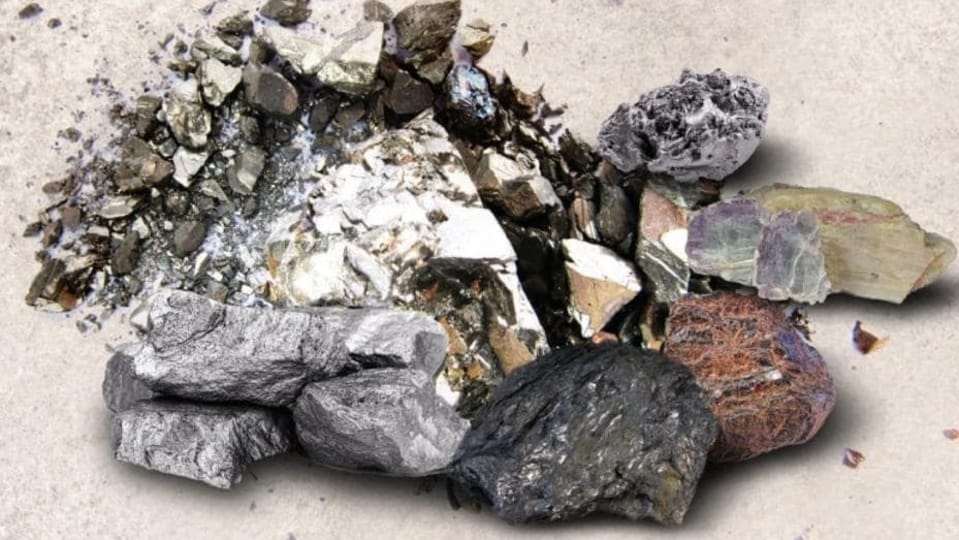
The answer will not be found underground alone. Mines matter, but they are only the first link in a long and fragile chain. The decisive contest is over processing, refining, component-making, recycling and technological innovation. A country can possess mineral deposits and still remain strategically exposed if it cannot convert them into batteries, magnets, semiconductors, defence inputs or high-value manufactured goods. India’s task is not simply to discover more minerals; it is to build the industrial depth that turns mineral security from a policy ambition into industrial reality.
In 2023, the ministry of mines identified 30 minerals as critical for India. The list includes lithium, cobalt, nickel, copper, graphite, rare earth elements, titanium, tungsten and gallium—materials essential to clean energy, electronics, transport and defence. The designation was important because it recognised that supply-chain vulnerability, not geological abundance alone, determines strategic risk.
The policy architecture has since moved in the right direction. The NCMM covers exploration, mining, processing, recycling, research and overseas acquisition. It targets more than 1,000 exploration projects, seven Centres of Excellence and 1,000 patents by 2030-31. The Mines and Minerals (Development and Regulation) Amendment Act, 2023 also gave the Centre exclusive auction powers over 24 of the 30 identified minerals.
Yet India’s vulnerability lies less in the absence of a policy than in the narrowness of its industrial base. China’s advantage lies less in mining than in processing and midstream manufacturing. Opening mines elsewhere will not, by itself, weaken that position. India may secure ore through domestic exploration or overseas partnerships, but without refining and separation capacity, it will remain dependent on others to convert raw material into industrial input.
This is the central strategic distinction. Mineral security is not measured by tonnes extracted. It is measured by whether a country can process, refine, recycle and manufacture with those materials at scale. India’s ambition to lead in electric vehicles (EVs), solar manufacturing, semiconductors, defence production and advanced electronics will remain fragile if its value chain begins with imported intermediates and ends with imported components.
India’s most immediate constraint is not only supply. It is assured demand. Investors will hesitate to build high-capex refineries if they cannot see a credible market for their output. The government has recognised this by approving a ₹2,814 crore capital-expenditure support scheme for critical-mineral processing, covering 24 minerals across mining and recycling streams. The scheme is intended to prepare minerals for use in batteries, electronics, semiconductors, defence equipment and heavy machinery.
But subsidies cannot create an industrial ecosystem on their own. India needs a clearer connection between mineral processing and downstream manufacturing. EVs, battery factories, solar-module plants, wind-turbine manufacturers and electronics firms must be able to plan around domestic supplies of processed materials. Without that visibility, a refinery may be built, but it may operate below capacity or depend on imported feedstock.
Demand creation should, therefore, be treated as industrial policy, not simply as a climate measure. Faster deployment of electric buses, public procurement of batteries, domestic solar and wind manufacturing, and credible recycling targets can give processors the certainty they need to invest. The objective is not protectionism for its own sake. It is to ensure that public support for clean technology also builds a domestic industrial base rather than simply substituting one import for another.
Recycling deserves particular attention. India’s growing stock of electronic waste, end-of-life vehicles and battery scrap can become a source of refined material, but only if collection, sorting and offtake arrangements are commercially viable. ₹1,500 crore recycling incentive, aimed at building 270 kilotonnes of annual capacity and creating nearly 70,000 jobs">The government’s ₹1,500 crore recycling incentive, aimed at building 270 kilotonnes of annual capacity and creating nearly 70,000 jobs, is a promising beginning. But incentives alone will not create a recycling industry.
India also needs to be realistic about timelines. A mine does not become a strategic asset overnight. Exploration, environmental clearance, land access, infrastructure, financing and construction can take years, often decades. The NCMM’s target of more than 1,000 exploration projects is necessary, but it should not be mistaken for a short-term solution to import dependence.
Technology can reduce this risk, but it cannot eliminate it. Artificial intelligence, geospatial mapping and advanced geological data can improve prospectivity analysis and help identify promising sites. India should integrate these tools across the IndiaAI Mission, the National Geospatial Policy and existing exploration programmes. But an AI-led approach will succeed only if geological data are accessible, standards are clear and private explorers have a predictable regulatory pathway.
The State must also avoid treating every mineral as equally urgent. Rare earths used in small volumes for specialised defence and high-technology applications require different instruments from bulk minerals such as copper. For niche minerals, stockpiles, long-term contracts and coordination with partner countries may be more practical than waiting for domestic mines. For high-volume minerals, diversified supply and processing capacity matter more. A single template will not secure a heterogeneous mineral portfolio.
International partnerships are necessary, but they must be judged by outcomes rather than announcements. India should deepen cooperation with Australia, Japan, the European Union, the UK and the US, while also building durable relationships with mineral-rich countries in Africa, Latin America and Southeast Asia. The objective is diversification, not the replacement of one dependency with another.
Partnerships should be designed to secure technology transfer, joint research, processing capacity, recycling infrastructure and long-term offtake arrangements. India should not be content with importing refined materials or finished components. It should seek a position across the value chain: in exploration, processing, advanced materials, recycling and manufacturing. Otherwise, global partnerships may improve supply security without reducing strategic vulnerability.
The ₹7,280 crore programme to develop 6,000 tonnes a year of sintered rare-earth permanent-magnet capacity is a necessary beginning. But magnets require reliable feedstock, skilled labour, quality certification, technology partnerships and committed buyers—not capital subsidies alone. India must build these conditions deliberately, rather than assume that a single incentive will produce an entire industry.
Critical minerals will not determine India’s future by themselves. They will determine whether India can build the industries it says it wants: clean energy systems, electric mobility, advanced electronics, semiconductors and defence manufacturing. The NCMM has given India a framework. The next test is whether ministries, states, public-sector enterprises and private investors can convert that framework into functioning refineries, reliable supply chains and competitive factories.
India should resist the temptation to measure progress through announcements alone. It should create a public dashboard for processing, recycling and magnet-manufacturing projects; publish annual targets for refining and recycling capacity; and link public procurement to verified domestic supply. These measures would make progress measurable and give investors the certainty they need to commit capital.
The way forward lies in converting policy intent into industrial capability. India needs assured offtake agreements for processed minerals, deeper research and development, and technology partnerships with countries such as Japan, the UK and the European Union. Rare-earth corridors can anchor supply chains in mineral-rich states, but they will deliver results only when backed by robust demand, viable financing and effective technology transfer. The task now is to build an integrated value chain, from exploration and processing to recycling and advanced manufacturing, that turns mineral security into a foundation for industrial competitiveness.
(The views expressed are personal)
This article is authored by Amrendra Pratap Singh, public policy scholar, Ambedkar University.


