
 E-Paper



The real constraint isn't complexity, it's visibility
This article is authored by Hemanth Kumar Kolluru, a strategy and finance professional, USA.

 Prefer HTon Google


India sends roughly $87 billion of goods a year to the US. The rules governing that trade have changed repeatedly over the past year, and most firms still cannot see their operations clearly enough to redesign them in anticipation of the next change.
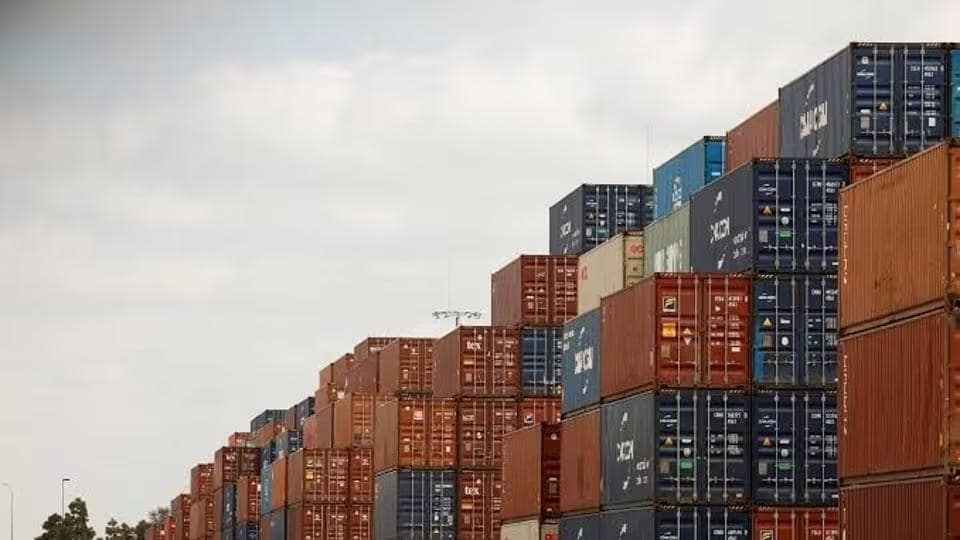
For an exporter in that trade, the past year has looked like a rollercoaster.
In August 2025, Washington added a 25% penalty over India's purchases of Russian crude on top of the existing reciprocal duty, taking the total to 50%. On February 7, 2026, an interim agreement removed the penalty and cut the reciprocal rate to 18%. Thirteen days later, the US Supreme Court held in Learning Resources v. Trump that the International Emergency Economic Powers Act, the statute underpinning those duties, never authorised them at all, and the 18% vanished along with it, along with everything else built on it. A flat 10% surcharge under Section 122 of the Trade Act of 1974 took its place on February 24. In May, a trade court struck that down too, though an appeals court left it standing pending appeal. It then expired by statute on July 24, and a fresh action under Section 301 of the same Act took effect the same morning, placing India in a 10% tier that stacks on top of the normal duty.
Six changes to the rules in 12 months, under three separate legal authorities, two of which were struck down in court. The current measure carries no expiry date and no rate ceiling, and a further US investigation into excess manufacturing capacity, covering India, remains open.
Exporters have responded roughly as the situation invites: Shipments front-loaded ahead of each deadline, prices renegotiated with buyers, a route switched when a cheaper one appeared, and capital held back until the picture cleared. These were sensible moves, and the firms that made them got through a bruising year. But all of them were tactical. None changed the structure of the business that will have to absorb whatever comes next.
The usual explanation is that modern supply chains have become too complex to redesign quickly. The real constraint is different and more fixable. It is visibility.
Seeing, in this sense, is a demanding thing. It means knowing which products move through which ports and routes, at what landed cost, for which customers. How much of the cost base is locked into contracts, and for how long? Which supplier relationships turn out to be single-sourced once you trace them past the first tier. Where capital is sunk in fixed equipment, and how much annual throughput each rupee of it carries. Almost every firm holds these facts somewhere. They sit in an ERP system, a transport management system, a procurement folder, and three spreadsheets kept by people who have never met. What almost no firm has is the assembled picture in the hands of someone with the authority to act. When the commerce ministry convened export promotion councils on September 1 to map sector-wise exposure ahead of the next round of talks with Washington, it was asking firms for a picture many of them cannot assemble for themselves.
Visibility matters more as Indian manufacturing automates. Production-linked incentives and rising labour costs have drawn automation investment into sectors that were largely manual a decade ago, and much of that investment is sound. But automation capital is the tightest form of lock-in a firm can take on. An automated sorting system sized for one product mix and one destination market is a bet that the flows it handles will look broadly similar over the many years it takes to pay back. Typically, firms build the investment case for such systems on labour savings and little else. Very few appraisals ask what the equipment would cost to reconfigure if the destination market changed or how much of it would be stranded if a product line moved.
Economists would say a firm facing an uncertain trade regime holds a valuable option: Wait, observe, then commit. That is right, and it explains a good deal of the caution seen since 2025. But an option has to be exercised at the moment it becomes valuable, and exercising it requires knowing what you hold. A firm that cannot say how much of its cost base is reconfigurable, or over what horizon, is not preserving optionality. It simply cannot act, and from the outside the two look identical. Often, they look identical from the inside as well.
The delegation of decisions to software adds a twist. As firms hand operational choices to planning and pricing systems that optimise on their own, the assumptions built into those systems become the firm's de facto policy. An inventory replenishment system tuned to a 50% tariff kept optimising diligently against a world that ended in February, while one tuned to 18% became obsolete within a fortnight of being set up. Neither raised an alarm, because from the system's perspective nothing had gone wrong. The decision had moved into software, while accountability remained with a manager who no longer saw the decision being made. Automated planning is fine. What a firm needs is to know which assumptions its systems are enforcing on its behalf.
None of this calls for permanent hedging or for inventory the business cannot afford. It calls for three things, and they cost less than most firms expect.
First, someone should own the shape of the firm's supply network. Not procurement, not logistics operations, not the plant, but a person accountable for the architecture itself, with the authority to convene the others and a standing schedule for reviewing it. In most Indian firms this role does not exist, which is why network questions surface only in a crisis and get answered by whoever happens to be nearest.
Second, measure before you automate. Before signing a capital appraisal, the firm should be able to state the sunk automation capital per unit of annual throughput and what reconfiguration would cost if the product mix or destination market shifted. If that number cannot be produced, the appraisal is incomplete, whatever its internal rate of return says.
Third, treat trade policy as a design variable with a review schedule rather than as an event that happens to you. Twelve months and three legal authorities should have settled the question of whether the rules are stable enough to be treated as background.
India sits in the lower tier of the current measure, below China and Vietnam, and that is worth something. But a tariff rate is a condition rather than an achievement, and every previous rate of the last twelve months proved temporary; two of them were undone by a court or a calendar rather than by negotiation. The formal trade agreement promised in February has still not been signed. On September 3, the commerce minister said India would finalise it only once Washington offered a rate advantage over Vietnam and Bangladesh. What will separate firms in the coming years is how quickly they can rearrange themselves when the rate moves again, as it will on this record.
That is a capability, and it can be built. It begins, unglamorously, with being able to see the machine you are already running.
(The views expressed are personal)
This article is authored by Hemanth Kumar Kolluru, a strategy and finance professional, USA.


